The $0 Cost of Genius: How an 11-Year-Old Chess Prodigy Just Broke a 38-Year-Old Record
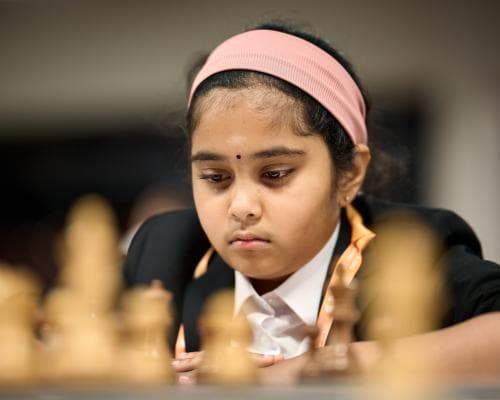
Here’s a sentence you don’t read every day: An 11-year-old schoolgirl from Harrow just made the chess world’s oldest age record look like yesterday’s news.
Last Saturday, Bodhana Sivanandan walked into the Dole Trophy in Aix-en-Provence and did something only a handful of humans have ever done. She beat a grandmaster rated over 2600. Not just any grandmaster—Marc’Andria Maurizzi, the current French champion and 2023 world under-20 junior champion. The kid is 19, rated 2628, and plays like a buzzsaw. For 27 moves, he held the advantage. Then he blinked. A tactic, a miscalculation, and suddenly his queen was gone for inadequate compensation. Game over. Sivanandan’s age at the time of the win? Eleven years and four months. The previous record holder? Judit Polgar, the all-time women’s No. 1, who set that mark at 12 years and two months back in 1988—38 years ago.
Let’s put the scale of this in terms the Money & Markets desk understands. In chess, rating points are like market cap: they represent accumulated value, earned through thousands of hours of compound effort. A 2600+ GM is a blue-chip asset—think a company with a $50B market cap that has delivered consistent returns for a decade. Sivanandan just took that asset apart. She’d beaten two GMs before, but neither was in this league. This is the equivalent of a 6th-grade startup toppling a Fortune 100 firm in a hostile takeover. The mechanics are brutal: she didn’t win on time or on a fluke. She won on calculation, on pattern recognition, on a kind of raw pattern-matching that most adults can’t replicate even after years of training.
Now, let’s talk rarity. Sivanandan is now the fifth youngest pre-teen ever to defeat a 2600+ GM. The list reads like a who’s-who of chess’s future billionaires: Nodirbek Abdusattorov (did it at 9), Faustino Oro (10), Roman Shogdzhiev and Praggnanandhaa Rameshbabu (both at 11 years one month). These are not just prodigies—they are generational outliers. In wealth terms, they are the equivalent of a 14-year-old coding a platform that later sells for $10B. The Polgar record stood for nearly four decades because the statistical probability of a girl under 12 beating a 2600+ GM is vanishingly small. Polgar herself was a once-in-a-century talent. Sivanandan just reset the clock.
For the wealthy—especially those who allocate capital to talent, to education, or to early-stage bets—this is a signal. The chess world is seeing a compression of the age curve. Kids are getting stronger, faster. The same pattern is visible in AI, in biotech, in quantitative finance. The barrier to entry for world-class performance is dropping. Why? Because information is cheaper, training tools are better, and the network effects of global competition are accelerating. If you’re an investor in human capital, you should be watching the 11-year-olds. The next Magnus Carlsen—or the next Judit Polgar—might not be a teenager anymore.
Sivanandan couldn’t sustain the magic into round two, losing to an Israeli IM. But in round three, she drew with GM Maxim Rodshtein, the current Israel No. 2, whose peak rating was 2710. That’s a man who has won national championships and the prestigious Rilton Cup. She held him. After six rounds, she had three points against mostly much higher-rated opponents and was in contention for her second norm for the women’s grandmaster title. This isn’t a one-hit wonder. This is a compound trajectory.
So what does this mean for the markets of mind and money? The lesson is simple: Alpha is where you find it. It doesn’t come with a pedigree or a price tag. It doesn’t care about age, gender, or geography. The 11-year-old from Harrow just proved that the rarest returns—in chess, in capital, in life—still belong to the outliers who see the board differently. The rest of us? We’re just trying not to blunder our queen.