The ICC Showdown: Why the World’s Richest Are Watching the Court’s Survival
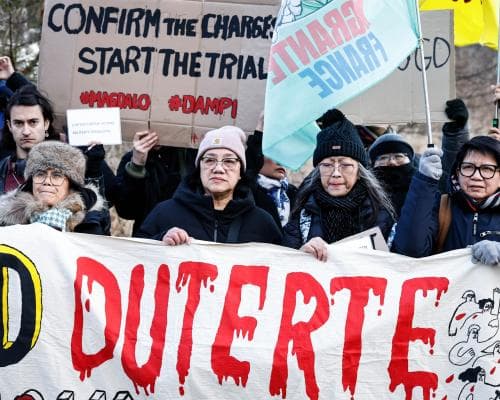
Barely a month goes by without Donald Trump taking a sledgehammer to the international rules-based order. He’s pulled funding from institutions, shuttered USAID, and walked away from the Paris climate agreement. But the State Department’s recent announcement that it wants to dismantle the International Criminal Court “brick by brick” may be the most chilling move yet. This isn’t a late-night tweet that gets walked back. This is official U.S. policy — and it comes with teeth. Nations that don’t fall in line will be punished. The administration has promised “increased scrutiny” of countries that refuse to reject the ICC’s “false authority,” especially those under the U.S. security umbrella. That includes the UK, which pours about £15 million a year into the court.
For the wealthy, this isn’t abstract geopolitics. It’s a capital event. The ICC has long been a backstop for justice, but it’s also a signal to global investors about the stability of international law. When the world’s largest economy declares war on a court that prosecutes war crimes and genocide, it reshapes the risk calculus for anyone moving money across borders. The U.S. has already slapped travel bans and sanctions on ICC judges and officials. One previously sanctioned individual told me the consequences are brutal: personal bank accounts shut down, apps like Uber and booking.com become inaccessible, email accounts blocked. Microsoft and Google are American companies. The message is clear: defy Washington, and your digital and financial life evaporates.
This is where the money story gets sharp. The ICC isn’t just a legal body — it’s a mechanism that creates predictability. It holds leaders like Vladimir Putin, Benjamin Netanyahu, and even Trump himself (should the court ever pursue him) accountable for actions that disrupt global order. For billionaires and family offices, that accountability matters. It underpins the rule of law that protects property rights, contract enforcement, and asset repatriation. When the U.S. attacks the ICC, it weakens that framework. The result? A premium on jurisdictions with independent legal systems — think Singapore, Switzerland, or the UAE — and a discount on emerging markets where legal recourse is already thin.
The timing is everything. We’re seeing a broader retreat from multilateralism: Trump’s “Board of Peace” aims to sideline the UN, NATO is on life support, and the Paris agreement is a memory. The ICC is the latest domino. For the world’s smartest capital, this means recalibrating sovereign risk assessments. Countries that host ICC headquarters or are signatories — like the Netherlands, where the court sits — suddenly face new political heat. And for ultra-high-net-worth individuals with assets in U.S.-aligned jurisdictions, the threat of secondary sanctions is real. If the U.S. can cut off an ICC judge from the global financial system, what stops it from targeting a Russian oligarch’s Swiss trust or a Chinese billionaire’s London property portfolio?
Let’s talk numbers. The ICC’s annual budget is roughly €200 million — a rounding error for the world’s 2,600 billionaires, who control over $12 trillion in wealth. But the court’s survival isn’t about its budget. It’s about precedent. If the U.S. succeeds in dismantling the ICC, it sets a template for other powerful nations to ignore international law. That’s a direct threat to the kind of predictable, rules-based environment that wealth managers depend on. We’ve already seen capital flee Russia after the Ukraine invasion — sanctions froze $300 billion in central bank reserves and billions more in private assets. The ICC’s arrest warrant for Putin was a legal exclamation point on that risk. Now, imagine a world where no court can enforce those norms. That’s the world Trump is building.
For investors, the playbook is clear. Diversify legal exposure. Move assets to jurisdictions with deep, independent judiciaries — the U.S. itself remains a fortress, but the political risk is rising. Gold and hard assets are getting a second look; central bank buying hit 1,000 tonnes last year. And watch the bond markets: sovereign debt from countries that defy the U.S. on the ICC could see yield spreads widen. The wealthy are already voting with their feet. Miami, Dubai, and Singapore are absorbing capital from Europe and Asia as the old order frays. The ICC battle is just another signal that the rules are being rewritten — and those who adapt first will protect the most.
The bottom line? The ICC is far from perfect. It’s slow, politically compromised, and often toothless. But it’s one of the few institutions that can hold powerful leaders accountable. For the world’s richest, its destruction would be a quiet disaster — not because they care about war crimes, but because it erodes the legal bedrock their fortunes are built on. The smart money is already hedging. Are you?