The Wedding as a Work of Art: Why the Ultra-Wealthy Are Redefining Nuptial Luxury
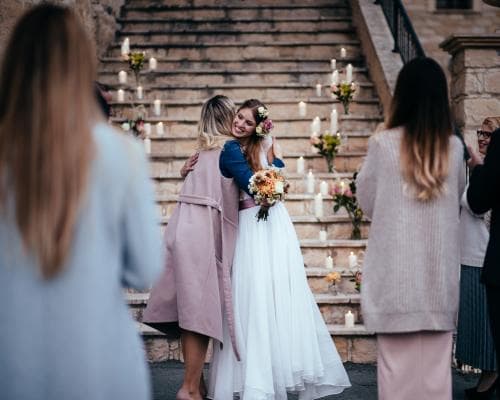
Picture this: a sprawling French château, its limestone walls glowing in the golden hour, 150 guests sipping Krug under a canopy of fairy lights. It sounds like a dream—and for the ultra-wealthy, it has been the default for a decade. But lately, a quiet revolution is stirring among the tastemakers. They are whispering about a different kind of wedding: one that values flirting and chaos over a three-day itinerary, and where the most coveted invitation is not to a weekend-long production but to a single, electric evening.
This is not about austerity. This is about taste. When former rugby star Danny Cipriani and actress Annalynne McCord launched a crowdfunding page for their wedding, the internet gasped—not at the audacity, but at the sum: a mere £10,660. For a couple whose combined earnings could fund a small fleet of vintage Aston Martins, the ask felt less like a plea and more like a provocation. And it landed. Suddenly, the conversation shifted from ‘how much did it cost?’ to ‘what is it worth?’ The answer, for the discerning few, is everything and nothing at once.
Consider the craftsmanship of a truly great wedding. It is not in the hand-embroidered tablecloths or the Michelin-starred canapés—though those are lovely. It is in the curation of people. The best weddings, like the finest watches, are defined by their movement: the unexpected dance-floor collision of a grumpy uncle and a freshly divorced cousin; the whispered secret overheard by the bar; the subtle thrill of a revenge dress. These are not accidents. They are engineered by a host who understands that luxury is not abundance but selectivity. A three-day castle wedding, with its relentless schedule of brunches and bouquet-tossing, leaves no room for the beautiful accident. It is the opposite of luxury.
The market for weddings among the ultra-wealthy is quietly bifurcating. On one side, the old guard still books the entire Four Seasons in Bora Bora for a week. On the other, a new cohort—tech founders, art collectors, discreet heirs—is opting for what I call the ‘micro-spectacular’: a 40-person dinner in a private Mayfair club, a sunset ceremony on a Cornish cliff with no backup plan, a single, perfect night at a vineyard in Tuscany where the only schedule is the moonrise. The price tag is often higher per head, but the effect is exponentially more memorable. It is the difference between a limited-edition Patek Philippe and a factory-ordered Rolex: both tell time, but one tells a story.
What does this say about luxury taste? Everything. The old signifiers—size, duration, sheer volume of champagne—are now seen as gauche. The new signifiers are risk, intimacy, and the courage to let the evening breathe. A wedding that lasts three days is a performance. A wedding that lasts six hours and leaves everyone wanting more is a masterpiece. The crowdfunding controversy, then, is not about money. It is about intention. By asking guests to contribute, Cipriani and McCord inadvertently exposed the tension between the wedding as a gift to others and the wedding as a gift to oneself. The truly luxurious wedding, it turns out, is the one where the host gives the gift of presence—not a weekend of obligations.
Looking forward, I expect to see more of this. The ultra-wealthy are already abandoning the megayacht for the secret island; they are swapping the private jet for the perfectly timed train. The wedding will follow. The next great nuptial will not be a production; it will be a punctuation mark—a single, sharp, unforgettable sentence in the story of a life. And the best guests will not be those who RSVP’d months ago, but those who were simply, beautifully, in the right place at the right time. That, after all, is the ultimate luxury: to be present for a moment that cannot be replicated, no matter how deep the pockets.