Rolls-Royce’s £2.5 Billion Quarter: The Engine Maker That Refuses to Coast
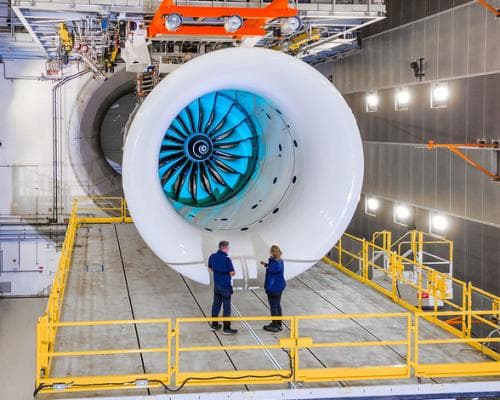
There is a particular hum that only a Rolls-Royce engine makes. It is not loud. It is a deep, almost cellular thrum—the sound of 24,000 pounds of thrust held in perfect check. But last week, the company itself made a different kind of noise: £2.5 billion in underlying profit for the first half of 2026, up 48 percent from the same period last year. That is not a recovery. That is a coronation.
For the collector who owns a Phantom or a Cullinan, or for the aviation enthusiast who has watched a 787 climb out over the Atlantic on Trent engines, this news is not just a line on a balance sheet. It is a signal of engineering supremacy. Under CEO Tufan Erginbilgic—brought in three years ago to shake the cobwebs from a national treasure—Rolls-Royce has become something it hasn’t been in decades: lean, mean, and wildly profitable. Revenues hit £11.3 billion, up £2 billion year-on-year. Statutory profits halved to £1.9 billion, but that’s accounting noise. The real story is the underlying surge.
Let’s talk about what makes these numbers possible. First, the civil aerospace division has spent heavily on keeping engines in the air longer. The dreaded AoG—aircraft on ground—metric has fallen sharply. Fewer jets parked, more revenue per flight hour. It’s a quiet revolution in maintenance: smarter diagnostics, better coatings, more durable turbine blades. Second, defence spending has soared since 2022, and Rolls-Royce powers everything from Typhoon fighters to naval propulsion. Third, AI. Yes, artificial intelligence. The company’s power generation unit is booming thanks to data centres that need constant, reliable electricity. Rolls-Royce makes generators that never blink. That’s a luxury the ultra-wealthy understand: the value of something that simply does not fail.
For the market, this is a statement of intent. The new guidance—£4.7 billion to £4.9 billion in full-year underlying operating profit, up from £4.0 billion—is a confident hand on the tiller. Free cashflow is also rising, from £3.6 billion to £3.8 billion at the top end. Investors have cheered. But the real connoisseurs are watching the small modular reactors. Rolls-Royce is pushing ahead with nuclear micro-plants in the UK, Czechia, and Sweden. That’s not just an energy play. It’s a bet on a future where power is personal, clean, and utterly reliable. For the owner of a superyacht or a private island, that’s the kind of infrastructure that turns a fantasy into a logistical reality.
What does this signal about luxury taste? That the most discerning buyers are no longer satisfied with mere speed or leather stitching. They want provenance with a purpose. They want the company that powers the plane they fly, the generator that keeps their home humming, and the reactor that might one day light their private retreat. Rolls-Royce is no longer just a car. It is a system. A philosophy. A guarantee of motion in a world that keeps trying to stop.
Looking forward, the company is not resting. Erginbilgic’s transformation is still in its middle innings. The next decade will see new engine platforms, deeper defence contracts, and—if the reactors come online—a wholly new revenue stream. For the collector, this means one thing: the brand is becoming rarer, more valuable, and more essential. A Rolls-Royce engine is not a purchase. It is a partnership with gravity. And right now, that partnership is paying dividends.