The Coach, the Comeback, and the Cost of Certainty
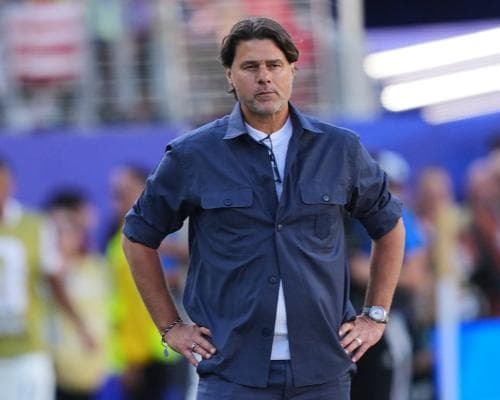
There is a particular thrill in watching a man who has already won—who has already tasted the summit—choose to climb the same mountain again, not because he must, but because he believes the view is better the second time around. Mauricio Pochettino, with his salt-and-pepper beard and the calm of a man who has seen both glory and its shadows, has decided to stay. Not for a season, not for a farewell tour, but through 2030, a full cycle of World Cups, a commitment that in the rarefied world of elite sport is the equivalent of commissioning a bespoke yacht before you’ve even sold the old one.
The news, delivered with the understated gravity of a Swiss bank statement, is that Pochettino has signed on to lead the US men’s national team through the next World Cup and beyond. It is a decision that feels, at first blush, like a paradox: risky, expensive, and, to many observers, entirely unnecessary. He had already done what he was hired to do—injecting life into a squad that had gone stale, finding a system that suited a generation of players whose talent was never in question, only their ability to deliver on the world’s biggest stage. The 4-1 dismantling of Paraguay in the group stage was not just a victory; it was a statement, a piece of football that belonged in a gallery. And then, against Belgium, the house of cards collapsed, undone by a meddlesome president and a suspension that was never meant to be. Yet here he is, not walking away, but doubling down.
For the collector’s mindset—the same one that drives a person to acquire a rare Ferrari or a first-edition Hemingway—Pochettino’s decision is a lesson in value. The immediate return on investment was already banked: a team that looked lost now looks found, a legacy that was tarnished now gleams with possibility. But the true connoisseur knows that the first purchase is never the last. The extension is not a reward; it is an option on future upside. It is the difference between buying a painting because it matches the sofa and buying it because you know, in your bones, that it will appreciate. The US Soccer Federation, with its deep pockets and patient vision, has essentially bought a forward contract on a manager who has proven he can deliver, even when the odds are stacked against him.
The craftsmanship here is not in the tactics—though Pochettino’s tactical acumen is as refined as a bespoke suit—but in the human management. He has a knack for making players feel seen, for coaxing performances out of them that they didn’t know they had. That is a rare skill, one that cannot be replicated or outsourced. It is the equivalent of a master sommelier who can taste the terroir in a single sip, or a watchmaker who can assemble a tourbillon with his eyes closed. The price of such talent is not just monetary; it is the patience to let it bloom. And Pochettino, for all his charm, is not a cheap date. His salary is reportedly in the eight figures, a sum that would make even a hedge fund manager blink. But for the people who run US Soccer—a federation that has learned to think like a private equity firm—the cost is justified by the potential return: a generation of players who could, with the right guidance, finally break through the glass ceiling that has always separated them from the sport’s elite.
In the market of football managers, Pochettino is a blue-chip asset. He has managed Paris Saint-Germain, Tottenham, and Chelsea—clubs where the pressure is relentless and the margins for error are razor-thin. He has won trophies, but more importantly, he has built teams that play with a coherence and identity that is rare in the modern game. That is what the US is buying: not just a coach, but a brand, a philosophy, a promise of consistency. In a world where clubs change managers like the wealthy change yachts—frequently and with little sentiment—Pochettino’s decision to stay is a quiet rebellion. It signals a shift in how success is measured, not by the immediate trophy haul, but by the long-term arc of development. For the discerning observer, this is the most luxurious thing of all: the willingness to invest in something that may not pay off until years down the line, and to do so with the calm confidence of someone who has already seen the future and likes what he sees.
What does this say about the taste of the ultra-wealthy? It says that the new luxury is patience. The old money used to buy islands and vintage cars; the new money buys time. Pochettino’s extension is a bet on the idea that the best is yet to come, that the foundations he laid will hold, and that the next World Cup will be the one where it all clicks. It is a statement piece, not unlike a limited-edition Richard Mille or a private vineyard in Napa—something that cannot be acquired quickly, only cultivated over years. The risk is real, of course. There are no guarantees in football, just as there are no guarantees in the stock market or in love. But the true connoisseur knows that the greatest returns come from the investments that others are too afraid to make. Pochettino is not afraid. Neither, it seems, is US Soccer. And that, in the end, is what makes this story worth telling: not the dollars, not the trophies, but the audacity to believe that the second act can be even better than the first.
More in LIFESTYLE