The Tabby Who Owned the Street: Remembering Karl, the Cat Who Taught a Neighborhood the Art of Presence
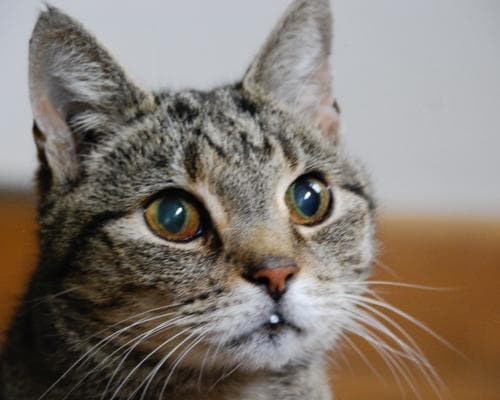
In the hierarchy of status symbols, the brown tabby rarely makes the cut. No Hermès collar, no pedigree certificate, no Instagram-worthy coat. But true connoisseurs of the finer things know that pedigree is often overrated. The real luxury is presence—the kind that makes a quiet street feel like a private estate, and a cat feel like its undisputed heir. Karl was that kind of cat. Unassuming, average-looking, with a glare that could silence a boardroom, he was, for nearly two decades, the sovereign of a south London cul-de-sac. And his story, one of quiet influence and unexpected legacy, is a reminder that the most valuable assets are often the ones you can't put a price on.
Karl came into my life in 2001, a gift from an old friend from Camberwell College of Arts who was decamping to Germany. I had known him as a student, where he had been mates with my late cat, Eric. Eric had passed from stomach cancer, and I thought my heart was closed to another pet. But Karl, with his unremarkable brown coat and a glare that could strip paint, took me back to the 90s, to student halls, to a time when the world was full of possibility. He was perhaps the most average-looking tabby in south London—and that was precisely his genius. He didn't need to be extraordinary to be unforgettable. He simply was.
Karl's legend began with a routine that would make a CEO jealous. He accompanied my children and me on school runs, walking ahead with his belly swinging, leading the procession like a small, furry majordomo. He would wait at the top of the road until I dropped off the kids, then escort me home, a daily ritual of loyalty and punctuality. But his true mastery was in his social engineering. He sat in the front garden for 'chats' with neighbors, remembering their routines, knowing exactly when to be waiting for his daily pats. He had formed connections with people I didn't even know—a web of relationships that would prove to be his most valuable asset. And then there was the toilet trick. Yes, Karl had learned to use the toilet at college, climbing onto the seat, lifting his tail, and aiming directly into the bowl. It was a party trick, yes, but also a quiet assertion of superiority. He didn't need to be trained. He trained himself.
But it was in death that Karl's true worth became undeniable. In 2008, while awaiting the birth of my third child, Karl met his end in the front garden, mauled by an unruly dog. His death was sudden, brutal, and witnessed by the very neighbors who had loved him. They rushed to my side as he died in my arms, a chorus of grief that would echo for years. My partner, Tim, a former funeral director turned chef, insisted on a proper send-off. That same night, we lowered Karl in his shoebox coffin into the back garden, with neighbors in attendance and music playing. I received more condolence cards for Karl than when my mother died. People walked past my house, asking, 'Where's the cat?' Tim had a plaque commissioned, placed at cat height, so that those who had knelt to stroke Karl could read his name. It was a monument to a creature who had, without trying, become the beating heart of a community.
Karl's story is a masterclass in the art of understated luxury. He didn't need a diamond collar or a personal chef. He had something far more rare: genuine connection. In a world where wealth often isolates, Karl's legacy is a reminder that the most valuable currency is the affection of those around you. His funeral was a testament to his influence—a gathering of people who had been touched by his quiet presence, his judgmental glare, his simple rituals. He had built a social empire on a single street, and his memory lives on, nearly two decades later. When I moved homes in 2019, I offered to remove the plaque for the new tenants. They refused. Karl was still part of the neighborhood, a permanent fixture in a world that values transience.
For the ultra-wealthy, the lesson is clear: true legacy isn't in assets or portfolios, but in the memories you leave behind. Karl was a cat, but he was also a symbol—of the power of presence, of the value of connection, of the fact that the most ordinary things can become extraordinary when they are loved. His story is a reminder that the best investments are the ones you can't quantify, and that sometimes, the most exclusive thing you can own is a piece of your neighborhood's heart. As the world moves faster, Karl's slow, deliberate rituals—his walks, his chats, his toilet trick—stand as a quiet rebuke to the noise. He was, in every sense, a gentleman of leisure, and his legacy is a lesson in how to live, and how to be remembered.
The Experience
To honor a beloved pet with the dignity of a Karl, commission a personalized memorial plaque from a master stonemason—or, for a living tribute, consider a bespoke portrait session with a pet photographer who captures the soul behind the stare.