The Last True Bazaar: Inside the Fight for Brixton’s Soul
On a damp Tuesday morning, the air inside Brixton Village smells of jerk chicken, fresh plantains, and ambition. Meera Ghanshamdas, co-chair of the Brixton Traders Community Association, stands behind a stack of poetry books at Roundtable Books, her voice steady but urgent. “If the market changes any more than it already has, what has been built here will disappear,” she tells me. “That’s what we’re fighting for.”
This is not a scene from a protest film. It is the front line of a battle that has become the most unlikely luxury-travel story of the year—not because of five-star suites or private jets, but because of what happens when a place of genuine cultural richness is threatened by the very wealth that so often seeks it out. Brixton Village and Market Row, a warren of arcades where vendors from over fifty countries sell everything from Ghanaian wax prints to Venezuelan arepas, is up for sale. The asking price: £50 million. The bidders: multinational private equity firms on one side, and a scrappy coalition of traders, community organizers, and local activists on the other.
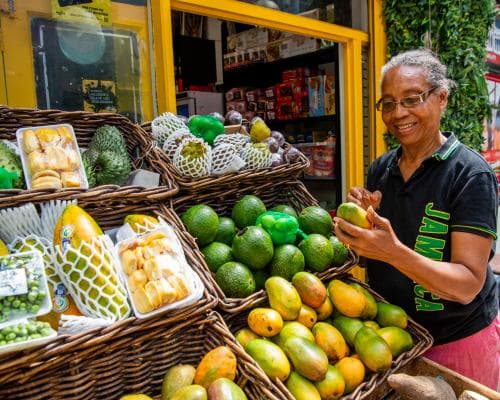
The Buy Back Brixton campaign has made it to the second round of the bidding process—a “once in a generation” chance, they call it. Hundreds of people recently rallied in the market’s concrete courtyard, waving signs that read “People Over Profit.” Esme, who runs a fruit-and-veg stall she started decades ago, told me that the soul of the place is already fraying. “There used to be music in every shop—Brazilian, Venezuelan, Jamaican reggae. But we’re not allowed to do that any more,” she said, gesturing at the empty space where a record shop once spun dub plates. Rising rents and service charges have already pushed out the old guard. A private equity owner, the traders fear, would finish the job.
For the ultra-wealthy traveler, Brixton Market has long been a secret detour—a place to taste the real London, away from the gilded corridors of Mayfair. But authenticity, as any connoisseur knows, is fragile. When private equity moves in, the hand-rolled tortillas and vintage vinyl get replaced by artisanal candle shops and overpriced smoothie bars. The market becomes a stage set, not a living ecosystem. That is why this bid matters beyond Brixton’s postcode: it is a test case for whether community ownership can survive in a city where a two-bedroom flat now costs more than a small mansion in the Cotswolds.
The campaign’s plan is audacious. They have raised millions through a combination of crowdfunding, impact investors, and a loan from a social finance institution. If successful, the market would be run as a community benefit society—profits reinvested into keeping rents low, preserving the mix of traders, and funding local arts programs. “This is much more than a commercial space for us,” Ghanshamdas said. “Brixton has a huge cultural legacy, but it also has a resistance history. And people are coming out for that.”
What does this signal about luxury travel? The old model—buy a villa, charter a yacht, eat at a three-Michelin-star restaurant—is no longer enough. The new currency is access to the authentic, the unrepeatable, the community-held. Wealthy travelers increasingly crave places that feel lived-in, not curated. They want to eat at Esme’s stall before it becomes a concept. They want to buy a book from Roundtable Books before the private equity firm turns it into a pop-up. The irony is thick: the very forces that make a place desirable—its grit, its diversity, its history—are the first things that get smoothed away when big money arrives.
So where do the wealthy go next? Not to the pristine resorts of the Maldives or the ski slopes of Verbier. They go to Brixton, while it still has its teeth. They go to stand in the queue at Fish, Wings & Tings, to listen to the steel drum busker on the corner, to feel the pulse of a market that has survived riots, recessions, and now the most insidious threat of all: being loved to death by capital. If the Buy Back Brixton campaign succeeds, it will be a blueprint for every other market town, city quarter, and cultural enclave staring down the same fate. And if it fails? Then the photograph you see here—the one of Meera, Esme, and the crowd of hopeful faces—will become a postcard from a world that no longer exists.
More in TRAVEL