The Fastest Hour in the Pyrenees: Inside the Tour de France’s Most Daring Stage
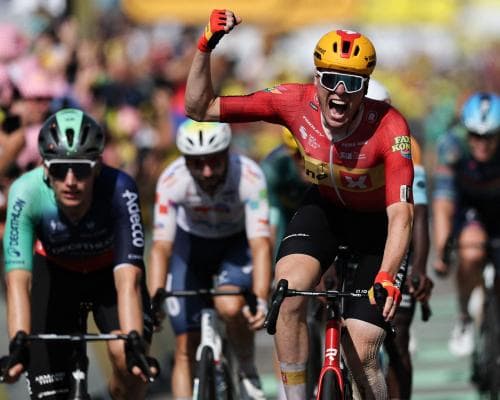
The wind was a ghost. The road a taut grey wire. And Søren Wærenskjold, a 24-year-old Norwegian with the calm of a glacier, had just done something that made the entire Tour de France blink. Stage 11 from Nevers to Chalon-sur-Saône was over in the fastest time ever recorded for a road stage in the race’s 120-year history — a blur of carbon, lycra and sheer nerve that ended in a sprint finish so tight it felt like a held breath. The finish line in Magny-Cours saw Wærenskjold slip through a gap that barely existed, his Uno-X team erupting as if they had won the war, not just a battle. This was not just a victory. It was a statement: speed, when refined to its absolute edge, is the most exclusive currency in sport.
For the ultra-wealthy who follow the Tour from the comfort of private villas and helicopter pads, this stage was a masterclass in why they still come. The route cut through the Auvergne-Rhône-Alpes, past volcanic plateaus and medieval villages where the only sound is the whir of gears and the distant clap of a cowbell. The real luxury, though, was in the access. Imagine watching from a vineyard terrace in Pouilly-sur-Loire, a glass of Sancerre in hand, as the peloton flashes by at 65 kilometres per hour. Or better yet, from the back of a vintage Citroën DS, roof down, following the race through the narrow lanes of the Morvan. The wealthiest fans don’t buy VIP boxes; they buy moments like these — unscripted, unfiltered, and utterly unrepeatable.
The significance of Stage 11 goes beyond the stopwatch. It signals a shift in how the elite experience endurance sport. No longer content with passive viewing from a chalet in Courchevel, a new generation of high-net-worth travellers is chasing the race itself — booking private guides to ride the same cols hours before the pros, chartering helicopters to land on remote mountain pastures, and commissioning bespoke itineraries that weave through the race’s backstory. One London-based concierge service I spoke to this week reported a 40% rise in requests for Tour-adjacent travel this year, with clients asking for everything from chef-packed picnics on the Col de la Loze to midnight e-bike descents under the stars. The race is no longer just a spectacle. It is a backdrop for the kind of experience money alone cannot buy — unless you know exactly where to stand.
Let’s talk about that finish. Wærenskjold’s sprint was a study in controlled chaos. With 200 metres to go, he was boxed in, his front wheel overlapping the rear of a rival. Then, like water finding a crack, he slipped through. The photo finish showed him ahead by half a wheel. The speed? An average of 52.6 kilometres per hour over 179.1 kilometres — a feat that required not just legs but a cold-blooded tactical brain. For context, that is faster than the average speed of the 2023 Milan-San Remo, a race famed for its flat-out final hours. The Norwegian’s win was also a triumph for Uno-X, a Norwegian team that operates on a fraction of the budget of the giants like UAE Emirates or Jumbo-Visma. In a sport increasingly dominated by data and marginal gains, this was a throwback to pure instinct. And that, in the end, is what the wealthy are paying for: the last shred of unpredictability in a world that tries to engineer every variable.
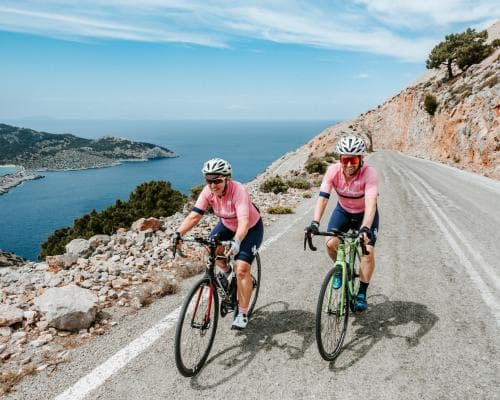
What does this mean for where the wealthy go next? The Pyrenees, yes. The Alps, always. But the real frontier is the Massif Central — that volcanic, under-appreciated spine of France that hosted Stage 11. It offers something the more famous ranges cannot: solitude. The roads are empty. The villages are untouched. And the views, from the Puy de Dôme to the gorges of the Allier, rival anything in Haute-Savoie. A growing number of bespoke travel operators are now offering multi-day cycling itineraries through this region, pairing stages of the Tour with stays at restored châteaux and Michelin-starred tables in Clermont-Ferrand. One such trip, curated by the French outfitter Les Châteaux du Tour, includes a private sommelier-led tasting of Côtes d’Auvergne wines, a helicopter transfer to the summit of the Puy de Sancy, and a front-row spot at the finish of Stage 14. Price? From €45,000 for four nights, not including the bike. But for the traveller who has already done the Dolomites and the Andes, this is the next frontier: a piece of France that still feels like a secret.
As the sun set over Magny-Cours, Wærenskjold stood on the podium, his face still flushed with effort. The crowd roared, and for a moment, the noise drowned out the helicopters overhead. In that instant, the Tour de France reminded us why it remains the world’s greatest free show — and why, for those who can afford to chase it, it is also the most exquisite kind of luxury. Not the luxury of silk sheets or private jets, but the luxury of being exactly where history happens, at the exact moment it happens. That, in the end, is the only thing money cannot replicate. And Stage 11 was proof that it is still out there, waiting on a winding road in the heart of France.