The Other Coast: A Year Along England’s Forgotten Shoreline
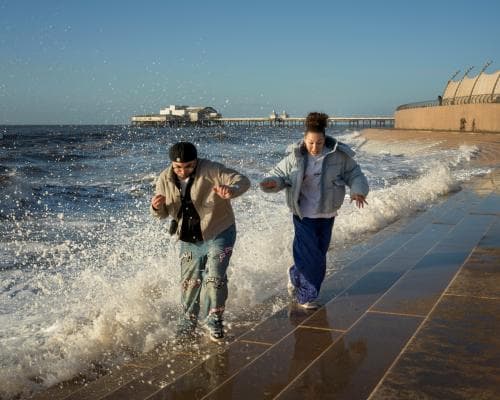
The English coast is supposed to be a postcard. Buckets and spades. Candy-striped deck chairs. The kind of horizon that promises escape. But for the young people growing up there, the sea has become a wall. A boundary that swallows opportunity. Over the course of a year, we drove through 17 towns along the shores of England and Wales, and what we found was not the holiday brochure — it was something far more urgent.
This wasn’t a luxury itinerary in any conventional sense. There were no overwater villas, no private butlers, no helicopter transfers. Instead, we found youth centres turned into storage units, bus routes cancelled, and a generation of 16- to 24-year-olds for whom the phrase “seaside life” means watching the tide of possibility recede. Nearly a million young people in the UK are now not in work, education, or training — and nine out of ten of the most deprived neighbourhoods in England are coastal. Seven of them sit in Blackpool alone.
Yet the most arresting view was not the deprivation — it was the dignity. In Morecambe, we met Eleanor, 23, who told us: “If people just chatted to the young people here and welcomed them to more decision-making events, it would make this a much better place.” That sentence became the thesis of our entire journey. The young people we met were not the “feral” or “lazy” figures of tabloid caricature. They were architects of their own survival — running community kitchens, teaching coding to younger kids, organising beach clean-ups, setting up music nights in abandoned pubs. They were doing the work that the adults in power had stopped funding.
The rarity here is not a private island or a Michelin-starred tasting menu. It is attention. The ultra-wealthy spend fortunes on exclusive access — to galleries, to chefs, to unreachable vistas. But the most exclusive thing you can offer a young person in a coastal town is a seat at the table. A genuine invitation to shape the place they call home. That is the luxury we found: the willingness to listen, the patience to stay, the refusal to look away.
This journey signals something uncomfortable for the luxury-travel world. We talk endlessly about “authenticity” and “local connection” — but how often do we actually sit with the locals who aren’t part of the curated experience? The young people of the British coast are not a tourist attraction. They are not a pop-up gallery or a farm-to-table dinner. They are a generation holding together communities that the rest of the country has forgotten. And their story is not a side trip. It is the main route.
Where do the wealthy go next? Perhaps not to a new resort in the Maldives or a hidden valley in Patagonia. Perhaps they go to Morecambe. To Hastings. To Rhyl. Not as voyeurs, but as witnesses. Because the most transformative journey is not the one that takes you further away — it is the one that brings you closer to a truth you’ve been avoiding. The coast of England and Wales is not broken. It is waiting. And the young people there are ready to show us a different way to travel: not as consumers of a view, but as companions in a conversation.