The Heat Below: What El Niño Is Revealing in the Galápagos
The water is hot. Not just warm, but alarmingly hot—the kind of heat that makes a seasoned marine biologist pause mid-sentence and stare at their thermometer. Around the Galápagos Islands, the Pacific has climbed from a brisk 18°C to above 30°C, a fever that would fell a lesser ecosystem. This is El Niño in full, unapologetic force, and it is playing out right now in the archipelago that Darwin made famous. For those who have already sailed the Mediterranean, skied the Alps, and chartered the Maldives, this is where the real luxury lies: not in comfort, but in consequence.
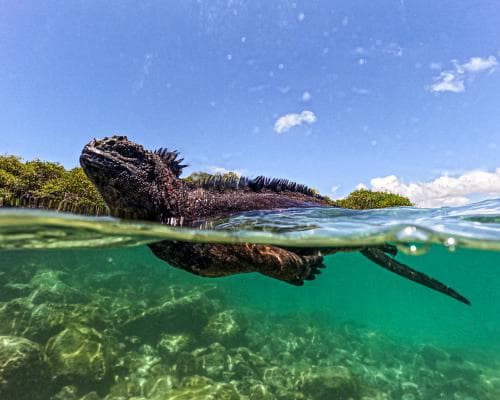
To stand on the black lava shores of Fernandina Island as a marine iguana starves is to understand something profound about the fragility of our planet. These iguanas, which can shrink their skeletons by up to 20 percent in lean times, are the ultimate survivors. But even they are struggling. The warm water strips the ocean of nutrients, causing a population crash in fish and algae. Sea birds like the Nazca booby and the blue-footed booby—whose ridiculous, cerulean feet have launched a thousand Instagram posts—are seeing their chicks go hungry. The Galápagos penguin, the only penguin species to live north of the equator, is clinging to existence in a bath that feels more like a Jacuzzi than a habitat.
For the discerning traveler, this is not a reason to stay away. It is a reason to go now. The ultra-wealthy are increasingly drawn to destinations that offer not just beauty, but meaning—places where the stakes are visible, where a single degree of temperature change can be felt in the air and seen in the eyes of a sea lion. Operators like Lindblad Expeditions and Silversea are running bespoke voyages that include marine biologists, climate scientists, and exclusive access to research stations. You can snorkel alongside hammerhead sharks in waters that are 12 degrees warmer than normal, and then return to a suite with a private butler and a bottle of Chilean Sancerre. The juxtaposition is not ironic; it is the point.
The rarity of this moment cannot be overstated. El Niño events have occurred for millennia, but this one is different. It is building on a baseline of global warming that makes every spike more dangerous. The Galápagos Marine Reserve, a UNESCO World Heritage site, is one of the most protected waters on Earth, yet it cannot shield its inhabitants from the ocean’s rising temperature. The price of a proper expedition—think 10 to 14 days aboard a 50-guest yacht with a crew of 40—starts at around $15,000 per person and can climb to $50,000 for a suite with a balcony. For that, you get front-row seats to a slow-motion catastrophe that is also a masterclass in adaptation.
What does this signal about the future of luxury travel? It signals a shift from escapism to engagement. The wealthy are no longer content to simply lie on a beach; they want to understand the forces shaping that beach. They want to talk to the scientists studying the shrinking iguanas. They want to see the penguins while they still exist in the wild. The Galápagos is becoming a pilgrimage site for the climate-conscious elite—a place where you can spend a fortune to witness the planet’s most urgent story unfold in real time. It is the opposite of a carbon-neutral resort in the Alps. It is raw, uncomfortable, and utterly unforgettable.
Where do the wealthy go next? They go deeper. After the Galápagos, they will book a spot on a polar expedition to Svalbard, where the ice is disappearing. They will charter a private jet to the Amazon, where the rivers are drying. They will pay for access to the front lines of the Anthropocene, not because they can fix it, but because they can afford to see it. The Galápagos, right now, is the ultimate trophy: a place where the luxury is not in the service, but in the story. And the story is written in warm water, starving iguanas, and the desperate, beautiful dance of survival.