Greenland Slams the Brakes on Trump-Linked Oil Drilling — and the Arctic's $1 Trillion Dream
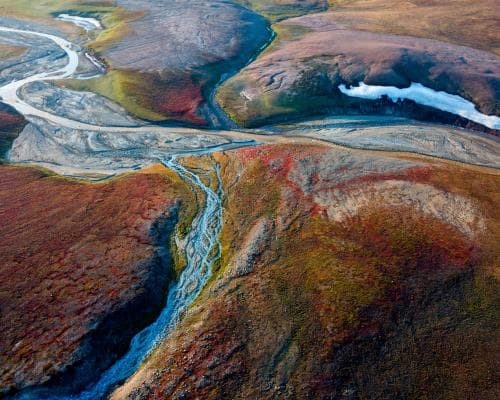
The Arctic's great oil rush just hit a wall of permafrost — and it's not the kind you can drill through. Greenland's government on Thursday forced Greenland Energy, a US firm with ties to Donald Trump, to postpone its planned drilling in the remote Jameson Land region, after the company brought heavy equipment ashore in July without permission. The decision is a sharp rebuke to the Trump administration's imperialist overtures and a reality check for anyone betting on a quick Arctic bonanza.
The timing is brutal for the company and its backers. Just a week before crews were set to sink the first wells into the tundra, the government announced that "the necessary regulatory process cannot be completed, and the necessary approvals cannot therefore be obtained before the planned start of drilling." The company now faces a wait of at least two years — with drilling possible as early as the winter of 2027, according to both the government and the firm. That's a far cry from the prediction made in May by Jeff Landry, the Louisiana governor Trump named as his envoy to Greenland, who boasted that "we could have those barrels on production within 10 months or so." That schedule was always improbable; now it's impossible.
At the center of this standoff is a $1 trillion promise. Robert Price, Greenland Energy's chief executive, has long maintained that oil worth that staggering sum lies beneath the glacial expanse of Jameson Land, a protected wetland that is home to rare birds and the muskoxen on which local hunters depend. But Greenland's government isn't swayed by headline numbers. In its statement, officials said they "expressed concern" that the timetable was too tight to properly assess environmental and social impacts. The company's equipment, which was landed without permission in July, drew a "strong warning" from authorities — a sign that the government is willing to enforce its sovereignty even against US political pressure.
This is a story about more than one drilling project. It's a litmus test for how the world's wealthiest and most politically connected players navigate the new Arctic frontier. Greenland sits atop vast untapped reserves of oil, gas, and rare earth minerals — resources that become more accessible as ice melts. But the territory's government, which has been inching toward independence from Denmark, is clearly signaling that it won't be rushed into sacrificing its environment or its people for foreign capital. The company's equipment is now idle, and the local hunters who depend on the muskoxen herds are breathing a little easier — for now.
The delay also exposes the fragility of political promises in resource plays. Landry, whose stated goal is to "make Greenland a part of the US," framed the drilling as a way to ease the energy crisis caused by the US attack on Iran. That geopolitical framing may have excited Washington hawks, but it does nothing to speed up Greenland's regulatory machinery. The government's decision is a reminder that even the most powerful patrons can't override local law — and that ESG concerns, once dismissed as a fringe obsession, are now a hard constraint on the world's most ambitious extractive projects.
For wealth builders and market watchers, the takeaway is clear: Arctic oil is a long game, not a quick trade. The $1 trillion figure may be real, but it's trapped under layers of regulatory review, environmental litigation, and political posturing. The companies that will ultimately profit are those with patient capital and a willingness to play by Greenland's rules — not those that try to bulldoze through them. As for the 2027 timeline, even that is optimistic. A change in Greenland's government, a new legal challenge, or a shift in global oil prices could push the project further into the ice. For now, the only thing certain is that the Arctic's wealth will be unlocked on Greenland's terms, not Washington's.
The message from Nuuk is unambiguous: the era of Arctic extraction on a whim is over. If Greenland Energy wants to drill, it will have to earn the right — one environmental review, one public hearing, one permit at a time. That's a slow, expensive process, and it's exactly why the world's smartest capital is watching this remote island with more interest than ever. The prize is enormous, but so is the patience required to claim it.