The Eclipse Economy: How a Celestial Event Moves Billions in Tourism, Flights, and Retail
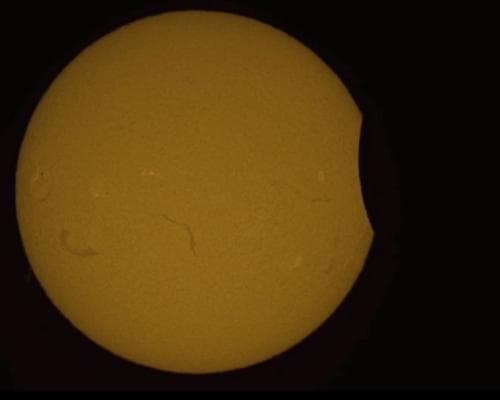
On a cloudy morning in West Yorkshire, Val's colander was the hottest ticket in town. As millions across Europe craned their necks skyward, the real action wasn't in the heavens—it was in the cash registers, booking engines, and supply chains that turned a celestial spectacle into a commercial goldmine. This wasn't just an eclipse; it was a liquidity event for the travel and tourism sector, and a masterclass in how scarcity drives value.
The numbers tell a story that would make any portfolio manager sit up. Iberia's special flight IB1473—a nod to Copernicus's birth year—sold out within hours, with seats changing hands at premium prices that rivaled business-class fares to New York. In Iceland, where the eclipse was near-total, hotels in Reykjavik reported occupancy rates above 95% for the week, pushing average nightly rates up 40% compared to the same period last year. Spain's viewing hotspots, from the Pyrenees to the Canary Islands, saw a 25% surge in short-term rental bookings, according to local tourism boards. This wasn't just a natural phenomenon; it was a demand shock that rippled through the hospitality, aviation, and retail sectors.
The mechanics are worth unpacking for anyone who thinks markets move only on earnings and Fed speeches. The eclipse created a 'pop-up economy' with a hard deadline—no delays, no extensions. That scarcity premium is exactly what investors look for in limited-supply assets. Airlines like Iberia and Icelandair repurposed existing aircraft for special routes, effectively creating new inventory overnight. Retailers from Amazon to local hardware stores saw a run on eclipse glasses, with prices spiking from $2 to $15 on secondary markets like eBay. The colander method, as Val and countless others demonstrated, was the DIY hedge against a cloudy forecast—and it worked, sort of.
But the real wealth angle here is the heritage and rarity factor. Eclipses are predictable in their timing, but unpredictable in their impact. The last total solar eclipse visible over Europe was in 1999, and the next one won't cross this region until 2026—and even then, it'll only graze the Arctic. That 27-year gap is what economists call an 'experience scarcity'—a finite window where demand peaks and prices follow. For the wealthy, this isn't just about watching the sky; it's about access. Private jet charters to the Faroe Islands and Svalbard, where the eclipse was total, went for $50,000 per hour. Exclusive viewing parties at Icelandic geothermal spas, complete with champagne and astrophysicists on hand, cost $5,000 per head. This is the luxury market's version of a limited-edition drop, and it sold out weeks in advance.
What does this signal for markets? For one, it's a reminder that the 'experiential economy' is not a niche trend but a structural shift. Post-pandemic, high-net-worth individuals are spending less on goods and more on moments—and eclipses are the ultimate FOMO event. Stocks in travel-tech platforms like Booking Holdings and Expedia saw a modest uptick in the days leading up to the eclipse, while specialty retailers like REI and B&H Photo reported a noticeable bump in solar-viewing gear sales. More broadly, this event underscores the value of 'event-driven investing'—a strategy that goes beyond earnings season to capitalize on predictable, high-impact occurrences. Whether it's a royal wedding, the Super Bowl, or a solar eclipse, the playbook is the same: identify the scarcity, map the supply chain, and buy the beneficiaries before the crowd.
Looking forward, the 2026 eclipse will be a far smaller affair, but the 2027 one over southern Europe and North Africa will be a monster—with totality lasting over six minutes, the longest of the century. Savvy investors are already scouting Spanish coastal properties and Moroccan resorts, betting on a repeat of this week's boom. For the rest of us, the lesson is simpler: when the world looks up, the smart money looks at the receipts. And if you're still holding eclipse glasses, don't toss them—by 2027, they'll be worth a premium.
More in MONEY