The Grit and Glory of Appalachia, Now in Shoreditch
The first bite of a cornbread madeleine at Appalachia is a revelation. It arrives hot, cheddary, and laced with a kick of fire, served from a cast-iron skillet that might as well have been forged in a Smoky Mountain cabin. This is not the London you know. This is a reclaimed saloon bar on Nile Street, a sliver of Shoreditch so discreet you could walk past it a dozen times. And that is precisely the point.
Chef Ali Borer, whose pedigree includes the fire-and-smoke temple of Smoking Goat and the rustic British pub of Guy Ritchie’s Lore of the Land, has turned his gaze to a cuisine London has long ignored: the food of the Scots-Irish settlers who carved a life into the sparse, beautiful ridges of Appalachia. These were people who smoked, pickled, and preserved everything because survival demanded it. Borer honors that necessity with a menu of grits, pork rinds, collard greens, kilt salad, chow-chow relish, and pot liquor — the broth left behind after cooking greens, a mountain elixir of pure, earthy soul.
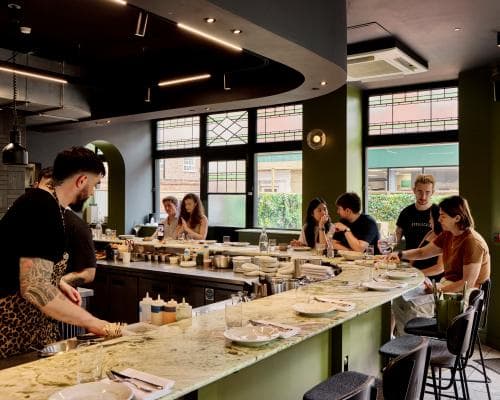
The room itself feels like a found object. You sit at the bar and watch Borer work, his hands moving with the quiet confidence of a man who knows that the best stories are told through fire and fermentation. There is no plush banquette, no hushed service. The space is unapologetically raw, a little uncomfortable, much like Tollington’s Fish Bar or other fiercely independent spots that refuse to cosset you. It is a restaurant making the best of its surroundings, not pretending to be a palace. Downstairs, the whiskey and cocktail bar Lowcountry nods to South Carolina’s coastal lowlands, where a banana pudding sazerac — made with brown butter-washed bourbon — feels like a ghost story told in a glass.
What makes Appalachia so rare is its refusal to pander. Most British diners know the region only through the banjo scene in Deliverance or the hillbilly fugitives of O Brother, Where Art Thou? Borer flips that caricature into reverence. He is not Appalachian himself, but he cooks like a historian with a smoker. The chicken, one regular declared, is “Sunday dinner on performance steroids” — a bird so deeply flavored, so crisply rendered, it tastes of generations. This is food that demands you slow down, that asks you to consider what it means to make something from nothing.
In a luxury-travel landscape obsessed with the new — the private-island resort, the chef’s table in the desert — Appalachia offers a different kind of privilege. It is the privilege of access to a story you didn’t know you needed. The ultra-wealthy increasingly seek not just comfort but authenticity: a meal that feels like a secret, a place that cannot be replicated. Here, the rarity is not in the price tag (a plate of grits costs a fraction of a tasting menu) but in the cultural translation. Borer has brought the mountain to the city, and the mountain does not apologize.
Where do the wealthy go next? They go to the edges of the map, to the cuisines that have been overlooked because they were too humble, too remote, too real. Appalachia signals a shift: luxury is no longer just about the finest ingredients but about the finest stories. It is about eating the pot liquor of a people who knew how to survive, and tasting in it the smoke of a thousand campfires. In a world of gilded excess, the most decadent thing you can do is sit at a reclaimed bar in a hidden London alley and let a chef take you to the mountains.