The Last Continent Falls: Bird Flu Reaches Australia, and the Luxury Travel Calculus Shifts
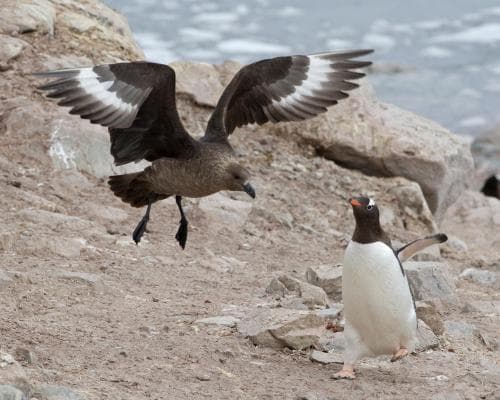
The brown skua does not look like a herald of doom. It is a stocky, gull-like bird with a hooked beak and a taste for pilfering penguin eggs—a scrappy survivor of the Southern Ocean. But when that skua was found sick on a Western Australian beach in late June, tested, and confirmed dead from the H5N1 clade 2.3.4.4b virus, it marked something the world's most discerning travelers had dreaded: Australia's run as the only continent free of highly pathogenic bird flu was over.
For those who spend their lives chasing the last great wild places—the sub-Antarctic islands, the penguin colonies of Macquarie Island, the seal haul-outs on Heard Island—this is not a distant agricultural headline. It is a seismic shift in the calculus of where to go next, and whether some journeys are still responsible to take. The virus has already killed millions of birds and thousands of marine mammals globally since 2021. Now it is here, on Australian soil, carried by the very migratory paths that make these expeditions so extraordinary.
What makes this strain different is its ruthlessness. Dr. Ariful Islam of Charles Sturt University calls it a “panzootic”—a pandemic among animals—that has jumped continents and species with alarming ease. More than 560 wild bird species and over 100 mammal types have been affected worldwide. In Antarctica, researchers watched it tear through penguin colonies last summer. Now the virus has reached Heard Island, an Australian territory 4,000 kilometers southwest of Perth, where it has spread among penguins, seals, and petrels. For the ultra-wealthy traveler who books a berth on an ice-class expedition vessel to witness emperor penguins or leopard seals, the question is no longer just about comfort or exclusivity. It is about whether the destination itself is safe for its inhabitants—and whether your presence might accelerate the damage.
Luxury expedition operators, from Ponant to Silversea to Aurora Expeditions, have built entire business models around delivering guests to these fragile ecosystems. They market “the last great wilderness” with images of untouched ice and teeming wildlife. But this virus does not respect marketing copy. It spreads through direct contact and contaminated environments. A single infected bird landing on a ship's deck, a seal carcass touched by a curious passenger, even mud on a boot—these are all vectors. The ultra-wealthy traveler, accustomed to bespoke access and behind-the-scenes encounters, now faces a paradox: the very privilege of proximity becomes a liability.
There is a dark irony in the timing. Just as the world's elite were rediscovering expedition cruising—booking out entire ships for private family voyages, chartering helicopters to land on remote ice floes—the virus arrived to remind everyone that nature does not negotiate. The Australian government has already activated its emergency response, and Wildlife Health Australia is tracking cases. But for the traveler who pays $50,000 for a 14-day sub-Antarctic voyage, the real cost may soon be measured in cancelled itineraries, altered permits, and the quiet guilt of being a potential vector.
What does this mean for where the wealthy go next? The smart money is already pivoting. Instead of the Antarctic Peninsula, insiders whisper about the Patagonian fjords, where the virus has not yet taken hold. Instead of penguin colonies, the focus shifts to deep-sea submersible dives and high-altitude desert treks—experiences that offer isolation without the same ecological fragility. The new luxury is not just remoteness; it is bio-security. Operators who can guarantee rigorous decontamination protocols, private air transfers, and exclusive access to disease-free zones will command a premium. The skua's death is a warning, but also a map: the future of luxury travel belongs to those who learn to tread more lightly, because the wild places we love are more vulnerable than we knew.