The Private Oracle: Why the Ultra-Wealthy Are Retracing the Footsteps of Gods and Heroes
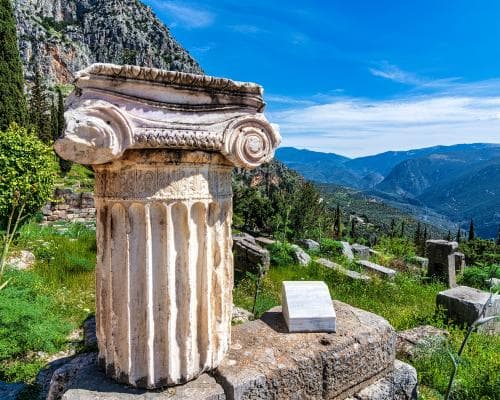
Imagine standing on a cliff in Delphi, the sun bleeding gold over the Corinthian Gulf, and realizing that for three thousand years, people have come here to ask the same question: What happens next? The ultra-wealthy are not accustomed to uncertainty. They hedge, diversify, and strategize. Yet even the most fortified portfolio cannot insulate a soul from the ancient pull of myth. This is why Greece—not the Greece of crowded ferry queues and Instagram sunsets, but the Greece of Zeus, Poseidon, and Hades—has become the quiet obsession of those who can charter a yacht, a helicopter, or an entire archaeological site for an afternoon. They are not tourists. They are pilgrims in linen.
The stories never died. They just got more expensive. Greek mythology explained the universe to the ancients: the origins of the earth, the constellations, the messy business of justice and love. Today, those same myths offer a different kind of clarity. For the person who has everything—the private jet, the Bond-villain watch collection, the vineyard in Tuscany—the next frontier is meaning. And Greece, steeped in legends from Athens (named for Athena, goddess of wisdom) to the shadowy banks of the Acheron, delivers that meaning with a side of crystalline sea views. The numbers are telling: luxury travel bookings to Greece’s mythologically significant sites have surged by over 40% in the last two years, according to high-end tour operators who prefer to remain unnamed. The clients? Hedge fund titans, tech founders, and heirs who want to walk where heroes stumbled.
Consider Delphi. When Zeus wanted to find the center of the world, he released two eagles that met on the slopes of Mount Parnassus. That spot became the navel of the ancient world—the spiritual heart that made Athens’ Acropolis look like mere politics. Apollo built his temple there, and the oracle Pythia, inhaling vapors from a fissure in the earth, delivered cryptic truths to kings and shepherds alike. Today, you can stay at the Kastalia Boutique Hotel, terraced into the cliffside, and sip a chilled Assyrtiko while gazing at the same amphitheater framed by Mount Kirfi. The million olive trees below? Still there. The sunset? Still godlike. The difference is that now, you can book a private after-hours tour of the archaeological site. No crowds. No selfie sticks. Just you, the pillars, and the echo of a priestess who once whispered fates.
Then there is the Acheron River in Epirus—the “River of Woe” that encircled Hades’ underworld. In July, when the heat wraps around you like a velvet shroud, the only reasonable response is to wade into its cool, clear waters. Circe herself recommended this route to Odysseus when he needed a shortcut to the realm of the dead. For the ancients, this was a place of dread: souls arrived with a coin clamped in their mouths for the ferryman. For the modern traveler, it is a sensory reset. The water is shockingly pure, winding through gorges and forests that feel untouched by time. You can hire a private guide—a local historian who knows the myths and the best swimming holes—and spend a day doing nothing but floating. No Wi-Fi. No board meetings. Just the sound of water over stone and the faint, thrilling sense that you are trespassing on sacred ground.
What does this signal about wealth and taste? It signals a shift from acquisition to immersion. The ultra-wealthy no longer want to own things; they want to own experiences that cannot be replicated. A Birkins bag is lovely, but a sunset at Delphi is singular. A superyacht is impressive, but bathing in Hades’ river carries a story that no concierge can manufacture. This is the new luxury: not just rarity, but resonance. The craftsmanship here is not of gold or leather, but of narrative—three-thousand-year-old narrative that still shapes how we think about fate, power, and the human condition. To walk where Odysseus schemed and Zeus thundered is to touch something that no amount of money can buy, even if it takes a considerable amount to get there in comfort.
The future of this market is clear. As global uncertainty mounts—markets wobble, geopolitical lines blur—the wealthy will seek anchors in the eternal. Greece’s mythological sites are not just destinations; they are psychological safe havens. Expect more private charters to remote ruins, more bespoke itineraries that include a night at a temple under the stars, and more whispered conversations about which god you might be trying to appease. The oracle is silent, but the landscape still speaks. All you have to do is listen—preferably with a glass of local wine in hand and a helicopter on standby.
The Experience
For a bespoke pilgrimage to Delphi and the Acheron River, contact your private travel curator or inquire with high-end operators like Abercrombie & Kent for an itinerary that includes exclusive after-hours access and a local mythologist guide.