The Prime Minister Draws a Line: Why Australia’s Creative Crown Jewels Are Not for AI’s Taking
Imagine commissioning a portrait from a master painter, only to discover a machine had copied every brushstroke and sold prints without your consent. That violation of taste, of provenance, of control—is exactly what Anthony Albanese has declared unacceptable. In a world where data is the new currency, the Australian Prime Minister just told the tech giants that the country’s creative heritage is not a commodity to be scraped. For the ultra-wealthy, who understand that true value lies in scarcity and authorship, this is a watershed moment.
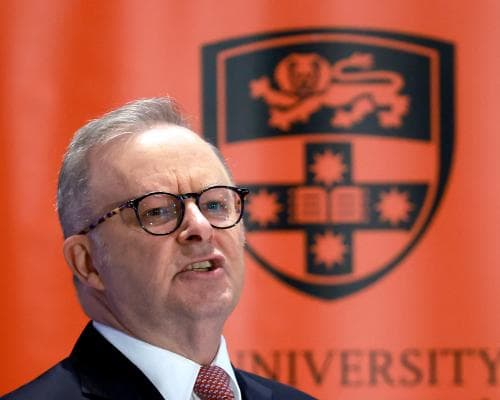
Albanese’s speech was not a policy whisper—it was a gavel drop. He announced the creation of a dedicated Office of AI and made an unequivocal promise: “No company should use Australian books, music, art or news to build or train AI without the artist’s control. That includes the artist’s control of the price and value of their work. Anything less is theft.” The message is clear—OpenAI, Anthropic, and their ilk will not get a free pass on Australian cultural assets. The Australian Recording Industry Association (ARIA) breathed an audible sigh of relief. Their CEO, Annabelle Herd, put it bluntly: “We don’t know exactly what most of these AI companies want… there isn’t one. [Albanese’s speech] should be a very strong message to the AI companies, they should pick up the phone and start licensing.”
This is not about regulation for regulation’s sake. It is about protecting craftsmanship in an age of infinite replication. Think of the rare, hand-stitched leather of a Hermès Birkin, the bespoke cut of a Savile Row suit, or the limited-edition print of a celebrated photographer. Each carries the signature of its maker. Australian creatives—writers, musicians, artists, journalists—produce work that is equally singular. The government’s refusal to grant a text-and-data mining exemption means that every song, every novel, every canvas retains its proprietary soul. For collectors and connoisseurs, this is the ultimate assurance: your investment in culture remains authentically human.
What does this signal about wealth and taste in 2024? That the truly discerning are moving beyond mere ownership of physical objects toward ownership of intellectual legacy. The luxury market has long pivoted from mass-produced logos to one-of-a-kind experiences and stories. This policy aligns perfectly with that shift. It says that the value of a work is not just in its aesthetic but in its provenance—and that provenance must be defended. The ultra-wealthy have always understood that rarity commands premium. Now, Australia is codifying that principle for the digital age. It is a statement that the most exclusive possession is not a yacht or a penthouse, but the right to say, “This is mine, and it cannot be copied without my blessing.”
Looking forward, the cabinet is still debating the fine print of copyright reforms. But the tone has been set. Jeff Bleich, Anthropic’s general counsel, acknowledged the process “respectfully,” signaling that even the biggest players know the game has changed. For those who collect Australian art, back Australian musicians, or simply value a world where creativity is rewarded, the message is invigorating. The Office of AI will also tackle the elephant in the room: the enormous energy and land demands of data centers. No more building them on prime residential soil. No more draining power grids meant for homes. It is a holistic vision of luxury—where culture, environment, and community are all treated as precious resources.
So what does this mean for you, the patron of the extraordinary? It means that when you commission a piece, attend a sold-out opera, or acquire the latest novel from a celebrated Australian author, you are not just buying an object. You are investing in a system that values the creator as much as the creation. The line has been drawn. The crown jewels are not up for grabs.
The Experience
To experience this protected world of creativity firsthand, consider an exclusive private viewing at an Australian artist’s studio or a bespoke commission from a member of the Australian Recording Industry Association. Your personal curator can arrange an introduction.