Britain’s Steel Nationalisation: A Blast Furnace for the Past, Not the Future
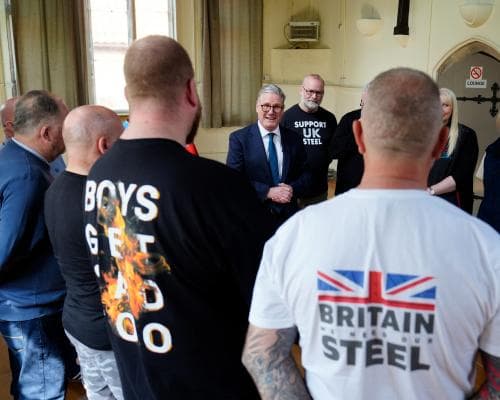
On Thursday, Keir Starmer signed the Steel Industry (Nationalisation) Act into law, formally taking British Steel into public ownership. The scene in Scunthorpe was not a ribbon-cutting for a gleaming new plant. It was a last-ditch rescue of a 19th-century process—blast furnaces turning iron ore into primary steel—that Jingye, the Chinese owner, had threatened to shutter entirely. The government stepped in to save 4,000 jobs and what it calls a “vital national capability.” But for anyone tracking the deep-tech frontier, this story isn’t about patriotism. It’s about the cost of not innovating.
British Steel is the UK’s last producer of primary steel from iron ore. That sounds strategic—until you realise that the global steel industry is undergoing its most radical transformation since Bessemer. The future is electric arc furnaces powered by green hydrogen, direct reduced iron (DRI) processes, and fully automated mills where robots handle everything from molten metal pouring to quality inspection. The Scunthorpe plant, by contrast, still relies on coke-fired blast furnaces that belch CO2 and require massive manual labour. The government’s takeover doesn’t include a mandate to retrofit. It’s a stopgap, not a springboard.
The capital picture is telling. Jingye, which bought British Steel out of liquidation in 2020 for £50 million, argued in its UK accounts that the asset was “valuable” and deserving of compensation. Yet the same company was prepared to walk away and let the furnaces go cold. That contradiction reveals a brutal truth: primary steelmaking in a high-cost, decarbonising economy is a low-margin, high-liability business without massive capital injection for green technology. The government will now appoint an independent valuer to decide compensation, but the real question is whether the Treasury is willing to spend the billions needed to turn Scunthorpe into a modern mini-mill—or whether that money would be better deployed elsewhere.
Meanwhile, the competitive landscape is moving fast. The world’s most advanced steelmakers—think Nucor in the US, SSAB in Sweden, and Tata in the Netherlands—are already building or commissioning hydrogen-ready DRI plants and fully roboticised rolling mills. In 2022, SSAB broke ground on a fossil-free steel plant in northern Sweden that will use hydrogen from electrolysis and run with near-zero human intervention. The UK, by contrast, is nationalising a 1960s-era facility. Without a clear plan to transition to electric arc or hydrogen-based production, the government is essentially buying a ticket to a fading industrial era.
What does this signal for the sector? For deep-tech investors, it’s a warning that legacy heavy industry cannot be saved by ownership alone. The real innovation opportunity lies in the supply chain around green steel: electrolysers for hydrogen, advanced robotics for material handling, AI-driven predictive maintenance for furnaces, and carbon capture retrofits. Startups like Boston Metal (molten oxide electrolysis) and Electra (low-temperature ironmaking) are attracting billion-dollar valuations precisely because they solve the problem that British Steel now embodies—how to make steel without the pollution and the labour cost.
The forward-looking move would have been a conditional nationalisation: a public stake tied to a binding timeline for decarbonisation and automation. Instead, the government chose preservation. For the 4,000 workers in Scunthorpe, that’s a relief. For the future of British manufacturing, it’s a holding pattern. The blast furnaces will burn for a few more years, but the real heat is in the labs and factories that are reinventing steel from the ground up. If the UK wants to be in that game, it will need more than a nationalisation act. It will need a national innovation strategy, and the courage to let the old furnaces cool.