The $200 Trillion Question: How Climate Risk is Rewriting the Rules of Capital Preservation
Imagine you're holding a 250-year-old family trust—a portfolio of prime real estate, municipal bonds, and trophy assets stretching back to the signing of the Declaration of Independence. Now imagine that the very climate that made that land valuable has fundamentally shifted. That's not a thought experiment. It's the quiet conversation happening in every private wealth office from Palm Beach to Park Avenue this week.
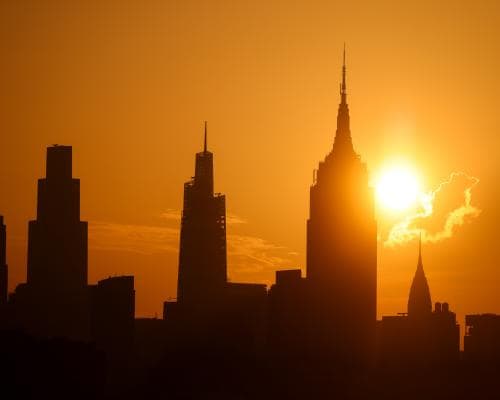
The numbers are brutal. World Weather Attribution just dropped a bombshell: the heat dome smothering the central and eastern US is a 1-in-200-year event—but one that would have been "virtually impossible" without the 1.4°C of warming caused by fossil fuels. In other words, the statistical playbook the wealthy use to model risk is now outdated. The same heat that's threatening to cancel World Cup matches in Philadelphia and Miami is also baking the foundations of the American wealth machine.
Let's talk mechanics. This isn't just about uncomfortable afternoons. The heatwave is hitting the US capital during the 250th anniversary celebrations—a massive concentration of high-net-worth individuals, government officials, and corporate sponsors. When the mercury soars in Washington DC, it doesn't just spoil parades. It disrupts supply chains, strains energy grids, and triggers insurance claims on everything from outdoor venues to luxury hospitality. The global players' union has already warned that extreme heat should trigger match delays—a signal that liability and operational risk are moving up the agenda for sports investors and stadium owners.
For the billionaire class, the signal is even sharper. Consider the asset classes that built American fortunes: coastal real estate, agricultural land, energy infrastructure, and municipal bonds tied to stable tax bases. Each is now being repriced by climate models that say "rare" is the new normal. The ultra-wealthy are already moving capital into climate-adaptive infrastructure—think desalination plants, hardened data centers, and farmland in northern latitudes. But the real play is in fixed income: municipal bonds from cities like Miami and Houston are starting to carry a climate risk premium, even as yields compress elsewhere.
The heritage angle is critical here. The Declaration of Independence was signed in a climate that no longer exists. That's not poetry—it's a portfolio problem. Family offices that manage multi-generational wealth are now asking: how do you preserve capital when the physical environment your assets depend on is shifting faster than any 10-year bond cycle? The answer, increasingly, is a mix of catastrophe bonds, parametric insurance, and direct investment in climate resilience. But the market for these instruments is still thin—and that creates opportunity for those who move first.
What this signals for markets is a slow-motion repricing of risk that most investors are still ignoring. The S&P 500 barely flinched at this heatwave, but the private wealth desks are watching the insurance-linked securities market like hawks. When a 1-in-200-year event becomes a 1-in-10-year event, the cost of capital goes up for entire regions. The wealthy are already hedging—not against a crash, but against a slow bleed of asset values in the Sun Belt and agricultural heartland.
The forward-looking close is this: the next great wealth transfer won't just be from boomers to millennials. It will be from assets that were built for a stable climate to those designed for a volatile one. The smartest capital isn't just multiplying—it's protecting itself against a heatwave that history books will call the moment the weather became a balance-sheet item. The question for every wealth builder reading this: is your portfolio built for the climate your grandfather knew, or the one your grandchildren will inherit?