A Bold Experiment in Kindness: The University of Michigan Ditches Grades to Save Freshmen
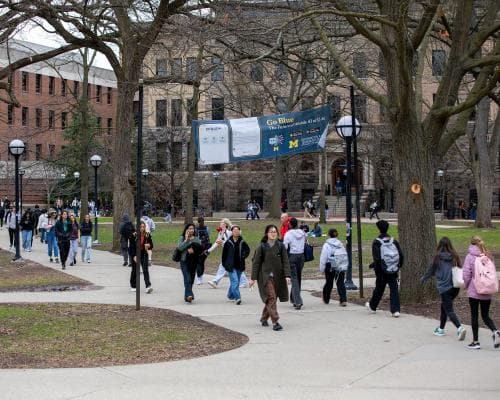
It’s 8 a.m. on a Tuesday, and a freshman at the University of Michigan is staring at a syllabus, heart racing. They’re not worried about the reading load—they’re worried about the GPA. What if they stumble? What if they’re not as smart as everyone else? That fear, shared by millions of college students across America, is exactly what the University of Michigan is trying to kill—not with therapy dogs or mindfulness apps, but by dismantling the very system that fuels the anxiety: the letter grade.
In a move that has stunned higher education, the University of Michigan’s College of Literature, Science, and the Arts (LSA)—the school’s largest and most prestigious undergraduate division—announced it will switch to a pass/no credit grading system for all first-semester students, starting this fall. No more A’s, B’s, or C’s. No more GPA panic. Just “pass” or “no credit,” with a transcript that tells a story of learning, not ranking. As Dean Rosario Ceballo put it, the goal is to “curb the mental health crisis unfolding among college-aged individuals” and to foster “a culture of connection and collaboration—rather than competition.”
This isn’t a gimmick. It’s a radical act of institutional philanthropy—giving students the gift of psychological safety when they need it most. The data backs the move: the 2024-2025 Healthy Minds Study, which surveyed over 135 colleges and universities, found that while severe depression rates have dipped to 18% (from 23% in 2022) and suicidal ideation has fallen to 11% (from 15%), those numbers are still terrifying. One in five college students reports severe depression. One in nine has thought about suicide. The University of Michigan is saying: enough. We’ll change the system, not just the support services.
The mechanics are simple, but the implications are profound. Under the pilot, first-year students in LSA will have their transcripts show only “pass” or “no credit” for all courses in their first semester. No GPA, no class rank, no honors list. The idea, as LSA Associate Dean Timothy McKay explained, is to give students “a smooth on-ramp” from high school to the rigors of a top-tier research university—a chance to refine study skills, build momentum, and, crucially, to let “intrinsic motivations guide personally meaningful academic journeys.”
The move has sparked a national conversation. Some critics worry that pass/fail will water down academic standards or that it will hurt students competing for competitive internships or graduate school spots. But the University of Michigan is not alone. The California Institute of Technology, Swarthmore College, Wellesley College, and MIT have all experimented with variations of this approach, and the evidence is growing that the benefits outweigh the risks. When students aren’t terrified of failing, they take more intellectual risks, collaborate more openly, and actually learn more deeply.
What makes this particularly philanthropic is that it’s a gift to the most vulnerable members of the academic community—first-year students, who are navigating a new environment, often far from home, while grappling with the transition to adulthood. By removing the threat of a bad grade, the university is saying: we trust you to learn, and we care more about your well-being than our prestige. That’s a powerful message, and it’s one that could reshape the culture of giving in higher education—where the most valuable donation isn’t always a building or an endowment, but a change in policy that puts students first.
For the rest of us, the University of Michigan’s experiment is a reminder that true generosity often means giving up control. It’s an invitation to rethink what we value: not the grade, but the growth; not the ranking, but the resilience. If this pilot succeeds, don’t be surprised to see other universities follow suit—because the most impactful philanthropy isn’t just about writing checks. It’s about changing the system so that the next generation can breathe.