The New East End: Brick Lane's Data Cathedral and the Battle for London's Soul
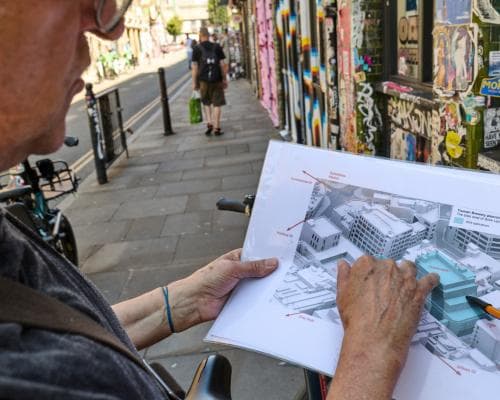
In the tangled warren of Brick Lane, where the scent of cumin and cardamom still clings to the air after dawn, a different kind of incense is about to rise: the low, constant hum of server fans. The housing secretary has just waved through a £500m redevelopment of the old Truman Brewery estate, and with it, a datacentre — a vast, energy-guzzling cathedral of the digital age — will take root among the curry houses and vintage clothes stalls. For the ultra-wealthy, this is a masterclass in how London's most storied square mile is being quietly rewired, not for people, but for the cloud.
The decision, delivered by the housing minister on behalf of Angela Rayner, overruled Tower Hamlets council and a coalition of nine local groups who had fought for the site to become 350 much-needed homes. Instead, the plan delivers six new blocks, offices, a cinema, galleries, a food market — and just 44 apartments. The rest is data. The Save Brick Lane coalition called it a 'slap in the face' for local democracy, and they're not wrong. But for the discerning traveller, this is a rare glimpse into the new geography of power: where the world's most valuable commodity isn't gold or oil, but the invisible infrastructure that stores your every digital footprint.
Let's walk the site as a luxury traveller would, because the developers clearly intend it to be a destination. The Truman Brewery, with its peeling brick facades and graffiti-scarred walls, has long been a pilgrimage site for the creatively inclined. The new masterplan preserves that gritty charm, slotting in a cinema, exhibition halls, and art galleries alongside the datacentre. It's a deliberate aesthetic collision: the old East End's industrial romance against the sleek, windowless anonymity of server housing. Imagine strolling from a private viewing of emerging Bangladeshi artists to a tasting menu in a rooftop restaurant, all while below your feet, millions of terabytes are being processed in a building that hums like a distant tide. It's a strange, surreal luxury — the luxury of being on the winning side of the algorithm.
But here's the rub for those who can afford to notice: this is not a story about technology. It's a story about displacement, dressed in the language of regeneration. Dr Fatima Rajina, of the local group Nijjor Manush, put it with devastating clarity: 'The people who made Brick Lane what it is will be seen as artefacts.' She's right. The very community that transformed this area from a derelict brewery district into London's most vibrant Bengali enclave is now being told, in effect, that their homes are less valuable than a server farm. For the ultra-wealthy, this is a sobering reminder that even the most culturally rich neighbourhoods are not immune to the cold logic of capital. The price of a pied-à-terre here may soon include a view of a building that never sleeps, never blinks, and never asks for planning permission.
The developers, Truman Estates and Zeloof LLP, argue that the scheme will bring jobs and life to the area. The cinema, the food market, the community spaces — these are the sweeteners. But the maths is brutally simple: 44 homes versus 350. The council's own masterplan, adopted in September 2024, would have delivered the latter, but the government said there was 'no detailed evidence' it was feasible. It's a decision that will echo far beyond Brick Lane. For anyone who has ever marvelled at the way a city can reinvent itself — from the High Line in New York to the Battersea Power Station in London — this is a cautionary tale about what gets lost when we prioritise efficiency over people.
So what does this signal for the future of luxury travel and urban exploration? The wealthy don't just visit cities; they collect them. And increasingly, they're seeking out the raw, unpolished edges before they vanish. Brick Lane, with its beigels and its Bengali sweet shops, is already on that list. But the new Brick Lane will be a different kind of destination — a place where you can watch the digital economy's heart beat, while the human one grows fainter. For the truly discerning, the next great expedition isn't to the Arctic or the Amazon; it's to the neighbourhoods where the battle for authenticity is being fought in real time. And you'd better go soon, before the only thing left to see is the server room.
In the end, this is a story about power — who holds it, who wields it, and who gets erased by it. The datacentre will be built, the offices will fill, and the 44 lucky residents will have a front-row seat to the future. But the families who made Brick Lane a global icon? They'll be watching from the outside, perhaps through the glass of a restaurant they can no longer afford. For the luxury traveller, that's the most valuable souvenir of all: not a trinket, but a question. What is a city worth if it forgets the people who built it? And where do we go next, when even our memories are being stored in someone else's cloud?