The Island of Grief and Grace: Where a Summer Cottage Becomes a Sanctuary
There is a particular kind of silence that settles over the Finnish archipelago in late summer—not the silence of absence, but of presence. It is the sound of wind combing through pine needles, of water lapping against granite smoothed by ten thousand winters, of a wooden door creaking open to reveal a world where time moves at the pace of the tide. This is the world that Tove Jansson, the beloved creator of the Moomins, captured so achingly in her 1972 novel *The Summer Book*, and it is the world that now comes to life on screen, with Glenn Close as its fierce, barefoot matriarch. The film is a meditation on grief, yes, but it is also a love letter to a very specific kind of place—a tiny island in the Gulf of Finland, where a family’s summer cottage is not a second home but a first truth.
For those who travel not to escape life but to encounter it more fully, the archipelago of Finland offers a rare, unmediated luxury. Here, there are no five-star spas or infinity pools; the only indulgence is the luxury of solitude, of being utterly unobserved. The island in the film—a fictional stand-in for the one Jansson knew intimately—is the kind of place where the wealthy, in their quietest moments, dream of going: a private rock in a cold, clear sea, accessible only by boat, where the nearest neighbor is a lighthouse keeper and the only sound at night is the groan of the Baltic wind. It is a destination that asks nothing of you except that you be present, and that, perhaps, is the most opulent gift of all.
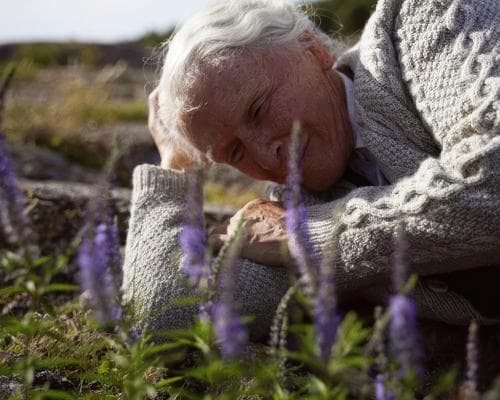
Close, with her makeup-enhanced grandmotherly face and a cigarette perpetually at hand, embodies this ethos of unadorned authenticity. She is tough, wise, and gloriously cantankerous—a woman who walks around naked when no one is looking and tells her six-year-old granddaughter, Sophia, the unvarnished truth about death, love, and the sea. The performance is a masterclass in the art of being, not doing. And it is the island itself that enables this. The cottage, with its peeling paint and wood stove, is a character in its own right—a place where the family’s grief can breathe, where the son (a quietly suffering Anders Danielsen Lie) can retreat into his sadness, and where the grandmother can take on the burden of simply being there, offering Sophia not platitudes but stories, not comfort but companionship.
The film’s climax arrives with a storm, as all good island stories must. The family’s boat trip to the nearby Söderskär lighthouse becomes a rite of passage, a test of their fragile bonds against the elements. It is a scene that will resonate with anyone who has ever stood on a windswept quay, watching the sky turn the color of bruised plums, and felt the thrilling, terrifying smallness of being human. For the traveler, it is a reminder that the most profound journeys are not measured in miles but in moments of vulnerability. The luxury here is not in the destination but in the permission to feel—fully, messily, and without the usual distractions of modern life.
This is the quiet revolution of luxury travel in the post-pandemic era. The ultra-wealthy, who once chased the glitter of St. Barts and the crowds of Capri, are now seeking the opposite: places that offer not more, but less. Less noise. Less expectation. Less everything. The Finnish archipelago, with its thirty thousand islands and a population that thins dramatically in winter, is becoming a refuge for those who can afford to rent an entire island for a month—or a summer—and live, for a time, like Jansson’s characters. It is a trend that mirrors the rise of the “northern retreat,” from the Scottish Highlands to the Norwegian fjords, where the true extravagance is the absence of other people.
And yet, there is a poignancy in this solitude that the film captures beautifully. The island is not a playground; it is a mirror. It reflects back whatever you bring to it—grief, joy, or the quiet hope that, like the grandmother, you can be unsentimentally present for someone else. For the discerning traveler, the lesson is this: the most luxurious destination is not the one with the most amenities, but the one that offers the deepest connection to the self, to family, and to the elemental world. The Gulf of Finland, with its stark, granite beauty, offers exactly that. It is a place where the wealthy go not to be seen, but to see—themselves, their loved ones, and the vast, indifferent, and ultimately healing sea.