The Pig at the Market: A Cévennes Encounter
The Cévennes in southern France is not the kind of place you rush. It is a landscape of granite ridges and chestnut forests, where the air smells of thyme and the roads unspool like ribbons dropped by a careless god. I came here with my family, a motley crew of divergent interests, to wander the region’s storied markets. But the real expedition, the one that would define the trip, began with a text: “THERE’S A PIG THERE’S A PIG.”
It was a market like any other in this part of the world, piled high with the detritus of centuries—giant Victorian scissors, tomatoes shaped like hearts, 70s airline trays, and carafes for Ricard so numerous they could have provisioned a fleet of pastis-drinking sailors. My brother could lose an hour talking about a cheese cloche, my sister amasses fonts that are also on a computer, and my nieces treat every object as a potential treasure. We had long ago accepted that we would conduct most of the expedition solo, each disappearing into our own rabbit holes of curiosity. But then I saw the pig.
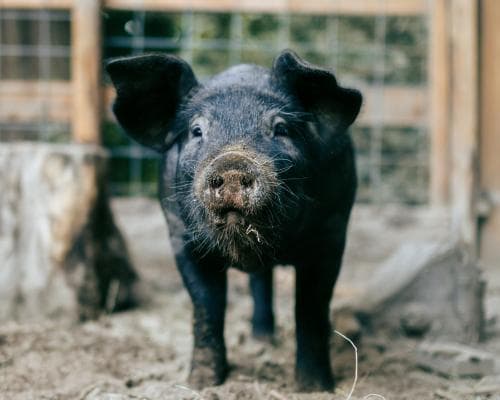
It was black, about the size of a short-legged pug, and it lay on its side, snorting with joy as a stallholder scratched its belly. The pig belonged to a woman selling sweets to raise money for an animal shelter, and it was, she made clear, not for sale. That did not stop my sister from sneaking a kiss, nor my niece from buying lemon-and-honey sweets as a cover for her own fascination. The pig was the gravitational centre of the market, a living, breathing reminder that the most luxurious travel experiences are rarely planned.
In a world where the ultra-wealthy can buy access to anything—private islands, Michelin-starred chefs, front-row seats at the Met Gala—there is something profoundly subversive about a pig that cannot be bought. It is the ultimate exclusivity: a creature that simply refuses to be commodified. The woman at the shelter was not playing hard to get; she was simply stating a fact. The pig was not for sale, and that was that. In that moment, the market became less a place of commerce and more a theatre of desire, where the only thing money couldn’t buy was the thing everyone wanted.
The Cévennes, with its patchy 5G and its insistence on slowness, is a destination that rewards the patient traveller. It is not the Riviera, with its yachts and champagne; it is a place where you might spend an afternoon arguing with a stallholder about the merits of a cast-iron pan, or texting your daughter a picture of a pig while simultaneously Googling whether teacup pigs make good pets. (The answer, for the record, is complicated—they grow, they root, they need space, and they are not toys. But they are, as I discovered, excellent at anchoring a holiday.)
For the discerning traveller, the Cévennes offers a kind of luxury that is increasingly rare: the luxury of not having an agenda. There are no five-star resorts here, no helipads, no concierge waiting to arrange a private tasting. Instead, there is the quiet pleasure of a market where the most valuable item is a pig that will not be sold, and the most memorable souvenir is a story about a sister who kissed it. It is a reminder that the best journeys are not about where you go, but about what you find when you get there.
As the wealthy look for their next frontier, they are increasingly turning away from the predictable and toward the authentic. The Cévennes, with its rugged beauty and its refusal to perform for tourists, is exactly the kind of place that appeals to those who have seen it all—because here, you can see something that cannot be bought. You can scratch a pig, share a laugh with a stranger, and leave with nothing but a bag of lavender pastilles and a story that will outlast any souvenir. That, perhaps, is the true luxury: not owning the moment, but being present for it.