The 15-Meter Warning: Why the UK's Coastal Future Demands a Billionaire-Backed Geoengineering Bet
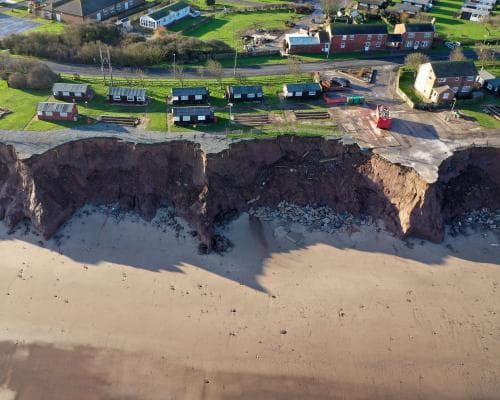
Imagine London under 15 meters of water. The Thames Barrier, a marvel of 20th-century engineering, becomes a useless trinket. The Houses of Parliament, the Shard, Canary Wharf—all submerged. This isn't dystopian fiction. It's the "reasonable worst-case scenario" laid out in a new Nature Communications study, which warns that up to 13 million people in the UK face long-term coastal flooding risk. The culprit? Not just gradual sea-level rise, but the terrifying possibility of runaway ice-sheet collapse in Greenland and Antarctica. For the deep-tech desk, this isn't a policy memo. It's a market signal—a massive, unhedged liability that demands a technological response far beyond what current climate pledges can deliver.
The study's numbers are brutal. Even if today's carbon pledges are met, about 1.4 million more people will face coastal floods by 2200, and 1.7 million by 2300. Sea levels around the UK have already risen 20cm in the last century, and another 40–60cm by 2100 is locked in. That alone puts half a million additional homes at risk, on top of the 2.5 million already vulnerable. But the real kicker is the post-2100 acceleration. If ice sheets begin a runaway collapse—melting not slowly in place but sliding into the ocean en masse—the UK could see 15 meters of sea-level rise by 2300. That's not a slow creep. That's a geological event happening on a human timescale. The researchers are blunt: planners who only look to 2100 have a "false impression of the true risk landscape."
This is where the innovation story gets interesting. The traditional response—build higher sea walls, relocate populations—is politically toxic and economically staggering. Relocating millions from Lincolnshire, the Humber estuary, and parts of London would cost trillions and take generations. But deep-tech offers a different path. Think of it as a three-layer bet: first, accelerated carbon removal to slow the warming that drives ice melt. Second, advanced coastal engineering—not just walls, but floating cities, adaptive barrier systems, and even artificial reefs that grow with the sea. Third, and most audaciously, geoengineering interventions to stabilize ice sheets themselves, such as pumping seawater onto ice shelves to freeze and buttress them, or deploying reflective materials to reduce solar absorption. These are not pipe dreams. They are projects that require the kind of capital, risk tolerance, and long-term vision that only billionaires and sovereign wealth funds can provide.
The competitive landscape is already forming. On one side, you have the traditional defense contractors—Bechtel, AECOM—pitching massive infrastructure projects. On the other, a new wave of climate-tech startups like Ocean-Based Climate Solutions and Arctic Reflections are experimenting with ice sheet stabilization and marine cloud brightening. The capital flow is shifting: Breakthrough Energy Ventures, Bill Gates's climate fund, has already backed several carbon removal plays, but the ice-sheet intervention space remains largely untapped. That's a vacuum. And vacuums in deep-tech tend to attract the boldest bets—think Elon Musk's Starlink for connectivity, but for planetary defense. The UK government's own Climate Change Committee has warned that current adaptation plans are "woefully inadequate." That gap is an invitation.
What does this signal for the sector? First, the timeline for climate adaptation is expanding beyond 2100, which changes the risk-reward calculus for long-duration capital. A 50-year bond doesn't cover a 2300 liability, but a billionaire's foundation or a permanent capital vehicle does. Second, the convergence of AI-driven climate modeling, materials science, and robotics makes previously impossible interventions feasible. Third, the sheer scale of the liability—trillions of pounds in insured assets, not to mention cultural heritage—creates a powerful incentive for governments to subsidize R&D. We're likely to see a new asset class emerge: "adaptation bonds" tied to specific geoengineering milestones.
The bottom line is this: the UK's coastal future is not a slow-motion disaster. It's a design problem. And the most interesting design problems attract the most interesting people. The billionaires who built the space industry and the AI revolution are now looking at the planet's most stubborn physical challenges. The 15-meter warning is not just a threat. It's a call to build something that has never been built before. The question is not whether someone will answer that call. It's who will be first, and whether they can move fast enough to keep London dry.