The Billion-Dollar Revolt: Why AI’s Architects Are Demanding a Seat at the Table
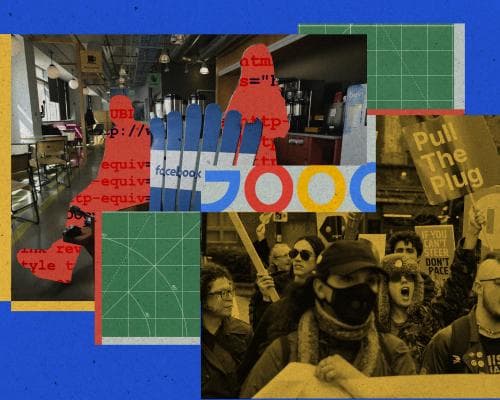
Picture this: You’re the architect of a machine that could replace a thousand workers overnight. Your stock options are golden, your campus has a cold-brew tap, and your boss wears sneakers to the boardroom. You have everything—except control. That’s the paradox haunting the ultra-wealthy engineers of Silicon Valley. They built the algorithms that are now rewriting the rules of labor, and they’re discovering that the ultimate luxury isn’t a private jet or a Napa vineyard. It’s a voice.
For decades, tech was the one industry unions couldn’t touch. Why would they? Engineers had unlimited vacation, free sushi, and a flat hierarchy where a 25-year-old coder could out-earn a VP. But that fortress is cracking—from the inside. After waves of mass layoffs tied directly to artificial intelligence, workers at Google DeepMind and Meta in the UK are doing something unprecedented: they’re organizing. They’re not fighting for better coffee or a ping-pong table. They’re fighting for a say in how their own creations are used—whether for military surveillance, employee tracking, or cutting their colleagues’ jobs. The numbers are stark: union actions at Alphabet doubled in 2025, and a petition for job security at Google garnered 4,500 signatures in a single week. The era of the silent builder is over.
What’s driving this shift? It’s not just fear of obsolescence—it’s a crisis of conscience. These are the people who designed the very tools that now monitor their keystrokes and decide their workloads. A Meta employee involved in a recent UK union drive put it bluntly: “It’s about us having a voice in all of the operations of the company, from products to employee experience.” That’s a stunning admission from a workforce that once prided itself on being above the fray. The craftsmanship of their work—the elegant code, the neural networks, the trillion-parameter models—has always been a badge of honor. Now, that badge feels heavy. They want to ensure their legacy isn’t just efficiency, but ethics.
This is a rare moment in the history of wealth and work. For the ultra-wealthy—the founders, the VCs, the family offices that bankroll these giants—this revolt signals a fundamental shift in what power looks like. In the old economy, money bought loyalty. In the new one, it buys surveillance and resentment. The engineers who once felt like owners now feel like tenants. As one anonymous organizer said, “Forming a union is the best way to actually show up as owners, and take our seat at the table.” That’s not the language of a disgruntled intern. That’s the language of a class that knows its worth—and is ready to demand it.
What happens in Silicon Valley rarely stays there. These workers are the canaries in the coal mine for every industry about to be reshaped by AI—from finance to fashion, from law to logistics. If the architects of the future can’t secure a voice, what hope does anyone else have? The luxury market, too, should watch closely. The same desire for agency, for craftsmanship over automation, for human touch over algorithmic efficiency, is already reshaping how the 1% spend their money. Bespoke, not batch. Curated, not computed. The revolt in the server rooms is a preview of a world where the most exclusive thing you can own is control over your own creation.
Looking ahead, the question isn’t whether tech workers will unionize—it’s how fast. The Alphabet Workers Union now represents over 1,400 people across Google, YouTube, and Waymo. Meta, Google DeepMind, and others are in the early stages of recognition. The companies are talking in careful corporate language—“good faith”—but the momentum is undeniable. For the ultra-wealthy, this is a moment to listen. The people building your future are asking for a seat at the table. If you don’t give them one, they’ll build their own. And that table might not include you.
The Experience
For a private briefing on how AI-driven labor shifts are reshaping the luxury investment landscape, schedule an exclusive consultation with our wealth intelligence team.