The Green Machine That Bleeds Money: Inside Lime’s Billion-Dollar Gamble on Two Wheels
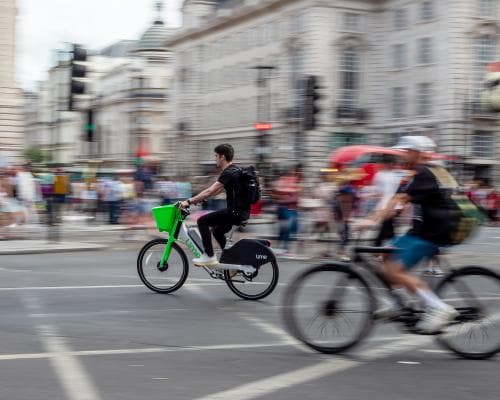
In April, the first of Lime’s signature green e-bikes appeared on the streets of Canberra, Australia’s sprawling capital of roundabouts and government buildings. They looked sleek, purposeful—the kind of silent, electric two-wheeler you’d expect to see leaned against a limestone facade in Palm Beach or parked outside a private club in Mayfair. But before the company had even plugged in a single battery, it had already lost nearly $2 million. That is the paradox of Lime, and it is a fascinating one.
Lime is the world’s most recognizable micro-mobility company, a brand that has become synonymous with the effortless, app-enabled glide of an electric bike. Its vehicles are ubiquitous from Santa Monica to Shanghai, and for the ultra-wealthy traveler, they offer a discreet, zero-carbon way to explore a city without the fuss of a chauffeur or the hassle of a rental car. Yet the financial documents Lime filed with its recent NASDAQ listing tell a different story: one of a business that is, by any traditional measure, bleeding money. The company’s 1,500 Canberra vehicles each cost $1,300 to buy, and that is just the beginning. Lime pays for warehouses, for staff to redistribute scooters each morning, for the app infrastructure, for repairs against vandalism and crashes, and for permit fees to local governments. In return, each vehicle generates just $7.47 per day across Lime’s 230 operating cities. That is the juice, and it is not nearly enough to squeeze.
The numbers are staggering. Lime owes nearly $850 million in debt repayments within the next year, and its path to profitability remains uncertain. A $167 million lifeline from Uber and other investors helped it go public on July 1, but the company has yet to prove it can generate the kind of margins that attract serious capital. Gad Allon, a professor at Wharton, put it succinctly: “They built a very good machine for running scooters before they built an equally good machine for managing the balance sheet.” For the collector or investor accustomed to assets that appreciate—rare Ferraris, first-edition Porsches, vintage Speedmasters—Lime represents the opposite: a depreciating asset that requires constant maintenance and generates thin returns. Yet that is precisely why it fascinates.
What Lime has achieved, despite its financial fragility, is a kind of cultural ubiquity that most luxury brands would kill for. Its bikes are not just transportation; they are a statement. They signal a willingness to engage with a city on its own terms, to move with the flow rather than above it. For the ultra-wealthy, who often experience cities from the back of a black sedan or the balcony of a penthouse, Lime offers a rare intimacy: you feel the street, the breeze, the gradient of a hill. It is the automotive equivalent of a bespoke linen suit—casual, but carefully chosen. The fact that the company loses money on every ride only adds to its mystique. It is a vanity project at scale, a billion-dollar bet that convenience will eventually translate into cash.
In the collector market, where provenance and rarity drive value, Lime’s business model is a cautionary tale. The vehicles themselves are not rare; they are mass-produced and disposable. The value lies in the network, the data, the algorithm that places a scooter exactly where you need it. That is the asset worth watching. As Lime matures, it may pivot toward premium tiers—think subscription services for the frequent rider, or bespoke fleet partnerships for luxury hotels. Already, you can spot Lime bikes parked outside the Four Seasons in many cities. The next step is a white-label service for private estates and gated communities, where the cost of a bike is trivial compared to the convenience it provides.
The future of Lime is not about profitability in the traditional sense. It is about staying alive long enough to become indispensable. For the connoisseur of modern luxury, that is a compelling narrative: a company that loses money but wins the war for attention, that trades in pennies today for pounds tomorrow. The green bikes keep rolling, and the balance sheet keeps bleeding. But for now, the ride is worth it.