The $8 Million Raccoon: How a Ballard Bin-Diver Became the Internet’s Most Coveted Asset
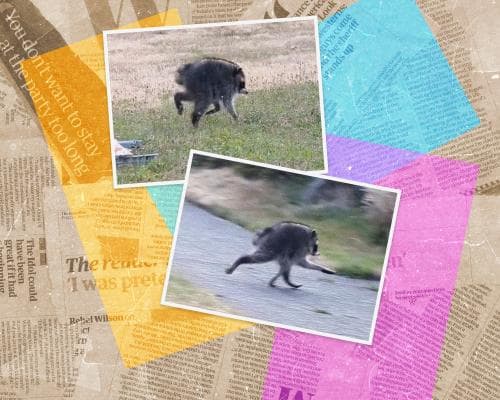
Two weeks ago, he was just a silhouette in a Seattle alley. A round, stumpy shadow with a ringed tail and a knack for trash. Today, Jimothy the raccoon has a mural, a city proclamation, and an Instagram following that would make most luxury brands weep. He has raised $6,500 for charity in a single auction. The Seattle Mariners asked a stadium of 47,000 people to “make noise for Jimothy.” And if you haven’t seen him yet, you will. The algorithm has decided. But here is what the ultra-wealthy understand that the rest of the world is just beginning to grasp: Jimothy is not a viral pet. He is a rarity asset.
Jimothy lives in Ballard, a neighborhood in Seattle where tech money meets Pacific Northwest grit. His body is the result of a rare genetic condition called short spine syndrome—compressed vertebrae that give him a compact, almost sculptural form. He moves like a furry beanbag with ambition. A local woman named Kiana Hall filmed him on her 13th anniversary walk, dubbed him Jimothy on a whim, and posted the clip. In six days, it racked nearly 400,000 likes. At last count, eight million views. The internet doesn’t just love Jimothy. It covets him.
Now, covet is a word we use carefully in this magazine. Covet is what drives a bidding war at Christie’s. Covet is what makes a collector fly across an ocean for a single vintage wine. And covet is exactly what happened when a local artist painted Jimothy’s portrait—a raccoon peeking from behind a bin—and it sold at auction for $6,500. That money went to a food bank, but the signal was clear: Jimothy had crossed from curiosity into collectible. A mural in his likeness now adorns a pottery studio in his neighborhood. The city council will issue an official proclamation celebrating his “majestic” presence. This is not a pet. This is a legacy.
What makes Jimothy different from Grumpy Cat or Tuna the chihuahua is not his condition—it is the speed of his ascent. Grumpy Cat took years to build a licensing empire. Jimothy went from anonymous to icon in fourteen days. That velocity is a kind of wealth in itself. It creates scarcity before the market can catch up. There is no Jimothy merchandise yet. No brand deal. No NFT. The window is still open. And for those who understand how status works in the digital age, that window is the whole point.
The ultra-wealthy know that true exclusivity is not about price tags. It is about timing. It is about being in Ballard on that Tuesday night. It is about knowing the raccoon’s name before the Mariners do. Jimothy represents a new kind of trophy: the viral artifact that has not yet been commodified. He is a reminder that the most valuable things are often the ones you cannot buy—yet. In a world where everyone is chasing the next Birkin or the next Patek Philippe, a round raccoon from Seattle has become the ultimate conversation piece. Not because he is rare. Because he is unrepeatable.
What happens next is anyone’s guess. Jimothy could vanish back into the bins, a glorious flash in the pan. Or he could become the most famous raccoon in American history, with a documentary deal and a line of luxury pet accessories. Either way, the lesson is already written: status is no longer about what you own. It is about what you saw first. And if you missed Jimothy, do not worry. The algorithm will show him to you again. And again. Until you understand that in the economy of attention, the rarest thing is not a diamond. It is a silhouette that stops the scroll.
The Experience
Secure your own piece of the moment by commissioning a portrait of your most distinctive possession from our private art concierge, or book a curator-led tour of Seattle’s emerging digital-art scene before the next Jimothy emerges.