The New Power Brokers: Why Silicon Valley's 'Tech Fascists' Are the Ultimate Status Risk
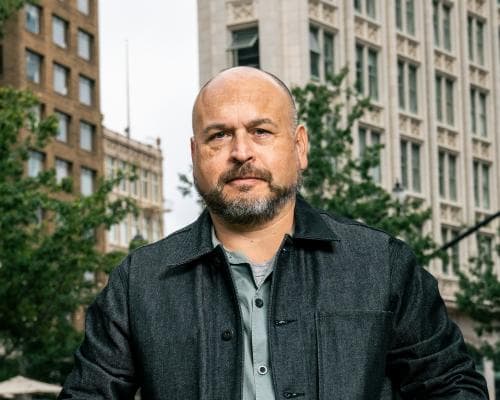
Imagine being banned from the world's most powerful digital town square for uttering two words. Not profanity. Not a threat. Just a sharp, intellectual jab: “TLDR: Fascism.” That's the fate that befell journalist Gil Durán in April, a modern-day exile that would be merely ironic if it weren't so revealing. For the ultra-wealthy, who navigate a world where access is currency and influence is the ultimate asset, Durán's story is a wake-up call. It's a glimpse behind the velvet rope of power, where the tech titans who once promised utopia now wield a control that feels chillingly authoritarian. This isn't about politics; it's about the architecture of influence and the fragility of the platforms we've all come to rely on—and the men who own them.
Durán's crime, if you can call it that, was responding to a 22-point “technological manifesto” from Palantir, the data-mining giant. The manifesto celebrated American “hard power,” AI weapons, and compulsory national service, while denouncing inclusivity. Durán's two-word rebuttal was a masterclass in brevity. But his real offense, he suspects, was his book's cover: “The Nerd Reich: Silicon Valley Fascism and the War on Democracy.” The book's thesis is as provocative as its title: the billionaires of Silicon Valley have abandoned their friendly, hoodie-wearing facades and seized economic and political control, steering the planet toward their own apocalyptic visions. He's not being hyperbolic, he insists. He's studied the definitions of fascism—from Umberto Eco to Robert Paxton—and argues that the MAGA movement, which the tech elite have embraced, fits every criterion. “It's a cult of grievance,” he explains, “that seeks to purge its enemies through absurd propaganda, exploiting fears over law and order and gender and sexuality to install a permanent hierarchy.” And Silicon Valley, he says, is complicit because they've aligned themselves with this movement to gain power.
This isn't conspiratorial paranoia; it's a documented reality. We've all seen the spectacle of Meta, Google, Apple, and Amazon's CEOs lining up behind President Trump at his second inauguration. We've watched Musk's Department of Government Efficiency (DOGE) conduct mass firings of federal employees with the impunity of a sovereign prince. We've read about Palantir's AI-driven surveillance enabling deportations by ICE. This is a cozy relationship, as Durán calls it, where tech titans have helped the Trump family become billionaires through cryptocurrency and have been rewarded with government contracts and a freedom from regulation that would make a robber baron blush. For the ultra-wealthy, this is the new power dynamic: the old guard of industrialists and financiers has been replaced by a new aristocracy of code and compute, whose whims can make or break fortunes and whose reach extends into every corner of our lives.
But what does this mean for you, the connoisseur of fine things, the collector of rare experiences? It means that the concept of “exclusivity” has taken on a darker hue. The same platforms that connect you to your private jet charter or your limited-edition timepiece are now arbiters of truth, where a single post can get you banned without explanation. Durán's ban, which came without violating any of X's written rules, is a stark reminder that the “free-speech absolutism” promised by Musk is a myth. The real currency now is not just wealth but ideological alignment. The craftsmanship and heritage we prize in a Patek Philippe or a bespoke yacht are now mirrored in the careful curation of one's digital presence—and the risk of being muted by an algorithm or a capricious billionaire is a new form of social death. This is the ultimate status risk: not a market crash or a failed investment, but being digitally excommunicated by the very systems that define our modern lives.
So, what's the forward-looking takeaway for the discerning few? The era of the benevolent technocrat is over. The new power brokers are unapologetic in their pursuit of what Durán calls “techno-supremacy”—a belief that technology will solve all problems, provided we eliminate anyone who stands in the way of a glorious, accelerated future. It's a seductive narrative, but one that demands scrutiny. For the ultra-wealthy, whose lives are built on access and influence, the lesson is clear: diversify your platforms, cultivate offline networks, and be wary of those who promise utopia at the expense of liberty. The next frontier of luxury isn't a private island or a space flight; it's the ability to think freely and speak without fear of digital exile. As Durán's story shows, the price of silence is far higher than the cost of speaking out.
For those who wish to engage with this new reality, the invitation is to read Durán's work, to understand the forces shaping our world, and to make informed choices about the technology you embrace. The true luxury is knowledge—and the freedom to use it.
The Experience
To explore the ideas shaping this new world order, secure a private briefing with a leading tech policy analyst or acquire a first-edition copy of Durán's book through a rare-book dealer.