The Skies Over Leipzig: When Critical Infrastructure Becomes a Collectible Concern
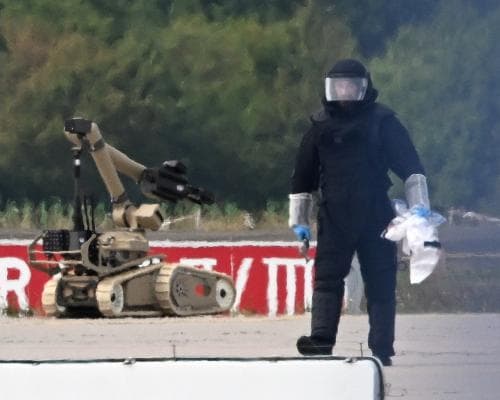
At 2 a.m., when the rest of the world is dreaming of boardroom victories, a night-shift employee at Leipzig/Halle Airport glanced up and saw something that didn't belong—a quadcopter, hovering like a malevolent hummingbird over the cargo zone, its payload glinting with the unmistakable shape of an explosive. It was a scene that could have been lifted from a Le Carré novel, but this was real, and it sent a chill through the corridors of power—not just in Berlin, but in every private aviation lounge from Gstaad to Aspen.
The drone was found near a Ukrainian Antonov cargo plane, one of those behemoths emblazoned with slogans like “Be Brave Like Kherson” and “Be Brave Like Bucha.” The irony is almost too sharp: a machine of war, parked at a hub that moves NATO supplies, became the target of another machine of war. But for the ultra-wealthy, this isn't just a news story—it's a cautionary tale about the fragility of the infrastructure that underpins their lives. When you own a Gulfstream or a Bombardier Global 7500, you don't just buy a plane; you buy a network of runways, fuel depots, and security protocols that must operate flawlessly. Leipzig, a facility classified as “critical infrastructure,” is exactly the kind of place where your jet might touch down for a discreet refueling stop. And now, it's a crime scene.
The incident unfolded with the precision of a thriller: a DHL cargo plane, forced to abort its landing, climbed away and collided with an unseen object—perhaps a second drone, perhaps debris. It landed safely in Hanover, but the damage was done. The Dresden prosecutor’s office and Saxony state police have taken over, and security experts are whispering about Russian involvement. For those who collect aircraft like others collect art, this is a reminder that the sky is no longer a neutral canvas. It's a contested domain, and the cost of entry—both financial and psychological—has just gone up.
What does this mean for the luxury market? Consider the private aviation sector, where a single long-range jet can set you back $70 million, and hangar space at secure airports is becoming as coveted as a penthouse in Manhattan. The incident has already sparked conversations among brokers and wealth managers about the value of airfields with hardened security, redundant radar systems, and counter-drone technology. Some ultra-wealthy clients are now asking their advisors: "Is my private airport on the list?" The answer, more often than not, is a shrug. Because the truth is, no amount of marble flooring or caviar service can protect you from a drone with a grenade taped to it.
But let's step back. For the collector of experiences—the person who owns a yacht, a vineyard, and a vintage car collection—this event is a mirror. It reflects a world where even the most functional elements of life become markers of status and vulnerability. The Antonov planes, with their patriotic decals, are not just cargo carriers; they are symbols of resilience, and they now sit at the center of a geopolitical drama. For the discerning traveler, this adds a layer of complexity to the question of where to land. It's no longer just about runway length or VIP lounges; it's about whether the airspace above you is monitored by people who sleep at night.
Looking forward, the incident will likely accelerate a trend already underway: the privatization of security for the ultra-wealthy. We're seeing a rise in luxury bunkers, secure aviation hangars, and even private airstrips in remote locations, from Montana to New Zealand. The drone attack on Leipzig, if confirmed as a hostile act, will only deepen this appetite. It's a world where the ultimate luxury is not a diamond-encrusted watch but the quiet assurance that your departure and arrival times are not on someone else's radar. For now, the skies over Leipzig are clear, but the questions they raised will linger in the minds of every pilot, every owner, and every collector who understands that the true price of freedom is eternal vigilance.