Tom Hiddleston’s Pompeii: A Curated Descent Into Antiquity’s Most Exclusive Tragedy
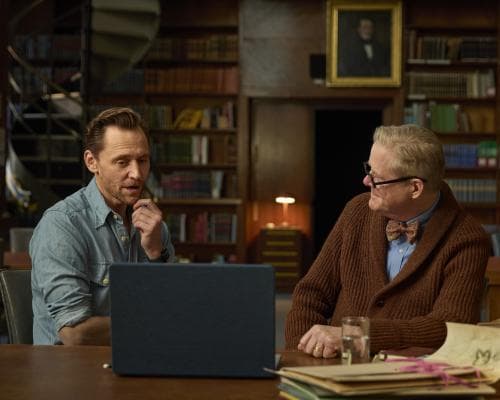
The first thing you notice is the light. It is the same honeyed, volcanic light that fell on Pompeii in August of AD 79, now captured in 4K and filtered through the glass of a private screening room in Belgravia. Tom Hiddleston, the man who once played Loki with a silk cravat and a god complex, stands before a Roman headstone and translates it from the Latin without a teleprompter. He is not just the host. He is the credential. Eton, Cambridge, a double first in classics — the man is a walking exhibition of the sort of education that costs more than most people’s houses. And here, in National Geographic’s *Pompeii: Out of Time* (streaming on Disney+), he uses it to unlock a story that has everything a luxury lifestyle reader craves: provenance, tragedy, and the ultimate scarcity — a moment in time that cannot be replicated.
This is not a documentary for the masses. This is a documentary for the person who owns a first-edition Pliny the Younger, who has stood in the Villa dei Misteri at dawn before the crowds arrived, who understands that the real luxury of Pompeii is not the ash-preserved frescoes but the silence between them. Hiddleston, with his studied vowels and his habit of freezing the frame to rewind the action with a twist of his fingers — “I’ve seen some Avengers movies,” he smirks — turns the excavation into a kind of heist. He interrogates the founder of the Pompeii Survivors Project, throws data into the air where it hovers in transparent panes, and translates the desperate graffiti of people who knew they were about to die. It is a performance, yes. But it is also a procurement. He is curating the end of a world.
The craftsmanship here is not in the CGI, though there is some of that — Vesuvius rendered with the kind of photorealistic violence you expect from a studio that once made *The Rite of Spring*. The real artistry is in the storytelling architecture. Each episode is built around a single human artifact: a loaf of bread, a fresco, a skeleton. Hiddleston uses these as clues, like a detective in a very expensive trench coat. He interviews real scholars, who are forced to address him as “Hiddleston” and issue prim little reprimands when he gets ahead of himself. There is a moment when he translates a Latin headstone and the academic looks genuinely surprised. That is the moment the documentary earns its place on the coffee table. It is not a celebrity tour. It is a collaboration between a man who can read ancient languages and a production budget that can afford to freeze time.
For the collector, the appeal is obvious. Pompeii is the original limited edition — a city frozen in its final breath, never to be reopened. The ultra-wealthy have long coveted its fragments: a carbonised loaf of bread sold at Christie’s in 2018 for £12,500; a fresco of Narcissus went for £1.2 million in 2020. But this documentary offers something rarer: the story behind the object. Hiddleston walks through the ruins with the gait of a man who has been there before, because he has — in his mind, in his books, in the tutorials he took as a scholarship boy at Cambridge. He treats the ash-covered bodies not as horrors but as evidence of taste. These were people who owned villas with private baths, who imported garum from Spain, who died in their finest jewellery. The tragedy is not that they died. It is that they died with such style.
The market for this kind of content is growing. The same people who buy a Bugatti because it is the last of its line, who charter a superyacht to the Bay of Naples because they want to see the sunset where Pliny the Elder saw the cloud, are the people who will watch *Pompeii: Out of Time* and feel a shiver of recognition. This is luxury as mortality — the ultimate hedge against the inevitable. Hiddleston, with his double first and his smirk, is the perfect guide. He knows that the rich do not want to be educated. They want to be reminded that they are already educated. He does not teach. He confirms.
What does this signal about luxury taste in 2025? It signals a shift from acquisition to immersion. The old luxury was owning a Roman coin. The new luxury is understanding what it meant to spend it. Hiddleston’s Pompeii is a portal, not a product. It asks the viewer to sit still, to listen, to let the ash settle. In a world of constant motion, that is the rarest commodity of all. The final shot of the first episode is Hiddleston standing alone in the Forum, the sun setting behind him, the ghost of a city at his feet. He does not say a word. He does not need to. The silence is the point.