The $200 Billion Question: California’s Ultra-Wealthy Face a Historic Ballot Showdown
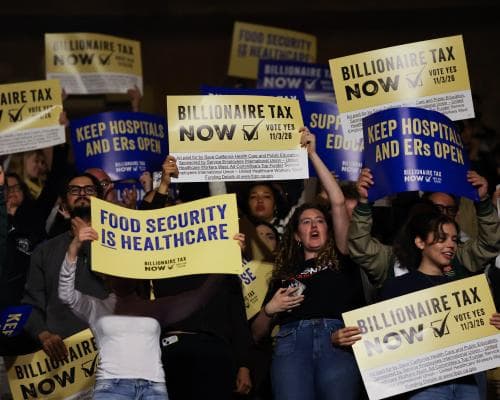
For the world’s most sophisticated wealth architects, the conversation has shifted from portfolio optimization to existential strategy. This November, California’s 200-plus billionaires—a cohort that includes tech titans, hedge fund legends, and real estate dynasties—will face a ballot measure that could redefine the cost of domicile for the ultra-wealthy. The California Billionaire Tax Act, a one-time 5% levy on net worth exceeding $1 billion, has cleared every procedural hurdle and will now go before voters. For those who measure their fortunes in nine figures and above, this is not merely a tax policy; it is a referendum on whether the Golden State remains a sanctuary for extreme wealth or becomes a cautionary tale in the annals of high-net-worth migration.
The measure, backed by the Service Employees International Union-United Healthcare Workers West, qualified with over 1.6 million signatures—more than double the required threshold and one of the highest totals in state history. The proposal targets approximately 200 individuals, each holding a net worth of $1 billion or more, and would generate an estimated $20 billion annually for healthcare, education, and food assistance. The deadline for a legislative compromise passed without a deal with Governor Gavin Newsom, who has expressed concern about capital flight. Silicon Valley’s most prominent figures—including Peter Thiel, Chris Larsen, Eric Schmidt, and Sergey Brin—have already poured tens of millions into opposition campaigns. For the billionaires of California, the ballot box has become the ultimate boardroom.
What makes this moment extraordinary is not just the dollar figure but the rarity of a direct wealth tax in a major U.S. state. Unlike income or capital gains taxes, which can be managed through trusts, offshore structures, or strategic timing, a net-worth tax is a blunt instrument. It assesses the full value of assets—from private equity stakes and real estate portfolios to art collections and vintage car fleets—without regard to liquidity. For a tech founder sitting on $50 billion in unvested stock, the tax could force a sale of treasured holdings: a Malibu compound, a Gilded Age painting, a stable of thoroughbreds. The craftsmanship of wealth preservation has never required more precision.
This ballot initiative signals a profound shift in the luxury market’s gravitational center. California has long been the epicenter of American wealth creation, home to Silicon Valley’s venture capital corridors, Beverly Hills’ haute couture boutiques, and Napa Valley’s private wine caves. A 5% wealth tax could trigger an exodus of capital to states like Texas, Florida, or Nevada—jurisdictions that have already lured hedge fund managers and tech entrepreneurs with zero state income tax. For the ultra-wealthy, the calculus now includes not just the financial cost but the emotional cost of leaving: the private airstrip at Van Nuys, the ocean-view estate in Montecito, the members-only club in San Francisco. Taste, in this context, is measured by how gracefully one navigates the tension between civic obligation and personal legacy.
Looking forward, the November ballot represents a bellwether for wealth taxation globally. If California—the world’s fifth-largest economy—passes a billionaire tax, it could embolden similar measures in New York, Illinois, and even European capitals. For the ultra-wealthy, the response is already being crafted: accelerated philanthropy, family office restructuring, and the quiet acquisition of second passports. The true luxury, after all, is not the asset itself but the freedom to choose where and how it is held. As the campaign unfolds, the most discerning billionaires will watch not with alarm but with the same strategic calm they apply to any market disruption. For them, this is not a crisis; it is a recalibration.
The Experience
Secure a private consultation with a wealth migration strategist through our concierge desk, or book a curated tour of tax-friendly estate properties in Palm Beach and Jackson Hole.
More in INNOVATION

The $1.3 Trillion Exodus: How America’s Community Bankers Are Fighting to Keep Rural Wealth From Vanishing Into Crypto’s Black Hole

The Next Frontier in Crypto Crime: Predatory Seed-Phrase Recovery Scams Signal a Darker Fintech Underbelly

The Sovereign Mind: OpenAI’s GPT 5.6 Sol and the New Geometry of Power