The Art of the Cool: Dressing for the Office When the World Is on Fire
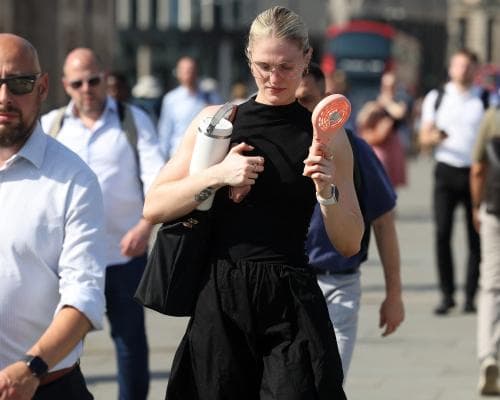
The corner shop has run out of fans. Bed sheets, in a patchwork of desperation, are taped to windows. And in the freezer aisle, people linger as if waiting for a revelation. This is not a scene from some distant, dystopian novel—it is a London heatwave, 36°C and climbing, with wildfire alerts and the kind of humidity that turns a suit into a sauna. For the rest of the world, this is a crisis. For the readers of The Curated Life, it is a test of taste.
Let’s be clear: the office is not a deckchair. That beach dress you wore to Mykonos? Leave it. The Paul Mescal short shorts that have become a meme of millennial rebellion? Absolutely not. The challenge is not about dressing for the heat—it is about dressing for the office while the heat tries to dissolve your dignity. The ultra-wealthy have long understood that true luxury is invisible. It is the weight of a perfectly cut linen blazer that breathes like a whisper. It is the crisp, unbuttoned collar of a cotton-poplin shirt from a Neapolitan tailor who still uses mother-of-pearl buttons. It is the absence of sweat stains, not because you don’t sweat, but because the fabric was engineered to wick before you even felt the drop.
The trick is to treat the heatwave as a design problem. Start with fabric: linen, seersucker, and high-twist cotton are not just materials—they are technologies. A bespoke linen suit from Anderson & Sheppard, for instance, can cost upwards of £4,000, but it will never cling, never wrinkle in a way that looks careless, and will drape with the kind of ease that suggests you own the room, not the other way around. For women, a silk crepe dress in a neutral tone—think sand or dove grey—worn with low-heeled mules and a single gold cuff, signals authority without shouting. The goal is to look as if you have just stepped out of an air-conditioned car, not a steam bath. And yes, that means investing in a proper leather loafer—no open toes, no flip-flops, no matter how hot it gets. The office is still the office.
In the world of high-net-worth collectors and connoisseurs, the heatwave has quietly reshaped the market for summer tailoring. Savile Row houses report a surge in orders for unlined jackets and quarter-lined suits, with clients requesting tropical-weight wools and double-faced cottons that can be worn without a tie. The price of a single custom blazer from a house like Huntsman or Gieves & Hawkes now starts at £5,000, and waitlists stretch into months. But for those who can afford it, the payoff is not just comfort—it is a signal of discernment. You are not dressing for the weather; you are dressing for the moment, with the knowledge that your clothes were built to withstand it.
What does this say about luxury taste in an era of climate extremes? It says that the truly sophisticated do not panic. They do not abandon their standards because the mercury rises. Instead, they invest in pieces that perform—garments that are as much about engineering as they are about elegance. The collector who owns a vintage Patek Philippe does not wear it to the beach; the aesthete who owns a bespoke linen suit does not wear it to a backyard barbecue. There is a time and place, and the office during a heatwave demands a specific kind of restraint. It is the restraint of the connoisseur who knows that less is more, that a single, flawless piece of clothing is worth a hundred trend-driven mistakes.
Looking forward, the heatwave is not an anomaly—it is the new normal. And as temperatures climb, the definition of office dressing will continue to evolve. But the principles remain timeless: quality over quantity, comfort over flash, and the quiet confidence of knowing that you have dressed for the occasion, not the emergency. Leave the short shorts at home. The office, after all, is still the place where fortunes are made—and where the way you dress is the first thing people notice, even before you speak.