The Rivalry That Roars: England vs. Argentina, Revisited Through the Eyes of Those Who Lived It
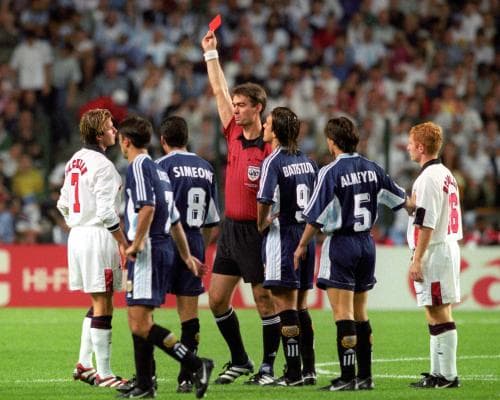
Diego Simeone rolls up his trouser leg and points to a pale, jagged line on his shin. ‘I’ve still got a souvenir from Stuart Pearce from that day,’ he says, almost fondly. The scar is a quarter-century old, a memento from a 1991 friendly at Wembley. But for Simeone, it’s not a mark of pain; it’s a badge of honour from the only trans-continental derby in football. England vs. Argentina is not just a match. It is a collision of histories, a theatre of cunning and courage, and—as the Atlético Madrid coach puts it—‘the best international match I’ve played in.’
We are sitting in the sun-drenched living room of Simeone’s Rome villa, a few weeks before the 2002 World Cup clash between the two nations. His wife, Carolina, brings espresso in demitasse cups. The air smells of jasmine and leather. Simeone, then still in his playing prime, is relaxed, almost philosophical. But when the conversation turns to England, his eyes sharpen. ‘I love playing against the English,’ he says. ‘English football is always more open, aggressive and passionate. Whether you win or lose, you always feel it’s been a proper contest.’ It is a sentiment that echoes through the generations—from the British invasions of 1806 and 1807 to the Hand of God and the boot of David Beckham.
The 1998 World Cup last-16 match in Saint-Étienne remains the rivalry’s defining modern chapter. Simeone remembers it not for the controversy—the flick of Beckham’s foot, the theatrical fall, the red card—but for its ferocious beauty. ‘England were incredible that night,’ he says. ‘Alan Shearer and Paul Ince were extraordinary. At times, it felt like a war.’ And yet, there is no malice in his recollection. ‘Knocking you out was a huge joy,’ he admits with a grin. ‘But it was joy born of respect. We knew we had beaten something special.’ That match, which Argentina won on penalties after a 2-2 draw, is still studied in coaching clinics for its tactical swings and emotional intensity.
For collectors of football’s great narratives, this rivalry is the ultimate limited edition. It is not about trophies alone—it is about history, identity, and the kind of visceral drama that money cannot buy. The 1998 match alone has spawned books, documentaries, and a permanent place in the cultural memory of two nations. Simeone’s scar, the red card, the penalty shootout—these are artefacts of a contest that transcends sport. ‘The first time I played against them was at Wembley in 1991,’ he says, tapping the scar. ‘Great game. Proper football.’
What does this rivalry signal about taste in the luxury of experience? It reminds us that the finest things in life are rarely comfortable. They are hard-won, layered with nuance, and often leave a mark. The ultra-wealthy who collect vintage Ferraris or first-edition books understand this: rarity is not just about scarcity, but about story. England vs. Argentina is a story that keeps writing itself. Simeone, now a legend on the sideline, still carries it on his shin.
As we finish our coffee, he looks out at the Roman hills. ‘We will meet them again,’ he says quietly. ‘And it will be beautiful again.’ The rivalry endures—not because of the politics, but because of the passion. For those who understand the value of a proper contest, there is nothing more aspirational than that.