The Manchester Mandate: How Andy Burnham Is Rewriting the Rules of British Power
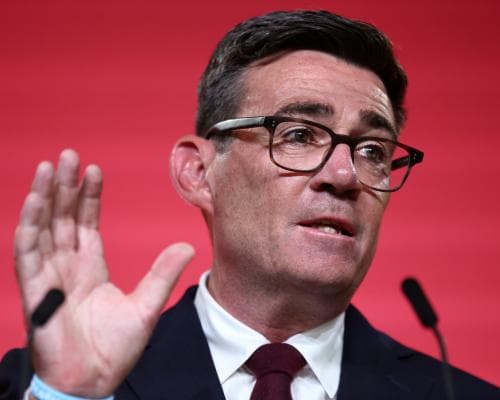
Picture this: a prime minister who doesn’t work from Downing Street. Instead, his command centre is a glass-walled hub in Manchester, flanked by old cotton mills turned into tech incubators. That’s the vision Andy Burnham is selling to a Britain fractured by decades of centralised wealth. For the ultra-wealthy, this isn’t just policy—it’s a signal. The country’s most powerful address is no longer a London townhouse. It might soon be a penthouse in Spinningfields.
Burnham enters No. 10 with a mandate that sounds almost heretical to the old guard: “good growth in every postcode.” He’s promising the biggest rebalancing of power Britain has ever seen. The numbers are stark. The UK is the most centralised G7 nation for tax and spending. Economic inequality between London and the rest is among the worst in the developed world. Burnham’s answer? Devolution on steroids. He’s handing tax powers to regional leaders, moving a chunk of the civil service north, and betting that Manchester’s revival—dubbed “Manchesterism”—can be replicated from Newcastle to Cornwall.
But here’s where it gets interesting for anyone with a portfolio. Burnham isn’t romanticising the past. He’s not trying to reopen steel mills or cotton factories. The city’s success story was built on private investment in knowledge-intensive services—finance, tech, biotech. Think of it as a bespoke suit: you don’t weave the cloth yourself; you pay a Savile Row tailor to cut it perfectly. The same logic applies to reindustrialisation. Burnham wants to safeguard sovereign manufacturing in steel, defence, and energy, but he’s savvy enough to know that Britain’s comparative advantage lies in services. The trick is to weave the two together—high-end manufacturing for defence, say, paired with AI-driven logistics.
For the discerning collector of influence, this is a rare moment. Burnham’s plan is a masterclass in exclusivity—not of goods, but of opportunity. The OECD just backed his approach, noting that devolution could unlock growth in underperforming regions. That means prime real estate in places like Leeds, Birmingham, and Glasgow is suddenly undervalued. The smart money is already moving: private equity firms are circling regional tech clusters, and luxury developers are eyeing Manchester’s new skyscrapers. Status, in this new Britain, won’t come from a Mayfair address. It will come from being first to a city that’s about to become a power centre.
Craftsmanship here is about policy, not product. Burnham is stitching together skills, infrastructure, and innovation with the precision of a bespoke watchmaker. He’s promised a coherent approach—aligning governance, finance, and training so that a factory in Sunderland and a fintech startup in Bristol can both thrive. The heritage angle is subtle but potent: he’s borrowing from the Victorian era’s civic pride, when Manchester was the world’s workshop. But he’s updating it for a generation that values connectivity over concrete. The price of admission? Patience. This isn’t a quick flip; it’s a long-term play for those who understand that power, like fine wine, improves with the right cellar.
What does this signal about wealth and taste? That the new luxury is optionality. The ultra-wealthy don’t just want a London pied-à-terre; they want a network of homes in rising cities, access to regional investment rounds, and a seat at the table when Burnham’s “northern hub” starts hosting global summits. The old model—buy a country estate, wait for capital gains—feels stale. The new model is active: sponsor a local university’s AI lab, back a regional infrastructure bond, or simply buy the building where the new No. 10 satellite will land. That’s the ultimate trophy asset: a piece of the future.
Looking ahead, Burnham’s biggest challenge is time. He has one term, maybe two, to prove that decentralisation works. If he succeeds, Britain will look less like a crown jewel and more like a constellation—each city a distinct gem, polished by local control. For the reader who values access, the move is clear: start scouting Manchester’s property market now. Attend the next Northern Powerhouse conference. Make friends in Liverpool and Sheffield. Because in five years, the question won’t be “Do you have a place in London?” It will be “Which postcode did you back?”
The Experience
Book a private briefing with our luxury property team to identify emerging regional power hubs—before the market catches on. Contact your concierge for an invitation-only portfolio review.