The Suite Life of a Literary Icon: Istanbul’s Hidden Keys to Agatha Christie’s Fortune
Some cities are bought. Others are earned. Istanbul, however, is a city you inherit—if you know the right keys. For the ultra-wealthy traveler, the sort who has already chartered a Bosphorus yacht and slept in every Sultan Suite from the Ritz to the Raffles, the real currency isn't a marble lobby or a Michelin star. It's a story. And the most coveted story in Istanbul right now isn't about a sultan or a shipping magnate. It's about a woman with a typewriter and a train ticket, who turned a fleeting stopover into the most famous murder mystery of the twentieth century. Agatha Christie's Istanbul is not a destination. It's a secret handshake. And the few who know it—who have stood in the room where she wrote, who have traced the ghost of the Tokatlian's facade—possess something that no credit limit can buy: provenance.
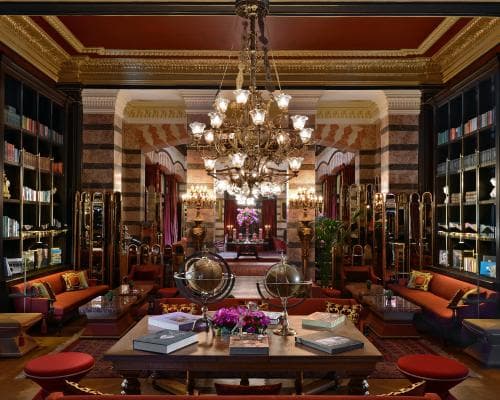
The facts are deceptively simple. Christie first arrived in Istanbul as a solo traveler, her first marriage in shambles, her future uncertain. She stayed at the Pera Palace, the city's grand dame of hotels, and allegedly drafted the outline of *Murder on the Orient Express* in room 411. That suite is now a shrine—an antique typewriter on the desk, first editions on the shelf, a brass plaque with her name. But the city's role in the novel is a masterclass in misdirection. Christie, a welterweight of prose, never lingered on landscape. She gave you a name, a gesture, a clue—and moved on. So it's easy to miss that Istanbul is the hinge of the entire plot: the starting point of the train, the city where Poirot boards, the place where the alibi begins to crack. The Tokatlian, the hotel where Poirot takes his soup and bath before the 9pm departure, is named in the second chapter. It's a blink-and-you'll-miss-it detail, but for the initiated, it's a golden thread. The Tokatlian is still there, its handsome facade carved with its name, though it now houses shops and offices. It stands on a corner of İstiklal Avenue, the pedestrian artery of Beyoğlu, near the Tünel—that Victorian funicular, the second-oldest underground railway in the world. Christie herself spent her first nights at the Tokatlian, and in her autobiography she mentions a nearby backstreet restaurant run by White Russians. That is almost certainly Rejans, now Istanbul 1924, still pouring flavored vodka and serving Russian-inspired food to a loyal crowd.
For the connoisseur of rare experiences, this is the real treasure map. You don't need to be a literary scholar to feel the charge of standing in suite 411, where the air is still thick with the scent of a plot being hatched. The Pera Palace has preserved its fin-de-siècle glamour—the wrought-iron elevator, the marble floors, the hushed corridors—but it's the story that elevates it from a hotel to a relic. And the Tokatlian, though gutted and repurposed, offers a different kind of thrill: the pleasure of archaeological discovery. To stand on İstiklal Avenue and look up at the carved letters, knowing that Poirot once stood there, is to participate in a private joke that only a handful of travelers will ever get. It's the opposite of a guided tour. It's a treasure hunt for the soul.
This is what luxury has become in the twenty-first century. Not acquisition, but access. Not a suite, but the story behind the suite. The ultra-wealthy have already bought the obvious—the private islands, the vintage cars, the haute couture. What they crave now is the intangible: the feeling of being the only one in the room who knows. Christie's Istanbul offers that in spades. It signals a taste that is both literary and worldly, a preference for the quiet thrill of a buried clue over the loud assertion of a logo. It says: I have read, I have traveled, I have noticed. And in a market saturated with identical five-star experiences, that kind of discernment is the rarest currency of all.
The future of luxury travel is not in new destinations. It's in old ones, seen through new eyes. As the Orient Express itself has been reborn as a super-luxury train (with carriages that cost more than a condo), Istanbul is poised to become the ultimate pre-departure ritual for the discerning few. Imagine it: a night in suite 411, a martini at the Pera Palace bar, a walk down İstiklal Avenue to the ghost of the Tokatlian, a dinner at Istanbul 1924, and then—if you're truly in the know—a private transfer to Sirkeci station, where the old train used to depart. The train no longer runs, but the imagination does. And that, perhaps, is the greatest luxury of all. To stand where a genius stood, to see what she saw, and to feel the world still humming with possibility. That is the inheritance of Istanbul. And it's waiting for you.
The Experience
Book a private literary tour of Istanbul's Pera Palace and Beyoğlu district, with a stay in suite 411 and a vodka tasting at Istanbul 1924, through a bespoke travel atelier.