The Ceuta Break: 50,000 Migrants, a Border Breach, and the Price of Europe's Political Disunity
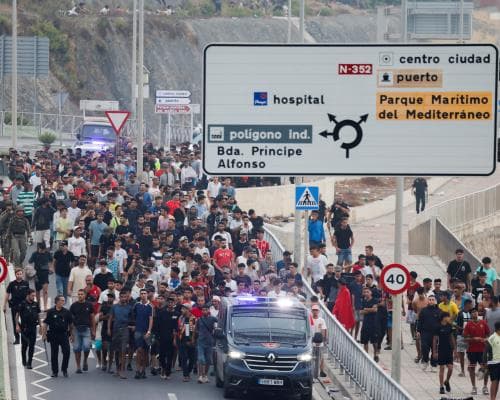
Imagine waking up to find that 50,000 people have just walked into your city—not over days or weeks, but in a single, chaotic surge. That's what happened in Ceuta, a Spanish enclave on Africa's northern coast, and the shockwaves are now rattling the corridors of power in Brussels. This wasn't a migration trickle; it was a flood, and it has triggered an emergency EU meeting, a diplomatic spat between Madrid and Rome, and a stark reminder that borders—and the capital flows that depend on them—can crack under pressure.
The scale is staggering: over 50,000 irregular migrants entered Ceuta from Morocco on Thursday and Friday, with at least 67 deaths reported—some drowned, others crushed while attempting to scale a breakwater barrier. By Friday evening, more than 48,000 had voluntarily returned to Morocco, but the political damage was already done. Spanish Prime Minister Pedro Sánchez fired off a blistering critique, accusing some EU countries, particularly Italy, of 'weaponising' the crisis instead of showing 'solidarity and empathy.' The EU's response? An extraordinary meeting of interior ministers and Frontex border agency experts, convened over the weekend to contain the fallout.
Here's where the money angle gets sharp. This isn't just a humanitarian story; it's a stress test for the Schengen free-movement zone, the linchpin of Europe's single-market labor mobility. When borders crack, trade flows, supply chains, and cross-border investment face new friction. The immediate market reaction was muted—Spanish bonds and the euro barely blinked—but the longer-term risk is clear: if the EU's external border is porous, internal controls creep back, and that's a tax on every business that relies on frictionless movement. The wealthy are watching this closely, because political instability on Europe's southern flank tends to ripple into sovereign risk premiums, tourism revenue, and even real estate values in coastal regions.
The mechanics of the breach are telling. Migrants massed on the Moroccan side, then surged across the border as Moroccan authorities—apparently in a deliberate show of displeasure with Madrid—looked the other way. Spain's response was swift: a new barrier along the breakwater, a military deployment, and a diplomatic push to repatriate the rest. But the episode has exposed a deeper fracture. When Belarus weaponized migration on Poland's border, the EU called it a 'hybrid attack' and rallied behind Warsaw. When Morocco does the same to Spain, some members are calling for Madrid's suspension from Schengen. That double standard is not lost on Sánchez, and it's a warning to investors: European unity is not a given—it's a negotiated, fragile asset.
For the wealthy, the Ceuta crisis is a case study in geopolitical risk management. The immediate data point—50,000 crossings in 48 hours—is a shock, but the more important number is the 48,000 who returned voluntarily. That suggests the crisis was a pressure valve, not a permanent shift. Yet the political fallout is real: Italy's right-wing government has already used the moment to push for harder borders, and Sánchez's domestic position is shakier. If this accelerates a broader EU shift toward fortress-style border policies, expect higher costs for migrant processing, more investment in surveillance tech, and potential friction with Morocco—a key trade partner for Spain.
Looking forward, the smart money is on resilience. Europe has weathered migration waves before, and the Schengen zone has survived near-death experiences. But this episode is a reminder that borders are not just lines on a map—they're risk barriers for capital. The EU's emergency meeting is a step toward a coordinated response, but the deeper question is whether member states can trust each other when the next crisis hits. For now, the market's verdict is 'stable,' but that stability is conditional on political repair. Watch the Spanish-Moroccan relationship, watch the EU's next moves, and watch whether Italy's rhetoric translates into policy. The Ceuta break was a warning shot—and the wealthy are taking notes.