The Sprint Queen's Edge: What Lorena Wiebes' Tour de France Femmes Opener Reveals About Winning Under Pressure
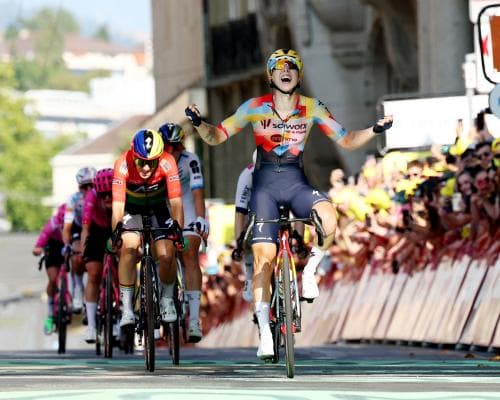
In the high-stakes world of elite sport, victory is rarely a solo act. It’s a symphony of split-second decisions, relentless preparation, and the quiet confidence that comes from having done it all before. Lorena Wiebes’ stage one win in Lausanne at the 2026 Tour de France Femmes was a perfect demonstration of that principle—a masterclass in capitalizing on opportunity when the margin for error is measured in millimeters.
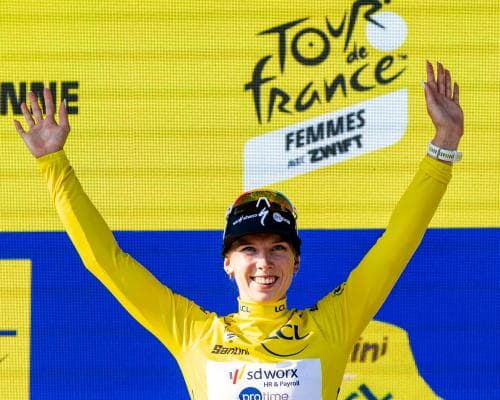
The numbers tell a compelling story. Wiebes, riding for SD Worx-Protime, crossed the line in 3 hours, 29 minutes, and 11 seconds, adding a 10-second bonus to her time. That puts her four seconds clear of Kim Le Court in the general classification, with race favorite Demi Vollering just two seconds further back. In a race where seconds are currency, Wiebes has already banked a meaningful dividend. But the real story isn’t just the win—it’s the mechanics of how it happened.
Let’s break down the asset allocation. With 1.2 kilometers to go, a crash disrupted the peloton, a reminder that risk is ever-present. Then, with the flamme rouge—the red kite marking the final kilometer—in sight, Vollering launched a decisive attack. It was a bold move, a bet on her explosive power. But Wiebes, reading the play like a seasoned portfolio manager, didn’t panic. She covered the move, stayed patient, and then, when the moment was right, she accelerated with a burst that left her rivals scrambling. The gradient wasn’t severe, but the pressure was immense. Wiebes’ ability to stay calm and execute her plan—to follow Vollering’s attack, then launch her own—is exactly what separates top performers from the rest.
This is where the rarity angle comes in. Wiebes now has over 130 professional victories. That’s not just a number; it’s a track record of consistent outperformance. In the world of finance, we’d call it a proven alpha generator. Her post-race comments were telling: 'I can’t believe it... the team worked super-hard... they really believed in me, even if I had some doubts.' That humility, combined with the fierce competitiveness she showed on the climb, is a rare combination. It’s the same blend of self-awareness and drive that you see in the most successful founders and fund managers.
For the wealthy and the markets, this race offers a broader signal. The Tour de France Femmes is growing in stature and, crucially, in commercial value. Sponsors are pouring in, teams are professionalizing, and the level of competition is rising. This isn’t just a sporting event; it’s a growth asset. The way Wiebes’ team, SD Worx-Protime, executed their strategy—working as a cohesive unit, sacrificing individual glory for the collective goal—mirrors the best-run investment firms. It’s about having a clear thesis, allocating resources wisely, and trusting the process, even when the outcome is uncertain.
Looking ahead, the race is far from over. Wiebes leads the points classification and wears the green jersey, but Vollering is a formidable opponent, and the mountains loom. The general classification battle is still wide open. But what Wiebes proved today is that she has the mental fortitude and the tactical acumen to win when it matters most. For investors, the lesson is simple: in any market, whether it’s a bike race or a bear market, the key to success isn’t just raw power—it’s the ability to stay calm, read the situation, and strike when the moment is right. Wiebes did exactly that. And she’ll be a force to reckon with for the rest of this Tour.