The Man Who Directed America’s Living Room: James Burrows and the Art of the Sitcom Set
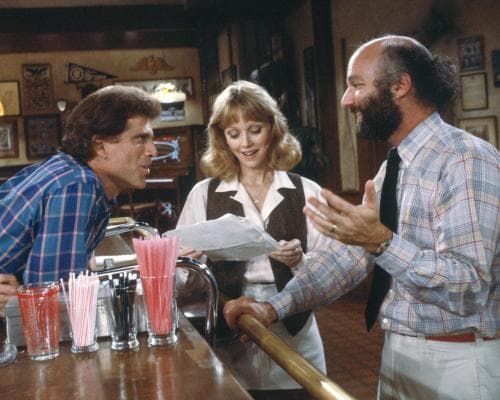
The best parties don’t feel directed. They feel inevitable—the right people, the right lighting, the right rhythm of laughter and pause. James Burrows, who passed away at 85, understood this better than any director in television history. He wasn’t a film auteur chasing sweeping landscapes. He was a “theatre rat,” as he put it, who staged a 25-minute play every week, then let the cameras cover it like guests at a dinner party. The result? The most beloved living rooms, bars, and coffee shops in American culture.
Burrows didn’t just direct sitcoms; he curated the spaces where we wanted to be. Think of the warm mahogany of the *Cheers* bar, the impossibly cozy purple-and-orange couch on *Friends*, the crisp Seattle elegance of *Frasier*’s apartment. These weren’t just sets—they were environments engineered for connection. Burrows pioneered the use of four cameras, a technique that allowed him to block scenes with the precision of a choreographer, capturing every wry glance and perfectly timed one-liner. The extra camera wasn’t a technical gimmick; it was a tool for intimacy, guiding the audience’s eye the way a maître d’ leads you to the best table in the room.
His craft was one of invisible perfection. Burrows directed nearly 100 pilot episodes—the high-stakes, single-shot sales pitches that could make or break a network’s season. He was the first call when a show needed to feel instantly alive. And he delivered, season after season, from *Cheers*’s slow-burn first season to the record-breaking finale that only *M*A*S*H* surpassed. His sets were lit not for drama, but for comfort—a soft, flattering glow that made even a Boston dive bar feel like a second home. This was heritage in the making: a standard of quality that made audiences return week after week, not for plot twists, but for the sheer pleasure of being in that room.
For collectors of cultural artifacts, Burrows’ work represents a pinnacle of analog craftsmanship in a digital age. The four-camera setup, the live studio audience, the careful blocking—these are the equivalent of a hand-stitched Hermès bag in a world of fast fashion. His shows have been syndicated into perpetuity, but the real rarity is the philosophy behind them: that comedy, like a great wine or a bespoke suit, requires patience, precision, and a deep understanding of human rhythm. The *Cheers* bar itself has been replicated, but the original magic was in Burrows’ direction—the way he turned a single set into a universe.
What Burrows signals about taste is this: true luxury is not about excess, but about ease. The most expensive watch is useless if it doesn’t tell time beautifully. The most lavish penthouse is empty without the right flow of conversation. Burrows’ genius was making 22 minutes of television feel effortless, a quality that the ultra-wealthy recognize in a perfectly cut jacket or a well-poured Negroni. He proved that the most valuable real estate is not a square foot, but a moment of shared laughter.
Looking forward, Burrows’ legacy is a quiet rebuke to the frantic, algorithm-driven content machine. As streaming services chase binge-ability, his work reminds us that the most enduring luxury is a space where people want to stay. The next time you settle into a perfectly lit room with good company, think of the man who directed America’s living room. He left the camera to Spielberg. He was busy staging a masterpiece.