Zelenskyy’s Sacking of Fedorov: A Billion-Dollar Blow to Ukraine’s Drone War
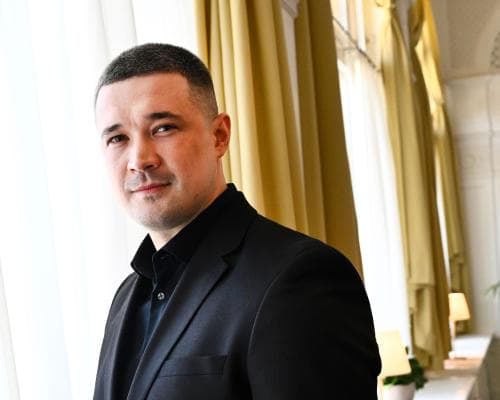
On the surface, it was just a personnel change. But when Volodymyr Zelenskyy abruptly sacked his defence minister Mykhailo Fedorov last week, he didn’t just reshuffle a cabinet—he yanked the plug on Ukraine’s most aggressive bet on technology as a war-winning weapon. Fedorov, 35, was the face of a new kind of warfare: drone swarms, data-driven procurement, and a kill-for-points scheme that rewarded efficiency over seniority. Now, at the very moment Kyiv was gaining momentum in the sky, the president pulled the architect off the board.
Fedorov wasn’t a general. He was a former marketing executive who had never worn a uniform. But he understood something the old guard didn’t: modern war is a software problem. As minister of digital transformation, he turned Ukraine into a laboratory for drone warfare, scaling production from a handful of hobbyist quadcopters to a fleet of AI-guided attack drones that hunted Russian tanks with terrifying precision. He convinced Elon Musk to cut off unauthorized Starlink access for Russian forces—a move frontline soldiers called a game-changer. He streamlined procurement, introduced competitive tendering, and began solving the army’s chronic recruitment crisis with digital tools. In short, he treated war like a startup: iterate fast, measure everything, kill what doesn’t work.
The dismissal has sent shockwaves through Kyiv’s tech corridor. European officials are stunned. Demonstrators took to the streets. And the question nobody wants to ask aloud is this: Did Zelenskyy just trade battlefield advantage for political control? Fedorov grated on senior officers with his casual style and data-driven insistence on "taking all the data and seeing what works." That rubbed the brass the wrong way—especially when his metrics showed that some elite units were underperforming. But in a war where Ukraine is outgunned and outmanned, innovation is the only asymmetric edge it has left.
This isn’t just a story about one minister. It’s a story about a fundamental tension that will define the next decade of warfare: the clash between hierarchical military culture and the speed of tech. Billionaires have poured capital into defense tech startups—Palantir, Anduril, SpaceX—all betting that software-defined warfare will win the future. Ukraine was the real-world test bed. Fedorov was their point man. Now that test bed is wobbling. The killing-for-points scheme he championed, which rewarded the most effective units with bonuses and better gear, was dismissed by some as a gimmick. But it was working: units that optimized their drone strikes saw kill rates climb by nearly 40% in some sectors. That kind of data-driven lethality doesn’t happen by accident. It requires a leader willing to upset the old order.
What happens next matters far beyond Ukraine’s borders. If Zelenskyy replaces Fedorov with a traditional military figure, the signal to the global defense tech community is clear: innovation is welcome only so long as it doesn’t threaten the chain of command. That could chill the flow of private capital and talent into Ukraine’s war effort. Already, whispers among Silicon Valley defense investors suggest they’re watching this closely. One told me, "If they can’t protect their best innovators, why would we bet on them?" The irony is painful: Ukraine’s greatest strength—its ability to adapt faster than Russia—is now its greatest vulnerability.
Fedorov’s sacking is a reminder that technology doesn’t win wars by itself. It needs political cover, cultural acceptance, and leaders willing to tolerate the friction that comes with change. Zelenskyy has shown he can be a wartime president. But this move suggests he may be more comfortable with loyalists than with disruptors. The next defence minister will inherit a drone programme that was just hitting its stride, a procurement system that was finally cleaning up corruption, and a military that needs to trust its civilian leaders again. That’s a tall order—and the clock is ticking. Russia is learning, too. Its own drone capabilities are improving. If Ukraine blinks now, the window of technological advantage may close for good.
In the end, this is a story about a 35-year-old who tried to turn war into a data science project—and got fired for it. But the idea he championed won’t die with his departure. The drone swarms are still flying. The algorithms are still learning. And somewhere in Kyiv, a new generation of engineers and officers is asking the same question Fedorov asked: "We will take all the data and see what works. Everything that works well will proceed." The question now is whether Zelenskyy will let them proceed—or whether he’ll keep choosing loyalty over lethality.