From Hayes Estate to World Stage: The Unscripted Rise of Michael Olise
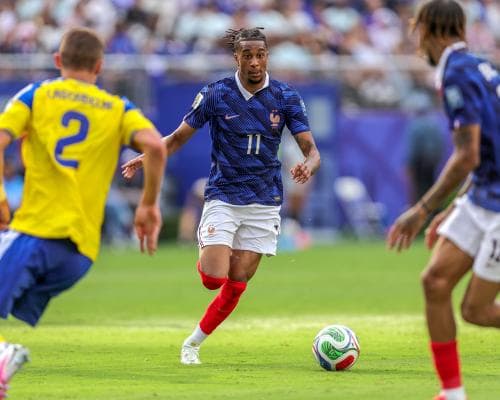
There is a patch of grass on a housing estate in Hayes, west London, that will forever belong to France. It is a scrap of parkland wedged between suburban homes, where a seven-year-old Michael Olise and his brother Richard chased a football until dusk. ‘Football in these conditions, it’s just freedom,’ Olise told L’Équipe. ‘It’s not really learning. It was simply the pleasure of playing football. I just loved it.’ That scrap of grass, with its concrete edges and few parked cars, was his first atelier. No floodlights, no manicured pitch, no scouts. Just a boy and a ball.
Fast-forward a decade, and that same boy is one of the most electrifying players at the World Cup—a Ballon d’Or candidate, a player described by those who know him as ‘the best player England has developed.’ But here’s the twist: Olise plays for France. His journey is a masterclass in how true excellence often slips through the nets of the establishment. Rejected by Chelsea and Manchester City as a youth, he landed at Reading, where academy scout Brendan Flanagan spotted him in a European under-21 match. ‘Michael came on with 17 minutes to go,’ Flanagan recalls. ‘Within five minutes, Hayden Mullins leaned over and said, “Who the fuck is that?!”’
What makes Olise’s story so compelling is not just the talent—it’s the provenance. In the world of luxury, provenance is everything. A Hermès Birkin is not just a bag; it is the story of the leather, the craftsman, the atelier. Olise’s provenance is that Hayes estate, the concrete, the small green, the obsessive hours of practice with his brother. Sean Conlon, his first coach at Old Isleworthians, remembers: ‘I would go over to his house and he would be practising outside with Richard. That little estate probably really aided him.’ There is an honesty to that origin. No academy factory, no synthetic grass. Just grit and joy.
For collectors and connoisseurs of the rare and the refined, Olise represents something increasingly difficult to find: authentic, unmanufactured greatness. In an era where elite athletes are often groomed from the age of six, where data analysts and performance coaches sculpt every move, Olise is a reminder that the most extraordinary things still come from the most ordinary places. His game is fluid, unpredictable, almost improvisational—a jazz solo in a world of sheet music. That is the hallmark of true rarity.
What does this say about luxury taste today? It says that the most coveted objects—whether a watch, a wine, or a footballer—are those with a story that cannot be replicated. The Hayes estate is not a vineyard in Bordeaux or a garage in Modena. But it is the birthplace of something singular. For the ultra-wealthy who collect not just things but narratives, Olise’s rise is a reminder that the best investments are often the ones that defy the algorithm.
As Olise steps onto the World Cup stage, he carries with him that scrap of grass, that concrete, that freedom. He is not a product of the system; he is a gift to it. And for those who understand that the finest things in life are the ones that cannot be engineered, his story is the ultimate luxury: a masterpiece born from a corner of a housing estate, forever France.