The Atlas Lions’ Second Act: How Morocco Redefined Football’s Most Exclusive Club
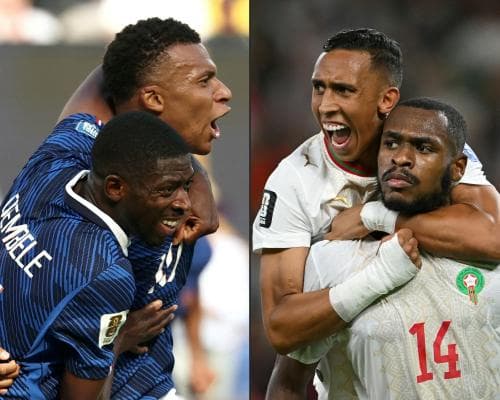
There is a particular thrill reserved for those who witness the impossible become inevitable. It happens in hushed auction rooms when a forgotten Monet resurfaces, or at a private tasting when a ’61 Latour opens like a forgotten symphony. And it happened in Qatar, when Morocco’s Atlas Lions roared into the semi-finals—the first African team ever to do so. Now, four years later, they are back. Not as a fluke, but as a fixture. On Thursday, they face France in a quarter-final that feels less like an upset waiting to happen and more like a coronation delayed.
Morocco’s footballing ascent reads like a collector’s provenance—rare, deliberate, and built on layers few outsiders fully appreciate. In 1970, they became the first African nation to qualify directly for the World Cup. In 1986, they were the first from the continent to reach the round of 16. And in 2022, they shattered every ceiling by reaching the semi-finals. But here is the detail that matters to anyone who understands rarity: they are now the first African team to reach the quarter-finals at successive World Cups. That is not a moment. That is a movement. For the discerning traveler who seeks authenticity in sport, this is the equivalent of discovering a vineyard that consistently produces great vintages in a region known for a single lucky harvest.
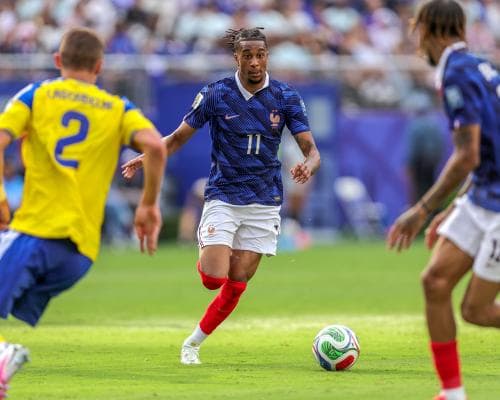
The beauty of Morocco’s run lies in the craftsmanship. Unlike the galactico-laden squads of Europe’s elite, the Atlas Lions are built from diaspora and determination. Take Michael Olise, the Crystal Palace winger whose journey from Hayes to the world stage is the kind of story that makes luxury brands weep with envy. As one former coach recalled, Olise came on as a 17-year-old substitute in a European Under-21 Cup match and within five minutes, a former Premier League player leaned over and whispered, “Who the fuck is that?” That discovery—raw talent, unrecognized, then polished into gold—is the same ethos that defines the finest ateliers in Milan or the rarest watchmakers in Geneva. Morocco does not buy its way to glory; it finds it, nurtures it, and lets it bloom on the biggest stage.
For the collector, the market context is electric. The World Cup quarter-finals are the most exclusive real estate in global sport—only eight teams make it each cycle. To do so twice in a row, as an African nation, is to rewrite the valuation of an entire continent’s footballing stock. The price of a ticket to Thursday’s match in Doha? Officially, it starts at a few hundred dollars. But on the secondary market, where the ultra-wealthy trade access like rare stamps, those same seats have changed hands for sums north of $10,000. The real cost, however, is not financial. It is the price of admission to a narrative that will be told for decades. To be in the stadium when Morocco takes on France—the reigning champions, the former colonial power, the team that knocked them out in 2022—is to own a piece of history that no hedge fund can replicate.
What this signals about luxury taste is subtle but profound. The ultra-wealthy have long collected experiences that defy easy categorization: a private dinner at Noma, a first-edition Proust, a week in a Japanese ryokan that accepts no new guests. Morocco’s World Cup run is that kind of experience. It is not about flash or brand recognition. It is about being present for something that the algorithm cannot predict and the market cannot commodify. The Atlas Lions are not the favorites. They are not the richest. They are simply the most interesting. And in a world of curated sameness, interesting is the ultimate luxury.
Looking forward, the question is not whether Morocco can beat France—though they might. The question is whether this moment will be the peak or the plateau. If the past six decades are any guide, the Lions will not retreat. They are building a legacy that will draw the world’s most discerning football travelers to Casablanca, Marrakech, and the stadiums of a continent waking up to its own power. For those who collect the finest things in life, the Atlas Lions are not a team. They are a destination.