The $200 Million Power Play: Inside the Big Bash's Luxury Rebrand
On a sun-drenched afternoon in Melbourne, the roar of 50,000 fans is not the only sound echoing across the MCG. It's the whisper of private equity, the clink of champagne in corporate suites, and the quiet hum of a billion-dollar machine being tuned for maximum velocity. Cricket Australia's board has just green-lit a plan that could transform the Big Bash League from a beloved summer ritual into the world's most exclusive sporting property—a move that has collectors and investors alike reaching for their checkbooks.
The proposal, which will be voted on by state associations in the coming weeks, is a masterclass in modern sports economics. Rather than a wholesale sell-off of the league's eight franchises—a move that was rejected by New South Wales and Queensland in April—the new hybrid model allows each club to voluntarily sell a stake, with the proceeds flowing into a central pot. It's a strategy that echoes the English Premier League's golden era, where ownership became as much about status as success. And with the England and Wales Cricket Board raising nearly $1 billion by selling stakes in the Hundred, the template for riches is already set.
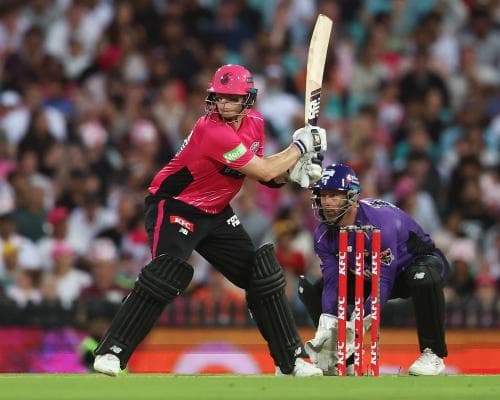
But this is not merely about money. It's about curation. The Big Bash has always been the sport's most theatrical expression—fireworks, DJs, and six-hitting that defies physics. Now, under the stewardship of US investment bank Raine Group, which has been appointed to run the sale, the league is being positioned as a trophy asset, akin to a rare Patek Philippe or a first-edition Ferrari. Initial valuations of up to $200 million per franchise are being bandied about in private boardrooms, and the interest from Indian Premier League and Hundred owners, who held talks with Big Bash officials in England last month, is described as 'serious' and 'sustained.'
This is where the story gets truly fascinating. The Big Bash is not just expanding its reach; it's expanding its roster. Cricket Australia is exploring a move to 10 teams, a vision that would see new markets—perhaps Geelong, perhaps Canberra, perhaps a second team in Sydney—enter the fray. It's a bold bet on the sport's future, one that mirrors the global surge in T20 leagues from the IPL to the Caribbean Premier League. The league's current eight teams, with their loyal fan bases and iconic venues, are being repositioned as the anchor of a new, more expansive ecosystem.
For the ultra-wealthy, this is a once-in-a-generation opportunity. Buying into a BBL franchise is not just about owning a piece of sport; it's about owning a piece of culture. The league's summer schedule, its family-friendly appeal, and its prime-time television slots make it an attractive asset for sovereign wealth funds, tech billionaires, and legacy families alike. The Raine Group's involvement—the same firm that advised on the sale of the NBA's Phoenix Suns and the Chelsea Football Club—adds a layer of gravitas that signals the league is ready for prime time.
What does this mean for the luxury consumer? It signals a shift in how we perceive sport as an asset class. Just as the art world has seen blue-chip works appreciate in value, and classic cars become investment-grade, cricket franchises are now entering the same conversation. The Big Bash, with its blend of tradition and innovation, is poised to become the ultimate status symbol—a passport to a world where the boundary between fandom and ownership is delightfully blurred.
As the board prepares to vote, the mood is one of cautious optimism. Victoria, Western Australia, and Tasmania are firmly in favor, and the momentum is palpable. The expansion to 10 teams is still in its infancy, but the conversations are happening, the money is ready, and the vision is clear. In the coming years, the Big Bash may not just be a cricket league; it will be a global brand, a lifestyle, and a testament to the fact that in the world of the ultra-wealthy, even the game itself can be curated.