The Eclipse Hour: Why the Smart Set Is Reconsidering the Grid
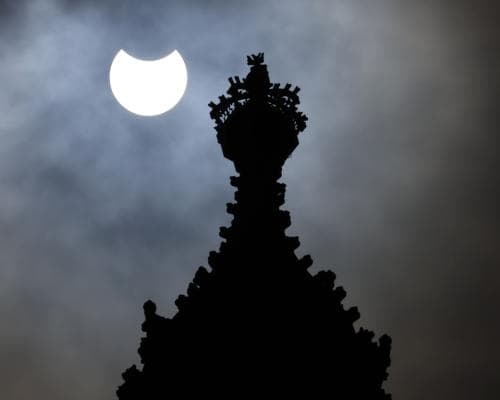
There is a moment, just before the light fails, when the garden goes still and the birds stop singing. On Wednesday evening, that moment will arrive early across Britain, as the moon slides across the sun and up to 95% of its face vanishes behind a velvet shadow. For most, it will be a spectacle to photograph from a deckchair. But for the country's most discerning energy supplier, Octopus Energy, it is something far more intriguing: a test of whether the ultra-wealthy—and everyone else—can be persuaded to treat electricity like a rare vintage, to be savored at the right moment and not a second before.
The request is simple, almost poetic. Between 6pm and 8pm, as the eclipse knocks out the last of the day's solar generation, Octopus is asking its customers to refrain from running the washing machine or the dishwasher. In return, those who sign up to the company's 'saving sessions' will receive a free hour of electricity the following weekend—a small token, but one that speaks to a larger philosophy. This is not about sacrifice; it is about choreography. The eclipse, after all, is nature's own dimmer switch, and the company is inviting us to dance with it rather than fight it.
At the heart of this appeal is a technical elegance that would make a watchmaker nod in approval. Britain's grid, like a finely tuned chronometer, relies on a delicate balance between supply and demand. When the sun disappears, solar panels—which on a clear summer day can contribute nearly a third of the country's electricity—drop to near zero. At the same moment, the fifth heatwave of the year is driving up demand for air conditioning and refrigeration. The result is a perfect storm, one that would normally force the system operator to fire up extra gas-fired stations, burning fuel and carbon in a frantic scramble to keep the lights on.
Octopus, however, sees this as an opportunity to showcase what it calls 'household flexibility'—a term that sounds like a yoga class but is actually a radical rethinking of how we use energy. The company estimates that British homes could provide a staggering 13 gigawatts of flexible capacity through smart appliances, electric vehicles, and home batteries. That is roughly the output of several large power stations, sitting idle in our kitchens and garages, waiting to be harnessed. By asking customers to delay their energy use by a few hours, Octopus is effectively turning millions of homes into a virtual power plant, one that can respond to the grid's needs with the precision of a Swiss movement.
For the collector of rare experiences, there is something deeply appealing about this. The eclipse is a celestial event that will not repeat in Britain until 2090—a lifetime away, and yet here we are, being asked to participate in it not as passive observers but as active partners. The free hour of electricity is a modest reward, but the real prize is the feeling of being in on a secret, of understanding that the most luxurious thing one can own is not a supercar or a penthouse, but the ability to shape one's own energy destiny. In a world where the ultra-wealthy are increasingly investing in off-grid estates and solar-powered villas, this is the ultimate status symbol: independence from the system, even as you help it breathe.
The market context is telling. Octopus Energy has become Britain's largest household supplier by positioning itself as the thinking person's utility—a brand that rewards intelligence over inertia. Its 'saving sessions' have already paid out millions to customers who shift their usage to times of renewable abundance, and the eclipse event is a natural extension of that ethos. It is also a glimpse into a future where energy is not a commodity but a currency, traded in moments of surplus and scarcity. For the luxury sector, which has long equated wealth with consumption, this represents a quiet revolution: the new rich are not those who use the most, but those who use the most wisely.
As the moon's shadow sweeps across the Atlantic, the question is not whether Britain will keep the lights on—it will—but whether we will choose to participate in this delicate ballet. The free hour of electricity is a lovely gesture, but the real gift is the reminder that even in an age of abundance, there is grace in restraint. For those who have already mastered the art of the slow dinner and the unhurried weekend, this is simply the next refinement: the eclipse hour, savored like a fine cognac, with the dishwasher left for another day.