The New Currency of Speed: Why the Ultra-Wealthy Are Flocking to Birmingham's Track
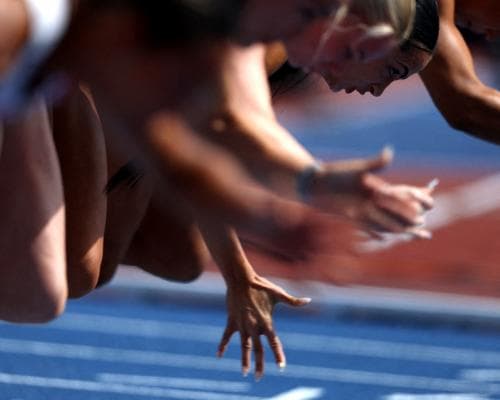
There is a particular thrill in watching someone run 100 metres in under ten seconds. It is not merely the speed—it is the compression of a lifetime of discipline into a single, explosive breath. And this week, that thrill is being staged in Birmingham, of all places, at the Alexander Stadium, where the European Athletics Championships have transformed the Midlands into a temporary capital of human performance. For those who collect experiences the way others collect vintage cars, this is not a minor diversion. It is a pilgrimage.
The evening sessions are selling out, but not entirely. There are still tickets, if you know where to look—and if you are willing to pay for the privilege of proximity. The cheapest seats, at £26 for adults and £13 for juniors, place you in the back of the north stand, a distant perch from which the athletes appear as specks of colour against the track. But the home straight, where the finish line breathes its final, decisive sigh, commands £150 a seat, with no concession for children. The back straight, slightly less hallowed, goes for £110. This is not ticket pricing; it is a tiered system of desire, a lesson in how we value the moment of culmination over the journey itself.
Tonight's session is billed as 'super'—a designation that carries its own weight in the luxury lexicon. Tomorrow and Wednesday, the sessions are merely excellent, and the prices reflect that humility: £110 for the home straight, £90 for the back. It is a subtle but telling calibration, a reminder that in the world of high-end experience, scarcity and spectacle are priced with surgical precision. For the collector of moments, the question is not whether to attend, but which evening to claim as your own.
The roster this week reads like a who's who of athletic aristocracy. Amy Hunt, the young sprinter with the poise of a seasoned diplomat, is the warm favourite for the women's 100m, though Dina Asher-Smith, the defending champion and a woman who has redefined British sprinting, will not relinquish her crown without a fight. Then there is Jakob Ingebrigtsen, the Norwegian middle-distance prodigy, returning from an Achilles injury that would have ended lesser careers. His presence in the 5,000m is not merely a comeback; it is a statement of resilience that resonates far beyond the track. And on Tuesday, the men's 100m pits Italy's Marcell Jacobs, the Olympic champion, against Britain's Romell Glave—a duel that has the flavour of a classic car rally, where horsepower and nerve are equally prized.
For the luxury traveller, these championships offer something that a yacht or a penthouse cannot: the raw, unmediated spectacle of human potential. There is no glass case, no velvet rope—just the roar of the crowd and the thrum of spikes on synthetic rubber. The pricing structure, with its premium on the home straight, mirrors the logic of a private box at the Royal Opera House or a courtside seat at Wimbledon. It is not about seeing better; it is about being seen, about occupying a space where the energy is thickest. And for those who have attended every Monaco Grand Prix and every Masters, this is the next frontier—a chance to witness history in a setting that still feels authentic, unpolished, and gloriously alive.
What does it signal about luxury taste? That the truly discerning have moved beyond the predictable. A Birkin bag is lovely, but it cannot run a 400m in 43 seconds. A Patek Philippe can measure time, but it cannot bend it. The new luxury is about proximity to greatness, to the sweat and strain of athletes who have honed their bodies into instruments of near-supernatural efficiency. It is a shift from owning to witnessing, from collecting to experiencing. And Birmingham, with its red-brick pragmatism and its sudden, electric nights, is the unlikely stage for this evolution.
As the week unfolds, from the women's 800m defence by Keely Hodgkinson to the men's 400m where local hero Matt Hudson-Smith seeks a third European gold, the stadium will thrum with a particular kind of energy—one that no amount of champagne can replicate. The forward-looking luxury traveller is already booking next year's calendar, not for a resort in the Maldives, but for a seat on the home straight, where the price of admission is also the price of memory. In a world of endless digital distraction, this is the real thing: flesh, bone, and the relentless pursuit of faster. And for that, £150 seems almost a bargain.