The 233-Run Masterpiece: How Buttler and Brook Redefined T20 Elegance
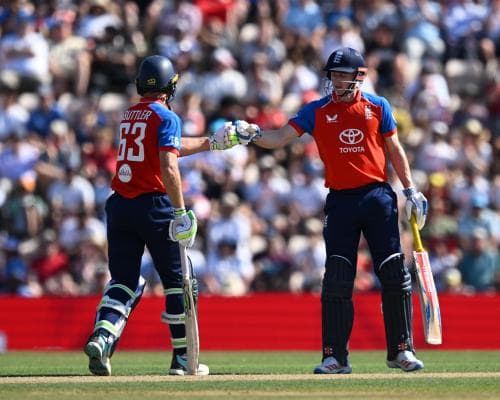
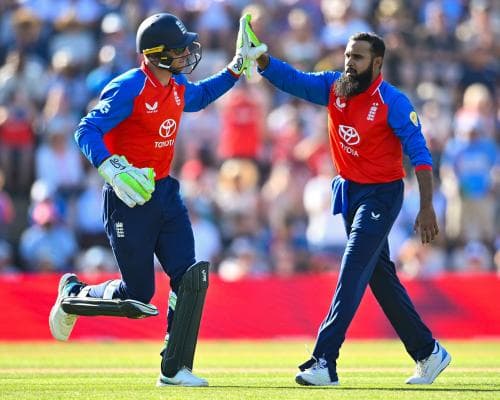
The scene was set for a coronation, not a contest. On a balmy Pune evening, under lights that seemed designed to flatter the players' every move, Jos Buttler and Harry Brook did something that transcends sport: they turned a T20 international into a gallery piece. The 233-run partnership they forged was the fifth-highest in all T20 history, the best ever against India by a staggering 59 runs, and the finest by any England pair in the format. But numbers, here, are mere decoration. What mattered was the how.
Buttler, who had endured 18 innings without a half-century in this format, chose this stage to produce the second-highest score by an Englishman: 131 off 64 deliveries. It was a performance that recalled the greats—not just of cricket, but of any craft where pressure is the ultimate test. His drives through the off-side were like a perfectly balanced watch movement: clean, inevitable, and devastatingly efficient. Beside him, Brook finished unbeaten on 95, his second-highest score, hitting eight sixes with a nonchalance that bordered on insolence. Of his six fastest-scoring T20 innings of at least 15 balls, three have come in this series alone. That is not form; that is a state of being.
The partnership was a study in complementary luxury. Buttler, the established patriarch of English white-ball cricket, played the anchor with a diamond-cutter’s patience. Brook, the young heir apparent, played the flamboyant disruptor, each six a brushstroke of audacity. Together, they made the Indian bowling attack look like a struggling start-up at a tech conference—outgunned, outclassed, and utterly out of their depth. The 233-run stand was not just England’s best in T20s; it was the best against India in the format’s history, surpassing the previous record by a margin that speaks to a different class of ambition.
For the collector of rare sporting moments, this was a piece of heritage in the making. The pitch at the Maharashtra Cricket Association Stadium became a stage where legacy was rewritten in real time. Both Buttler and Brook were dropped during their innings—a ragged, puzzling fielding display from India that only added to the narrative. In the world of luxury, mistakes by competitors are often the backdrop against which true excellence shines. Here, India’s errors were the rough edges that made the polished performance gleam brighter.
What does this say about the state of elite taste in sport? That the most coveted performances are not those that merely win, but those that do so with a certain insouciance—a refusal to break a sweat even when breaking records. England’s 257 for three was the highest total ever posted against India in T20s, and the series ended 4-0. But the real prize was the manner of the victory. In a world where the ultra-wealthy collect everything from vintage Ferraris to first-edition Picassos, the partnership of Buttler and Brook offers a different kind of trophy: a moment of pure, unscripted mastery that cannot be replicated or auctioned. It can only be witnessed.
Looking forward, this performance signals a shift in the hierarchy of T20 cricket. England, after two World Cup wins and a humbling series of defeats across Ireland and England, have now climbed to the top of the ICC rankings, unseating India after 1,601 days. But the true connoisseur knows that rankings are ephemeral. What endures is the memory of that evening in Pune—the sound of Brook’s six sailing into the stands, the sight of Buttler’s cover drive bisecting fielders like a blade through silk. For those who understand that the finest things in life are not things at all, but experiences, this was a masterpiece. And like all masterpieces, it will be talked about long after the scoreboard goes dark.