The Hidden Price of a First-Class Family
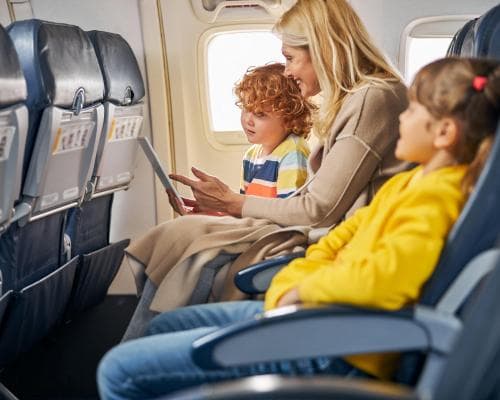
Imagine this: you’ve just paid £14.99 for your own seat on a short-haul flight to the sun. You’re feeling smug, like you’ve beaten the system. Then you add your baby—the one who will spend the entire journey sleeping on your chest—and the airline quietly tacks on a flat fee that is higher than what you paid for yourself. Your infant, who occupies no seat, just cost more than you. That is not a glitch. That is a design.
This is the hidden arithmetic of modern family travel, and it is a masterclass in opaque pricing. The numbers are startling. On Wizz Air, a lap infant—a child under two who does not require a seat—is charged a flat €32 per flight, regardless of the adult fare. So if you snagged a £14.99 ticket, your baby costs nearly double. And that is just the beginning. A recent audit by consumer experts uncovered nine separate fees applied to a single infant booking. Nine. By the time you add seat selection, checked bags, and the mandatory “infant handling” surcharge, the total for your lap child can exceed the cost of a full-fare adult ticket. Rory Boland, editor of Which? Travel, puts it bluntly: “There’s absolutely no sensible argument for why a very small child will be charged more than an adult.”
The craft here is not in engineering or hospitality—it is in the fine print. Airlines have turned family seating into a revenue stream disguised as policy. Ryanair recently scrapped its mandatory family seating fee, but the real cost has simply migrated. For children over two, who must have their own seat, the game changes again. On budget carriers like Ryanair, easyJet, and Wizz, kids pay the same as adults. Full-service airlines like British Airways and Virgin Atlantic offer a discount—roughly 10% off the adult fare for infants, and reduced fares for children under twelve. But even then, the ancillary fees pile up: priority boarding, luggage, and the infamous “seat assignment” charge that can run £136 for a family of four on a single round trip. Lisa Francesca Nand, host of the Big Travel Podcast, paid exactly that to sit next to her two sons on a Wizz Air flight to Málaga. That is more than a third of the total ticket cost for her teenagers.
What does this signal about wealth and taste? It signals that the luxury of simplicity has a price. For the ultra-wealthy, the calculus is different. A private jet charter eliminates these fees entirely—no lap-infant surcharge, no seat-selection game, no hidden costs. But for those who still fly commercial, the real marker of status is not just the class of ticket but the ability to absorb these friction points without a second thought. The family that books a bulkhead seat with a bassinet, pays the infant fee without blinking, and upgrades to extra legroom is not just buying comfort—they are buying freedom from the mental tax of deciphering airline pricing. That is the new luxury: not just the destination, but the absence of hassle.
Look ahead, and the trend is clear. As airlines continue to unbundle their services, families will face ever more granular charges. The days of a simple ticket are gone. The savvy traveler—or the one with a dedicated travel manager—will pre-pay for everything: seat selection, priority boarding, even a “family bundle” that bundles the infant fee into a flat rate. For those who truly value their time, the solution is to outsource the headache entirely. A membership in a premium travel concierge service, or simply booking through a top-tier travel advisor, turns the chaos into a single invoice. Because in the end, the real cost of flying with children is not measured in pounds or euros. It is measured in the quiet frustration of a parent who just wanted to sit next to their child without paying a premium for the privilege.
The Experience
For a seamless family journey, book a private jet charter or a first-class commercial ticket with a dedicated concierge who handles all infant fees and seat preferences before you even board.