The 29-Mile Kingdom: Why Slovenia’s Salt-Painted Coast Is the New Quiet Luxury
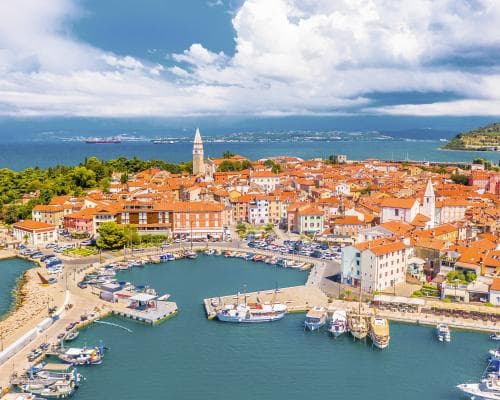
Imagine a coastline so short you could drive it in 40 minutes. Now imagine that 29 miles hold more exclusivity than the French Riviera. That is Slovenia’s Istrian coast — a sliver of Adriatic heaven wedged between Italy and Croatia, where the ultra-wealthy go when they want to disappear. Not to be seen, but to taste salt harvested by hand, to ride a horse through olive groves at dawn, and to sleep in a farmhouse that hasn’t changed in 250 years. This is not a place for yachts the size of hotels. It is for people who already own those yachts and are bored of them.
The story begins on a salt-coloured horse, galloping through the Dragonja valley. Electric-blue dragonflies dart over the river. The hills rise in grassy terraces, and at the top, you see them: the solinas. Salt pans. Huge grids glittering like light-blue mirrors against the wild sea. This is the Sečovlje salt pans, one of Europe’s last places where salt is still harvested by hand. Professor Flavio Bonin, a historian, walks visitors through the old crystallisation basins, explaining how seawater once flowed through shallow pools, growing saltier with each step. The prize is solni cvet — salt flower — a delicate, slightly sweet crystal prized by chefs who know that real luxury is not truffles, but something so pure it tastes of the sea itself. The Venetian Republic understood. They ruled here for five centuries, taking one-fifth of the salt as tax, and made Piran wealthy. That medieval town, just up the coast, still wears its Venetian bones with pride. But the real wealth today is not in the town. It is in the silence of the salt pans, where black-winged stilts stalk for lunch and egrets rise into an azure sky.
Then there is the farm. Kmetija Medljan. The Kodarin family bought the land in the 1980s. Now Marina, Marko, and their son Tilen run it. Simple rooms near the stables. Rustic apartments in the old farmhouse. Plans for treehouses. But the luxury here is not marble or gold. It is breakfast served under a mulberry tree at long communal tables: freshly laid eggs, strawberries from the garden, homemade bread. Marina’s take on traditional Slovenian noodle soup is the kind of dish that makes you cancel dinner reservations. The coast is ten minutes away, but guests come for the hills. For the peace. For the feeling that you have stumbled into a world that does not care about your net worth — and that, paradoxically, is exactly why it is worth so much.
What does this signal about wealth and taste? That the old markers — the superyacht, the penthouse, the private island — are becoming clichés. The new signal is provenance. Hand-harvested salt. A farm that feels like it has been there forever. A coastline so short it forces you to slow down. The ultra-wealthy are not buying things anymore; they are buying time, silence, and stories they can tell at dinner. Slovenian Istria delivers all three. It is a place where the Venetian ghosts whisper that true wealth is not about taking, but about knowing where to find the salt.
Looking forward, this tiny coast will not stay secret for long. The treehouses are coming. The gastronomy scene is rising. But for now, it remains a quiet kingdom for those who understand that the rarest luxury is a landscape that still feels wild. The salt pans will keep glittering. The horses will keep grazing among the olives. And the Kodarin family will keep serving breakfast under the mulberry tree. The question is not whether you can afford to go. It is whether you can afford not to.
The Experience
Book a private stay at Kmetija Medljan through their direct farm reservations, and arrange a guided dawn ride through the Dragonja valley with a local equestrian expert.