The Cyclospora Surge Is a Warning: America’s Food-Safety Puzzle Is Missing Pieces
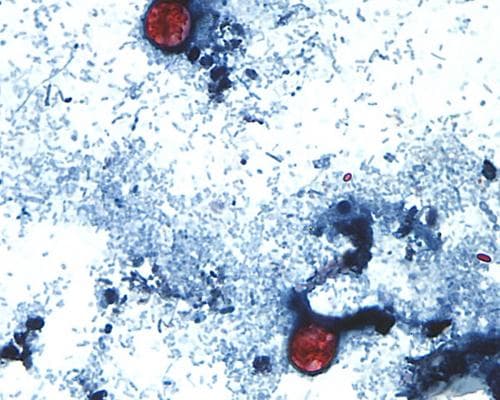
Imagine a disease that takes two weeks to announce itself. You eat a salad, go about your life, and 14 days later you’re hit with explosive, watery diarrhea that strips away your appetite and pounds your weight down. That’s cyclosporiasis — and right now, more than 2,800 Americans are living through it. The parasite Cyclospora cayetanensis has torn through Michigan and Ohio, with cases confirmed in 31 states. Eighty-six people have been hospitalized. No one has died — yet. But the real story isn’t the bug. It’s the broken system that let it spread.
This outbreak is a direct consequence of policy choices made a year ago, when the Trump administration slashed funding to state and local health departments and gutted the program that coordinates foodborne-illness data. Barbara Kowalcyk, a food-safety expert at George Washington University, put it plainly: “It’s like putting a puzzle together. You start taking pieces out of your puzzle — it’s harder to see the whole picture, and that’s what we’ve done.” The CDC now reports 843 confirmed cases and 1,500 suspected, but officials expect the number to rise. The lag is built into the biology: Cyclospora has a two-week incubation period, and the CDC assumes a six-week reporting delay between illness onset and case confirmation. That’s a terrifying window for a pathogen that can hide in fresh produce.
The technology to fight this exists. Rapid genomic sequencing, wastewater surveillance, and AI-driven outbreak mapping are all proven tools. But they’re only as good as the data pipeline feeding them. When you defund the state epidemiologists who collect stool samples, interview patients, and trace contaminated cilantro back to a specific farm, you starve the machine. This isn’t a failure of science — it’s a failure of infrastructure. The private sector has poured billions into precision medicine and lab-on-a-chip diagnostics, but those innovations can’t help if no one is paying the people who connect the dots. The irony is brutal: We can sequence a tumor’s genome in hours, but we can’t track a parasite that’s been making people sick for weeks.
The market context is sobering. The global food-safety testing market is projected to hit $24 billion by 2027, driven by demand for faster, cheaper detection. Startups like Clear Labs and Thermo Fisher are racing to build automated surveillance platforms. But these tools are being deployed in wealthy grocery chains and export-oriented farms, not in the underfunded public-health labs of Michigan and Ohio. The private sector sees an opportunity; the public sector sees a crisis. The disconnect is a feature, not a bug, of a system that treats foodborne illness as a cost of doing business rather than a national-security threat.
What this signals for the sector is a reckoning. The next wave of biotech innovation — think portable CRISPR-based sensors, real-time supply-chain blockchain, and federated data-sharing networks — will only matter if the public-health backbone is strong enough to absorb them. Right now, it’s not. The cyclospora outbreak is a canary in the coal mine for a country that has decided to fly blind on food safety. If billionaires and elite capital want to build tomorrow, they need to start by fixing the foundations. Because no amount of fancy sequencing matters if you don’t know what’s in the salad.