The $90 Billion Question: When AI Replaces the Human Hand at Montefiore
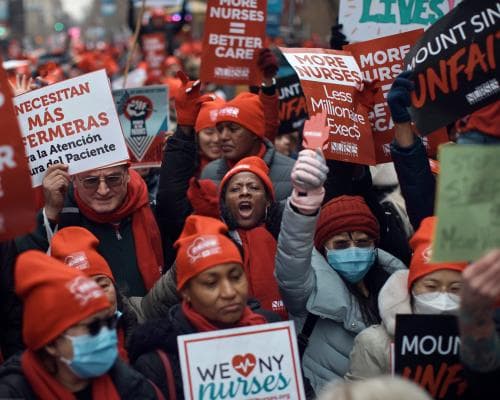
Marilyn Shuler has spent 39 years reading patient charts. Not skimming them. Reading them. She knows the difference between a medication change buried in a discharge note and a red flag that could send a patient back to the ER. She also knows the exact weight of a 45-day notice. That’s what she and eleven colleagues received on a Tuesday in late May, after returning from a historic nurses’ strike in January. Their replacements? Software. Not new nurses. Not better nurses. AI-powered software, quietly inserted into the workflow while they were on the picket line.
This is not a story about technology. It’s a story about trust. And for anyone who has ever paid a premium for a private doctor, a concierge health service, or a hospital with a wing named after a donor, it’s the kind of story that should make you ask who is actually watching over your care. Montefiore Medical Center in the Bronx is a 1,500-bed institution with a reputation that draws patients from Park Avenue to the Palisades. Its utilization review nurses—the ones who translate complex clinical decisions into language insurance companies understand—are being replaced by an algorithm. The union, National Nurses United, calls it a violation of the contract they won by striking. The hospital says nothing. Marilyn says she and her colleagues sent emails asking for transparency. They got silence. Then they got notices.
Let’s talk about what a utilization review nurse actually does. It’s not glamorous. It’s not on the cover of a medical journal. But it is the nervous system of a hospital’s revenue and a patient’s coverage. When a doctor wants to change a medication, extend a stay, or discharge someone with home care, the utilization review nurse is the one who picks up the phone, reads the chart, and argues with an insurance adjuster until the patient gets what they need. It requires clinical judgment, institutional memory, and the kind of interpersonal nuance that no algorithm has ever been trained to replicate. Marilyn puts it plainly: “AI should be a tool used in conjunction with the clinical expert, not to replace.” The software can parse data. It cannot persuade a skeptical claims adjuster that a patient’s new drug regimen is medically necessary. It cannot hear the hesitation in a doctor’s voice and ask the right follow-up question.
For the ultra-wealthy, this raises an uncomfortable question. You can buy a private room. You can hire a private nurse. You can fly to the Mayo Clinic or the Cleveland Clinic or a Swiss clinic that smells like eucalyptus and discretion. But the infrastructure of care—the system that decides whether your insurance pays for that MRI, that specialist, that extra day—is increasingly run by code. And code, unlike a veteran nurse, does not have a union. It does not have a 39-year memory of which insurance company representatives are reasonable and which are stone walls. It does not have pride in the organization. It just processes. And when a hospital cuts twelve nurses to save on salaries, it sends a signal that cost efficiency has begun to outweigh clinical nuance. That is a dangerous signal in an industry where nuance is often the difference between a complication and a recovery.
The timing is revealing. The layoffs hit just months after a massive nurses’ strike across New York City. The new contracts included AI safeguards. The union says Montefiore violated those safeguards. The hospital, so far, has not responded publicly. Meanwhile, the National Nurses United has drafted an AI Bill of Rights for patients and nurses—a document that reads like a luxury brand’s code of ethics, except the stakes are higher than a handbag’s authenticity. It demands transparency, human oversight, and the right to appeal a machine’s decision. It is the kind of framework that should exist in every industry where algorithms touch human lives. But in healthcare, the margin for error is not a stock price. It is a life.
Marilyn Shuler is not against technology. She says so herself. She has seen advances in healthcare that saved her patients. But she knows the difference between a tool and a replacement. A tool amplifies expertise. A replacement erases it. And when a hospital erases twelve experts who have spent decades building relationships with patients, insurers, and doctors, it does not just cut costs. It cuts the invisible thread of trust that makes a hospital feel safe. For the kind of reader who chooses a private jet over first class because of the service, not just the speed, this is a warning. The algorithm is coming for the back office. But the back office is where the real decisions are made. The question is not whether AI can read a chart. It can. The question is whether anyone will notice when it misreads one.
What happens next will set a precedent. If Montefiore’s move is allowed to stand, other hospitals will follow. The race to the bottom in healthcare rarely announces itself. It just arrives in the form of a layoff notice, a silent email inbox, and a nurse who has spent four decades taking pride in her work, suddenly treated as a line item. The luxury of good health has always been, in part, the luxury of being seen by people who care. If we replace those people with software, we are not streamlining care. We are outsourcing judgment. And judgment, unlike code, cannot be patched with an update.
The Experience
For those who demand human oversight in every aspect of their health, consider a concierge medical membership that guarantees a dedicated nurse navigator—no algorithms, no shortcuts, just a direct line to someone who knows your name.
Explore