The Breakaway Elite: Inside the Ballon d’Alsace Stage That Rewrote the Tour’s Soul
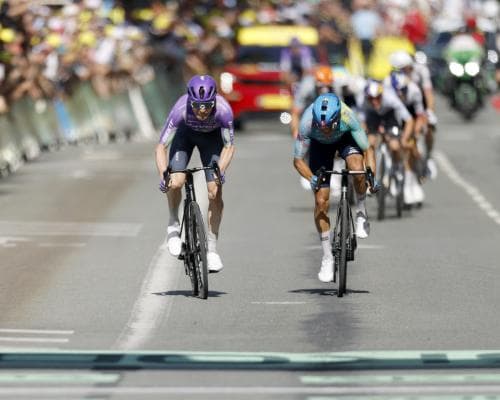
The Ballon d’Alsace does not roar. It waits. For nine relentless kilometers, the climb rises through beech and fir, past stone farmhouses that have watched generations of riders suffer, and—on a Tuesday afternoon in July—it witnessed something the Tour de France hasn’t seen in years: a breakaway that actually mattered.
Tom Pidcock, the double Olympic gold medallist who once won a mountain-bike race on a road bike for fun, was the man who made it matter. He started the day 7 minutes and 43 seconds behind the race leader, Remco Evenepoel—a gap that, in modern cycling, usually means you’re racing for a consolation prize. But Pidcock and a handful of others had other ideas. They formed what the commentators call a ‘mass breakaway’ on the rolling roads of the Jura and Doubs, a 200-kilometer chess game played at 50 kilometers an hour, and by the time they hit the foot of the Ballon, the script was already burning.
This is the kind of stage that the ultra-wealthy traveler dreams of witnessing—not from a corporate hospitality tent, but from a helicopter hovering above the switchbacks, or from a private villa in Belfort with a terrace that overlooks the final ascent. The Tour de France has long been the world’s most exclusive moving party, but its true currency is access: access to the riders before they suffer, access to the team cars where tactics are whispered into radios, access to the moments when a 23-year-old Swiss professional named Mauro Schmid—racing in his first Tour—crosses the line alone, arms raised, having outfoxed a field of superstars.
Schmid’s victory was a masterclass in patience. He had been in the break since kilometer 40, riding with the kind of quiet efficiency that only the Swiss seem to possess. When Pidcock surged on the Ballon’s steepest ramps, Schmid didn’t panic. He let the Olympic champion burn his matches, then slipped past in the final kilometer, a ghost in the mist. “It was always the objective to make it into the break,” Pidcock said afterward, his voice calm, almost philosophical. “I can’t be disappointed.” But the math told a different story: Pidcock leapfrogged into fourth overall, just nine seconds behind Evenepoel, and for a few fleeting moments, he had even sat second on GC. The crowd in Belfort—a city that usually sees the Tour only as a passing parade—erupted.
For those who can afford to experience the Tour not as a TV broadcast but as a live, sensory assault, this stage was a reminder that the race’s most precious commodity is unpredictability. The ultra-wealthy don’t just watch the Tour; they chase it. They book the same hotels the teams use, hire former pro cyclists as guides, and rent helicopters to follow the breakaway from above. The Ballon d’Alsace, a climb that rarely features in the Tour’s greatest-hits reel, suddenly became the most coveted piece of asphalt in France. A private helicopter charter for the day runs upwards of €8,000; a villa with a view of the finish line in Belfort costs around €15,000 for the week. And yet, the real luxury is the story you bring home—the one about the day the breakaway won.
What this stage signals about luxury travel is subtle but seismic. The old model—buy a VIP pass, sit in a glass box, sip Champagne—is fading. The new model is immersion: riding the same roads the day before the race, eating at the team’s training table, sleeping in the same hotel as the directeur sportif. It’s about understanding the geometry of a breakaway, the physics of a 9-kilometer climb at 7 percent gradient, the psychology of a rider who knows he has no teammates left and must win alone. That is the kind of knowledge that money can buy—but only if you know where to look.
And where the wealthy go next, after the Tour packs up its barriers and heads for Paris, is the Alps. Not the crowded resorts of Chamonix or Courchevel, but the quieter valleys: the Maurienne, the Tarentaise, the high passes that the Tour uses as its cathedrals of suffering. Private chalets with in-house chefs who prepare post-ride recovery meals. Guided gravel rides on the same trails Pidcock uses for training. Helicopter drops to the top of the Galibier, where the air is thin and the view is infinite. This is not a vacation. It is a pilgrimage.
The Ballon d’Alsace stage was a reminder that the Tour de France is not a parade; it is a war. And for those who can afford to witness it from the front lines, there is no better theater on earth.