Wildfire Smoke Is the New Climate Crisis—and Biotech Is Racing to Build the Defenses
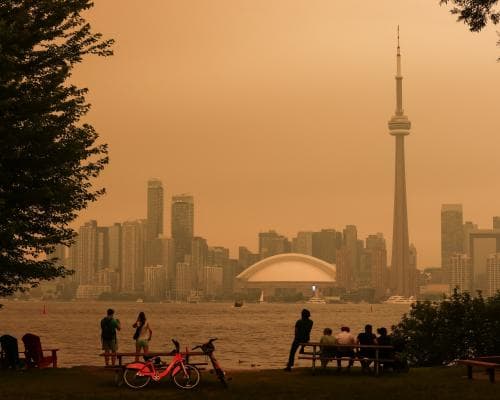
Erin O’Connor stood outside Toronto General Hospital, watching the sky turn a shade of orange she’d only seen in disaster movies. The air smelled like a campfire, but this was no cozy evening—it was the breath of a burning planet, carried a thousand kilometers from the boreal forests of northern Ontario. Inside, her emergency department was filling with patients gasping for air, their allergies and shortness of breath spiking as the smoke rolled in. “It really hit you in the face as soon as you walked outside,” she said. That scene, repeated across cities from New York to Madrid, is not just a climate tragedy—it’s a public health emergency that is finally getting the attention it deserves. And where there’s a crisis, there’s also opportunity: a new generation of biotech innovators is betting they can build the tools to fight back.
The numbers are staggering. A 2024 study in the Lancet found that landscape fires—wildfires, brushfires, and agricultural burns—kill 1.5 million people each year, more than floods, flames, storms, and heat combined. The killer isn’t the fire itself; it’s the smoke. Thick with toxic gases that inflame airways and fine particulates (PM2.5) that breach the lungs and ride the bloodstream to hit every organ, wildfire smoke is a silent assassin. A separate study in Nature last year revealed that Canada’s 2023 wildfires caused 82,000 premature deaths, with a third of the mortality burden landing in the US and another quarter in Europe. Even the UK, thousands of miles away, gets about 10% of its PM2.5 pollution from biomass burned abroad. The smoke doesn’t respect borders—and neither should the solutions.
This is where biotechnology enters the picture. The challenge is twofold: first, we need to better understand the biological mechanisms of smoke toxicity—how specific compounds in charred plant matter damage lung tissue, trigger inflammation, and contribute to cardiovascular and neurological disease. Second, we need practical interventions: better air filtration, wearable sensors, and even pharmaceutical treatments that can mitigate the damage. Startups and research labs are already working on these fronts, from companies developing real-time particulate monitors that can tell you exactly what’s in the air you’re breathing, to biotech firms exploring anti-inflammatory drugs that could be deployed during severe smoke events. The goal is not just to survive the smoke, but to build resilience against it.
The capital is starting to flow. While the biggest names in tech have been focused on AI and space, a quieter cohort of investors is betting on what you might call “smoke tech”—a niche that sits at the intersection of environmental health, diagnostics, and therapeutics. Venture funding for air quality startups has been climbing, and the urgency is growing as wildfire seasons lengthen and intensify. The market is enormous: billions of people live in regions now exposed to hazardous smoke, and governments are under pressure to protect their populations. In Canada, the federal government has already invested in early warning systems and air quality monitoring, but the biotech angle—developing medical countermeasures—remains underexplored. That’s a gap that forward-thinking founders and deep-pocketed backers are beginning to fill.
The competitive landscape is still nascent, but it’s shaping up to be a race. On one side, you have established medical-device companies pivoting toward air quality; on the other, nimble startups using AI to model smoke dispersion and predict health impacts in real time. There’s also a push for personalized medicine: imagine a wearable patch that monitors your exposure to PM2.5 and alerts you when to seek shelter, or a nasal spray that coats your airways with a protective barrier. These aren’t science fiction—they’re prototypes in labs right now. The key is scaling them fast enough to match the accelerating threat.
What this signals for the sector is profound. Wildfire smoke is becoming a chronic, global health issue, not a seasonal anomaly. That means the demand for solutions will only grow, creating a durable market for biotech innovation. We’re likely to see more cross-disciplinary partnerships—between atmospheric scientists, pulmonologists, and materials engineers—to develop integrated responses. And as the data on smoke’s long-term effects accumulates, expect regulatory pressure to mount, forcing governments and industries to adopt stricter air quality standards and invest in public health infrastructure.
The future is not just about fighting fires; it’s about fighting the invisible aftermath. The billionaires and elite investors who recognize this early will not only build fortunes—they’ll build the defenses that save millions of lives. The smoke is coming; the question is whether we’ll be ready. For the biotech innovators already at work, the answer is a determined yes. The sky may turn orange, but it doesn’t have to be the end of the story.